Animal Dreams
Dreaming of a Panda: What the Black and White Bear Means
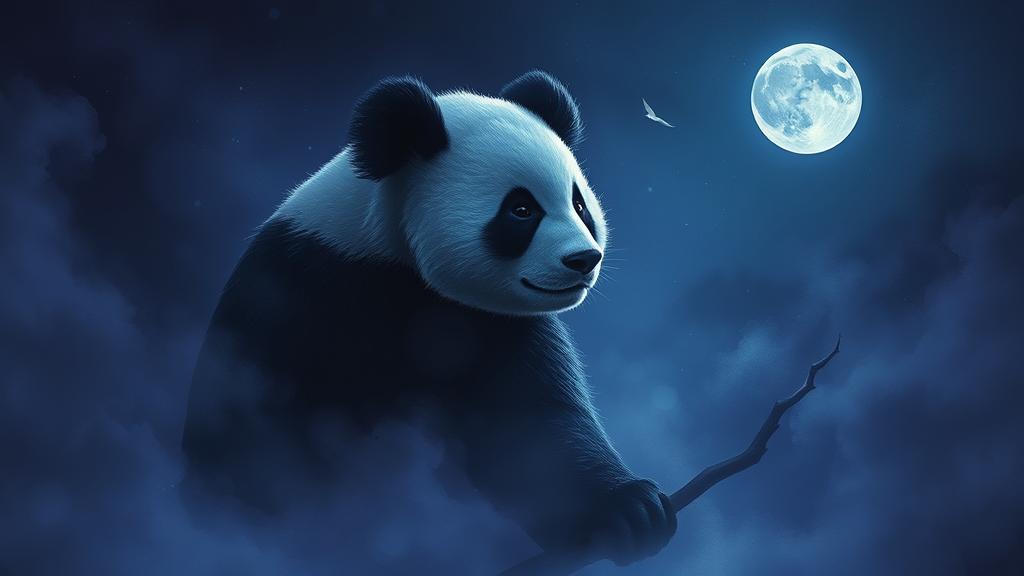
I’ll confess something that took me embarrassingly long to admit: I used to dismiss panda dreams. A panda felt like a borrowed image, a logo, a toy, not a genuine symbol. Then I started noticing how often the panda in someone’s dream was doing something that didn’t match its cuddly reputation at all. Sitting in rubble. Blocking a doorway. Eating while something burned behind it. The image was serious even when it looked soft.
That gap, between how something looks and what it’s actually doing, is probably where your panda dream lives.
A panda in a dream most often represents something in your waking life that appears harmless, even endearing, but that may be consuming more than its share of space or energy. The black-and-white pattern tends to add a layer of either-or thinking, a situation you’re trying to see in clean contrast when it might not be that simple.
What cultures have made of bears
| Tradition | How it reads the symbol |
|---|---|
| East Asian traditions | Bears broadly symbolize courage, healing, and the endurance of harsh conditions. The panda’s rarity added connotations of preciousness and the weight of caretaking. |
| Western modern psyche | The panda has become an emblem of fragility and conservation, something magnificent that exists only with intervention. Dreams that use this image may be exploring what you’re working hard to preserve. |
| Artemidorus tradition | Animals in dreams were read through their behavior and nature, not their cultural standing. A bear-type animal eating signaled absorption, taking in something, possibly too much. One that blocked passage meant obstruction in an important endeavor. |
| Jung’s animal symbolism | Bears in Jung’s framework often represent the powerful, instinctual self, especially in its more withdrawn, hibernating mode. The panda’s specific coloring, stark contrast without shading, maps onto binary thinking or a situation where nuance feels unavailable. |
The eating panda and the watching panda
In most panda dreams I hear about, the animal is either eating with complete absorption or watching without expression. Both are worth taking seriously. The eating version tends to point at something in your life that requires constant feeding: a project, a relationship, a habit. It’s not hostile. It’s just consuming. The question the dream is asking is whether you’re okay with how much you’re feeding it.
The watching version carries a stranger charge. A panda that simply looks at you without moving has this quality of being completely present and completely unreadable. You can’t tell if it’s curious or indifferent. That tends to map onto something or someone in your waking life whose intentions you genuinely can’t read, not because they’re hiding, but because their nature is different enough from yours that you’re not sure what you’re looking at.
The black and white thing
This is the part of the dream I find most interesting. Pandas are visually startling because their pattern is so binary: not dappled, not graded, just blocked. Your dreaming mind didn’t have to choose this animal. It could’ve given you any bear. The fact that it chose the stark black-and-white one is worth asking about. Revonsuo’s framework treats the dream’s content as shaped by what’s emotionally salient in your waking life, and binary thinking is emotionally costly. Either this works or it doesn’t. Either they love me or they don’t. The panda might be your mind drawing a picture of exactly that trap.
The rarity problem
Pandas also carry, whether you’re consciously aware of it or not, the freight of being precious and threatened. Something magnificent that needs a lot of support to survive. If the dream had a quality of tenderness or worry around the panda, that second layer might be active: something in your life that you’re working hard to protect, or that you sense could easily be lost. Dreams about rare or delicate animals, like small creatures that need silence to survive, often cluster around periods when you’re pouring energy into something you’re not certain will last.
I’ve had to revise my initial dismissal thoroughly. The panda isn’t a soft symbol. It’s a symbol of managed wildness: enormous strength inside a markedly non-threatening package, kept alive by extraordinary effort, eating constantly. When your sleeping mind reaches for that image, it probably knows something your waking mind hasn’t said plainly yet. Dreams involving other animals with unexpected emotional weight, like spiders or red snakes, often work the same way: the dissonance between the image and the feeling is the whole message.
The panda that blocked the doorway in one dream someone described to me: it wasn’t threatening anyone. It was just there, too big to go around, absolutely calm about being an obstacle. They woke up and spent the day thinking about something they’d been refusing to name as a problem. The dream was right, they said later.
- Was the panda eating, watching, or obstructing something? The action shapes everything.
- Did I feel tender toward it, or unsettled, or both at once?
- Is there something in my life right now that I’m treating as precious and harmless when it might be neither?
- Where in my waking life am I thinking in either-or terms when the situation might need more shading?
Quick answers
What does it mean to dream about a panda?
A panda in a dream often points to something in your waking life that appears gentle but is consuming significant energy or space. The stark black-and-white pattern can also signal binary thinking, a situation you’re experiencing as all-or-nothing when it might be more complex.
Is a panda in a dream a good sign?
It depends entirely on what the panda was doing and how it felt. An eating panda tends to raise questions about what you’re feeding. A watching panda can represent something or someone whose nature you’re struggling to read. Neither is inherently negative; both are worth examining.
What does a panda blocking your path mean in a dream?
Obstruction dreams almost always signal an unacknowledged problem. The panda version tends to be particularly pointed because the obstacle is something you might have been treating as harmless or even lovable. The dream is often asking you to name it as an obstacle.
Why did I dream of a panda when I don’t usually think about them?
Your dreaming mind pulls images based on their emotional resonance, not their frequency in your conscious thoughts. A panda is a very precise symbolic package: precious, voracious, powerfully built, and requiring constant care. If that combination of qualities matches something in your life, your mind might reach for this image exactly because it’s not in your daily vocabulary.