Animal Dreams
Dreaming of a Squirrel: Burying Things You'll Never Find
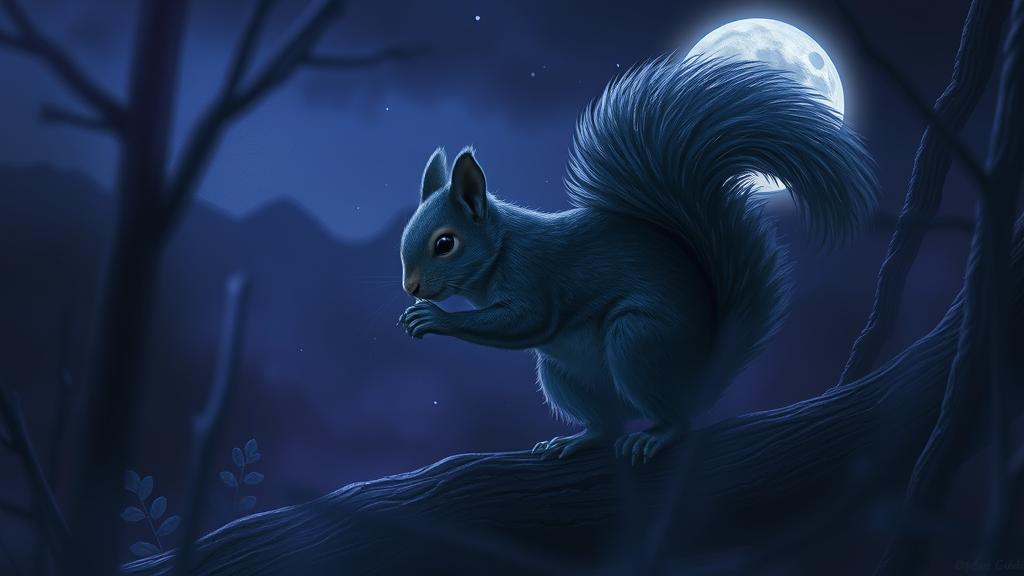
On my desk for longer than I’ll admit there’s been a jar of coins. Not a fortune. Maybe twelve euros in small denominations, the kind of thing you empty from your pockets and tell yourself you’ll cash in eventually. It’s been there through three different life situations, one move, and the purchase of a coin-counting machine I never used. I don’t spend the coins. I don’t throw them away. I keep adding to the jar. At some point it stopped being coins and became something else entirely.
That jar is the best description I have for what a squirrel dream tends to be circling.
A squirrel in a dream usually signals something about how you manage resources, security, or future anxiety. The specific activity matters more than the animal: a squirrel gathering and hiding is different from one that’s frantic, still, or lost.
The biology that makes this particular
Squirrels are scatter-hoarders. They bury things in dozens, sometimes hundreds, of separate locations and retrieve them using spatial memory. And a significant portion of what they bury, they never find again. Those forgotten caches become trees. The squirrel’s anxiety about scarcity literally generates forests. It’s one of the more genuinely beautiful inefficiencies in the natural world, and your sleeping mind has apparently noticed.
Jung’s framework for animal dreams treats the creature as an aspect of the self operating below conscious awareness, the part of you that follows instinct rather than deliberate plan. The squirrel-self is resourceful, tireless, and genuinely convinced that more reserves equals more safety. It’s also, under that reading, somewhat compulsive. It buries things it doesn’t need yet, in places it won’t remember, because the mechanism for recognizing when enough is enough hasn’t been installed.
A brief history of this animal in sleep
- 2nd century CE
Artemidorus in the Oneirocritica gives small, quick animals short entries and pragmatic readings. His consistent concern is whether the creature is busy or still, productive or idle. A working animal was a good sign for someone in trade.
- Pre-industrial Europe
Squirrels appear in bestiaries as symbols of industry and foresight, the creature who prepares for winter while summer is still warm. Dream interpretation in this period borrowed heavily from bestiary symbolism.
- 19th century
As psychology began to take dreams seriously as something other than prophecy, animal dreams were increasingly read through the lens of personality: the squirrel-dreamer as someone anxious, acquisitive, unable to be still.
- 20th century
Freud gave the squirrel almost no attention. Jung, working with archetypes, was more interested in what the creature’s instinct-pattern mirrored in the dreamer’s psychology, particularly around security and the management of resources.
- Contemporary
Threat simulation research, including Revonsuo’s work, situates squirrel dreams in the broader context of the brain rehearsing responses to scarcity or future uncertainty. The dream isn’t a sign of a problem, it’s the nervous system taking the problem seriously.
That contemporary framing is the one I find most useful, and I say that as someone who is actually careful about invoking Revonsuo’s threat simulation theory for every animal that crosses someone’s dream. The squirrel earns it. The burying behavior is specifically anxiety-forward: it’s not responding to immediate danger, it’s responding to anticipated future shortage. That’s a distinctly human mode of suffering too, and the dream body apparently recognizes the resemblance.
What you’re actually stockpiling
The most interesting question in a squirrel dream isn’t about money, though that’s the obvious reading and often the right one. It’s about what form your hoarding takes. Some people stockpile money. Some stockpile skills, convinced they’re not qualified yet for whatever they actually want to do, adding one more certification to the pile. Some stockpile information, reading everything about a decision rather than making it. Some stockpile time, saving the good crockery for a special occasion that keeps receding.
All of these are the jar of coins. All of them involve setting something aside against a future need that may or may not materialize, and in the meantime the thing isn’t being used for anything. The squirrel dream tends to arrive when the stockpiling has become more comfortable than the spending.
For how the squirrel’s nervous energy relates to dreams about movement and drive, it’s worth reading dreaming of a galloping horse, which covers the kind of forward momentum that doesn’t stop to bury anything. The contrast is genuinely useful.
The forgotten cache
What I keep returning to is the part the squirrel forgets. The whole anxiety-driven project generates something the squirrel never intended and never knows about. Those abandoned buried acorns become trees. The forgotten stores are the best outcome, in some ways, of the whole endeavor.
I don’t know what to do with that, exactly. But I think if you dreamed of a squirrel last night, it’s worth asking not just what you’ve been storing and why, but what might already be growing from the things you put down and walked away from. The projects you abandoned. The relationships you let go quiet. The skills you stopped mentioning. Something in that buried category might be more alive than you’re accounting for.
If the squirrel in your dream was dead or still rather than busy, dreaming of a dead fish explores what stillness and ending mean in animal dreams and may be a useful companion piece. And for the earthen, below-ground quality that squirrel dreams sometimes have, dreaming of earthworms covers that underground register in its own direction.
The coins are still on my desk. I thought about them differently this morning, which is maybe the most a dream piece can accomplish. I’m not sure they represent anxiety anymore. I think they might represent something I’ve been saving for a reason I’ve forgotten. That’s either useful information or a very sophisticated justification for continuing not to do anything about them. Probably both.
- Was the squirrel still collecting, or had it stopped? That shift in the activity is the whole reading.
- What form does my stockpiling take? It doesn’t have to be money.
- Is there something I’ve been saving for a future occasion that keeps not arriving?
- What am I convinced I need more of before I can actually start?
Quick answers
What does dreaming of a squirrel mean?
It usually points to how you’re managing resources, preparation, and future anxiety. The squirrel is a creature of anticipation and storage, and the dream tends to ask whether your stockpiling is serving you or substituting for something more direct.
Is dreaming of a squirrel a good sign?
Generally neutral to positive, depending on what the squirrel is doing. An active, busy squirrel suggests productive preparation. A frantic or lost squirrel leans toward anxiety that’s lost its object. A squirrel that finds its hidden store is actually quite a hopeful dream.
What does it mean if a squirrel is gathering nuts in a dream?
The classic version: you’re in preparation mode, possibly appropriately so. The question is whether the preparation is proportionate to the actual uncertainty in your life, or whether it’s become a way of avoiding the thing you’re preparing for.
Why did I dream about a squirrel running in circles or looking frantic?
The anxiety has overtaken the strategy. Whatever you’re trying to prepare for has started to feel unmanageable rather than plannable. The frantic squirrel usually appears when the scarcity the mind is trying to defend against is more emotional than material.