Animal Dreams
Dreaming of a Swallow: Return, Departure, and the Birds That Count the Season
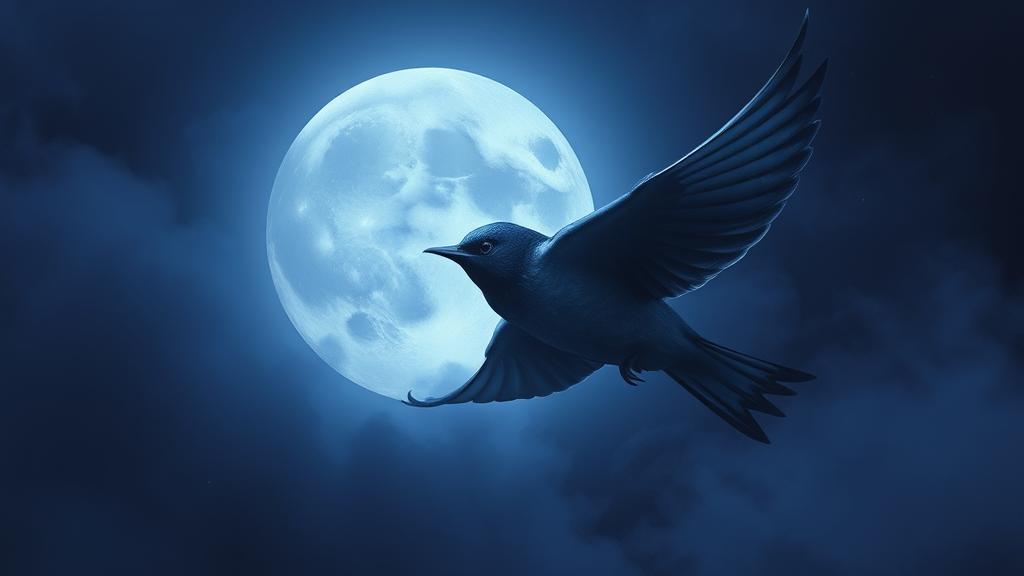
“You know summer’s really over when they go,” a colleague said once, not to me especially, just to the window. We were in an office meeting about something tedious, and she’d stopped mid-sentence to watch a line of swallows on the telegraph wire outside. Thirty seconds, maybe. Then the meeting resumed and nobody mentioned it.
That image stayed. The wire, the row of birds, the woman who stopped talking mid-report to mark a moment she wouldn’t get back. That’s what a swallow dream tends to feel like from the inside: something moving through your life that you either catch or you don’t, and the catching requires you to stop whatever else you’re doing.
A swallow in a dream is almost always an image of threshold: arrival or departure, return or ending. The bird doesn’t linger. It reads the season, then it acts. Whether the swallow in your dream was arriving or leaving is the first question, and it usually has a clear answer if you sit with it.
The bird that knows when to leave
Swallows are among the few animals that migrate with almost no ambiguity. They don’t get confused. They don’t delay. They read some internal combination of light and temperature and biology, and then they go. Watching them gather on wires in late August feels like watching something perform a decision your own nervous system can’t quite manage: confident, collective, on time.
That decisiveness is part of why the dream tends to carry a slight urgency. The bird isn’t asking your opinion about the season. It’s already in motion. If it appears in a dream at departure, your mind may be surfacing something in your own life that’s already in motion whether you’ve named it or not. Not a threat. A season. Something that’s ending because that’s what this time of year does.
If the swallow arrives in the dream, swoops in under eaves or lands close, the reading inverts. Something is coming back into range. Carl Jung wrote about the psyche’s relationship to cyclical time differently from the linear way most of us experience our days, and the swallow is almost entirely a cyclical creature. Its arrival means the last departure was real and completed. It returned. That’s not nothing.
What humans have read in the swallow, across time
- Ancient Greece
The swallow was sacred to Aphrodite, associated with love and its seasonal rhythms. Killing one was considered deeply unlucky. It marked spring’s arrival in a culture where the agricultural calendar was everything.
- 2nd century CE
Artemidorus in the Oneirocritica treated the swallow as a bird of short seasons and temporary residence. It nested in your house but left. A swallow dream could mean a visitor, a project, or a relationship that was real but bounded.
- Roman tradition
Sailors tattooed swallows for safe return: one swallow for five thousand miles sailed, a second for the return home. The bird was insurance against disappearing without coming back. It marked both the going and the coming home.
- Medieval Europe
The swallow nested in barns and houses and was considered a protector of the household. Driving one out or damaging the nest brought bad luck to the building. Its domesticity made it trustworthy in a way hawks weren’t.
- 19th century
Romantic literature used the swallow as the image of the soul’s restlessness, always in transit, never quite still. The bird in Wilde’s fairy tale “The Happy Prince” stays when it shouldn’t, and it costs the swallow everything. The tension between flight and loyalty was the story.
The bird at the edge of a roof
There’s a specific dream variant that recurs: the swallow nesting in the house, under an eave, in a corner, and the dreamer watching it from inside. Artemidorus would have read this as domesticity-in-transit, something vital that’s made itself at home temporarily but hasn’t committed to stay. I think that reading is exactly right, and it tends to fit a specific kind of waking-life situation: the relationship that’s present but unsettled, the job that feels right but provisional, the life that’s been assembled and isn’t quite sure of its own permanence.
Antti Revonsuo’s work on threat simulation offers an interesting angle here that he’d probably resist applying to this image. His theory is that dreams evolved partly as a rehearsal space for navigating what matters. Departure, arrival, and timing are genuinely high-stakes for social animals. Missing a window, failing to leave when the season calls for it, returning before things are ready: these aren’t trivial errors. The swallow dream may be your mind running something like that calibration.
When it appears alongside other birds
Brief note on this: a swallow rarely comes alone in waking life, and sometimes doesn’t in dreams either. A group of swallows has different weight than a single one. The group departure is a collective decision, impersonal, seasonal. One swallow that seeks you out or that you follow is a more individual, more personal image. That distinction tends to matter.
The dream also connects to related images that are worth considering. Dreaming of a white horse carries a similar quality of momentum and direction, something in purposeful motion, and the two dreams sometimes cluster in the same life-period. And if the swallow dream came with a sense of loss rather than just transition, dreaming of vermin deals with what accumulates when we don’t move on, which may be the other side of this coin.
I’ve thought about that woman and her window often. She stopped a meeting about quarterly projections to watch a row of birds decide to leave. I didn’t understand at the time why it stayed with me. Now I think it’s because she was marking time in the honest way, not by calendar but by what actually moves and changes. That’s what the swallow dream is doing for you. It’s marking the season. The question is whether you’ll let the meeting pause long enough to see it.
- Was the swallow arriving or departing? That single fact shifts everything about the reading.
- Did I watch from a distance or was the bird near me? Proximity in an animal dream usually signals how close the relevant thing is to your waking attention.
- Is there a season turning in my life right now that I’ve been calling something else?
- What would I miss, or what has already gone, that I only properly noticed when it was leaving?
Quick answers
What does dreaming of a swallow mean?
A swallow in a dream almost always points to threshold: arrival, departure, or a transition that’s already underway whether or not you’ve named it. The bird is a seasonal creature, and your mind uses it for exactly that: to make a turning point visible. Whether the reading is about something starting or ending depends entirely on what the swallow was doing in the dream.
Is a swallow dream a good omen?
Historically, almost universally yes. Across ancient Greek, Roman, and European folk traditions, the swallow was a protective and auspicious bird. Psychologically, even when it carries a departure reading, the swallow tends to feel purposeful rather than threatening. It doesn’t panic. It just acts when it’s time. That quality makes the dream more clarifying than alarming.
What does it mean to see swallows nesting in your dream house?
This is the domesticity-in-transit variant. Something vital has made itself at home in your life but hasn’t fully settled. It may be a relationship, a project, a version of yourself: genuinely present, genuinely nesting, but also carrying the swallow’s nature, which is temporary residence followed by a decision. Artemidorus read this kind of dream carefully and found it usually pointed to something real but bounded.
Why does a swallow dream feel urgent?
Because the bird doesn’t wait. Its entire nature is timing: it arrives at a specific moment and departs at another, and both are non-negotiable. That urgency is the dream’s information. Something in your waking life has a window, and your dreaming mind is flagging it. The feeling isn’t anxiety exactly; it’s more like the sensation of watching a tide.