Animal Dreams
Dreaming of a Sheep: Belonging, Obedience, and the One That Wanders
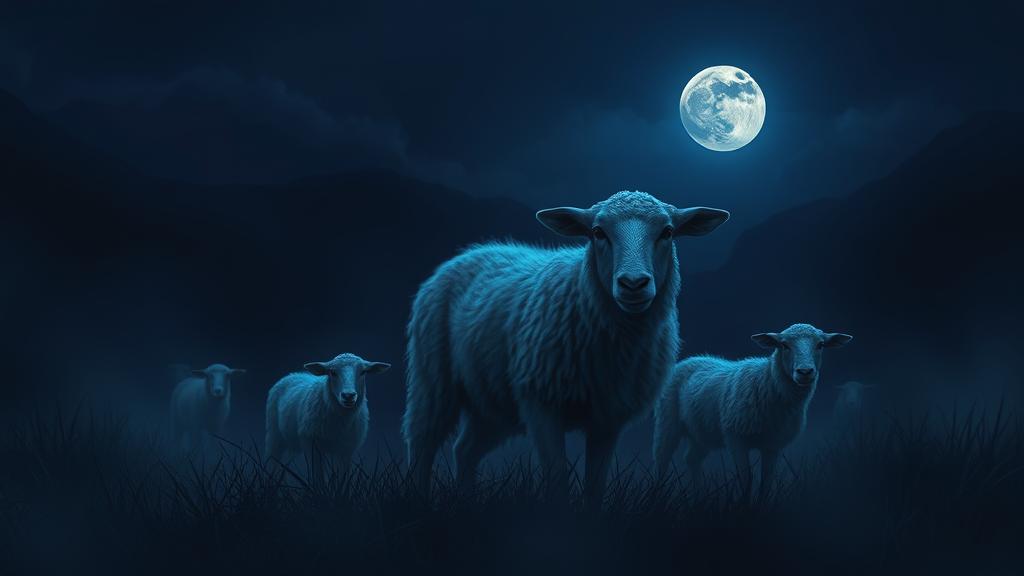
“You can always tell the ones who don’t know they’re doing it.” That’s what a shepherd said in a documentary I half-watched during a difficult week some years ago, talking about sheep that drift to the edge of the flock without registering that they’ve left. They’re not escaping. They’re just grazing, incrementally, away. And they never look up until the terrain changes.
The sheep dream lands very differently depending on whether you’re in the flock or watching it. That distinction is worth settling before anything else, because the two versions are practically different articles.
A sheep in a dream typically carries questions about belonging, conformity, and the price of fitting in. Whether you’re part of the flock or apart from it, and whether that feels safe or suffocating, is usually where the meaning lives.
A very long history of reading this animal
- ~1200 BC
The Chester Beatty papyrus includes animal dream readings in which domesticated animals often signal the dreamer’s household status and relationship to collective life. Sheep, as the era’s most managed animal, carried weight about provision and community standing.
- 2nd century
Artemidorus, in the Oneirocritica, treats sheep as linked to the flock and its shepherd, reading the dreamer’s relationship to authority and collective belonging. A stray sheep was a specific omen about departure from established order.
- 1964
Jung’s Man and His Symbols codifies the idea that domesticated animals in dreams often represent parts of the self that have been tamed for social function. The sheep is, in his framework, the shadow-cousin of the wolf: not wild, but shaped entirely by the necessity of being managed.
- Mid-20th c.
The continuity hypothesis, developed through decades of dream research, finds that animal dreams tend to reflect the dreamer’s waking social anxieties. Sheep dreams cluster around periods of social pressure, group belonging, and conformity conflicts.
- Now
Modern threat-simulation theory (Revonsuo) frames some animal dreams as rehearsal for social dangers, not just physical ones. Being separated from a herd, or being in a herd that moves as one body while you don’t, turns out to be a potent version of social threat.
The flock as a thing you’re in or watching
When you’re inside the flock in the dream, the dominant feeling is usually either comfort or claustrophobia. The comfort version, the warm press of bodies, the sense that the direction is already decided, often arrives during periods of genuine exhaustion. You don’t want to lead. You don’t want to dissent. You just want to be carried somewhere by a group that knows where it’s going. That’s not weakness; that’s a real human need, and the dream is acknowledging it without judgment.
The claustrophobia version is harder to sit with. You’re in the flock but you can’t stop moving with it. You didn’t choose this direction. The speed isn’t yours. And the density of other bodies isn’t comforting, it’s pressing. Jung would say something in you is recognizing the cost of the domesticated life, the version of self that was shaped entirely around function and fit.
Outside the flock
Watching the flock from outside it has its own distinct quality. Sometimes it’s peaceful, a field of movement you have no part in, and the distance feels chosen and clean. Other times there’s a subtle wrongness to it, the flock is going somewhere and you’ve been left behind, or you’ve wandered off without noticing, like the shepherd’s observation about sheep that drift incrementally to the edge.
That’s the version worth pausing on. Not the dramatic departure. The slow, grazing drift. If the dream had that quality, it’s worth asking whether something in your waking life has been quietly moving away from a group, a community, a shared project, without you fully registering it. Not as a crisis. Just as a fact that hasn’t been spoken.
The one sheep that isn’t the others
Almost everyone who tells me about a sheep dream mentions one sheep that was different. A black one. One that was standing still while the rest moved. One that turned and walked toward them when all the others faced away. I’m honestly uncertain whether this is a real pattern or whether people notice the outlier because the outlier is always what’s interesting.
What I do think is that the standout sheep in a dream is the shadow figure of this particular symbol. If the flock represents conformity and the safety of agreement, the one that doesn’t conform is carrying everything the flock has agreed not to carry. Whether you are that sheep, or whether it was approaching you, changes the reading. Being the outlier sheep is often about feeling at odds with a group in waking life, but being approached by the outlier sheep is more interesting. Something that doesn’t fit the agreed-upon shape of things is making contact. Artemidorus would have read that as a crossing of boundaries; I’d say it’s more like a suppressed part of your own position trying to get your attention.
Back to the drift
I’ve thought about that documentary observation more than I expected to. The ones who don’t know they’re doing it. Most conformity isn’t chosen, and most departures from it aren’t either. The sheep dream, in its most honest version, is asking where you are in relation to the groups that organize your life, not in a political sense but in a daily, practical, who-am-I-moving-with sense. And whether the answer is reassuring or unsettling is information worth having.
Dreams about other animals at the edges of a flock’s world can round out this reading. Dreaming of vermin often surfaces when something in the collective space feels contaminated or unwelcome. The dreaming of a white horse piece explores the same belonging-versus-freedom axis but through a symbol with much more obvious power behind it. And if your dream had a quality of something beautiful and separate watching the ordinary animals from a distance, dreaming of a peacock touches that register directly.
I’ve never dreamed of sheep myself, which I mention only because it gives me a certain distance from the symbol. I can’t feel my way into it from the inside. What I can say is that the people who describe these dreams tend to be in the middle of something quiet and significant, some slow drift, some question about fit, some unspoken friction with how things are arranged. The sheep is rarely urgent. It’s just insistent.
- Were you inside the flock or watching it, and how did that feel?
- Was there one sheep that was different from the others? Did it approach you or turn away?
- In waking life, is there a group whose direction I’ve been following without fully choosing it?
- Have I been drifting incrementally away from something without quite noticing?
One symbol, two traditions
The disagreement is honest: one school sees sheep as self-communication, the other as an image to be discerned against Scripture. They can inform each other, but they do not merge.
Sheep in dreams ask a quiet question about conformity and comfort. Are you part of the flock, or watching it from the outside? Here's what the dream means.
You are reading this oneSheep appear more often in the Bible than almost any other animal. Here's what Scripture actually says , and where it's honest about limits , for your dream.
Read the full biblical meaning →Quick answers
What does it mean to dream of a sheep?
Sheep in dreams are fundamentally about collective belonging. Whether you’re part of the flock or separate from it, whether the movement feels chosen or not, tends to be where the meaning concentrates. It’s less about the animal and more about your position relative to it.
Is dreaming of a sheep a good sign?
Often yes, particularly when the flock is calm and you’re at ease within it. It can point to legitimate comfort in belonging, safety in shared direction. It becomes more complicated when you’re being carried by the group rather than choosing to be in it.
What does a black sheep in a dream mean?
The outlier is usually the shadow figure in this symbol’s field: whatever the group has decided not to carry, it holds. If it was you, you may be feeling at odds with a collective. If it approached you, something non-conforming is trying to get your attention.
Why do I keep dreaming of sheep?
Recurring sheep dreams tend to surface during sustained social pressure, periods where the question of whether to fit in or not hasn’t been settled. They can also reflect a slow drift from a group or position that you haven’t yet named to yourself.