Animal Dreams
Dreaming of a Peacock: Vanity, Display, and the Self on Show
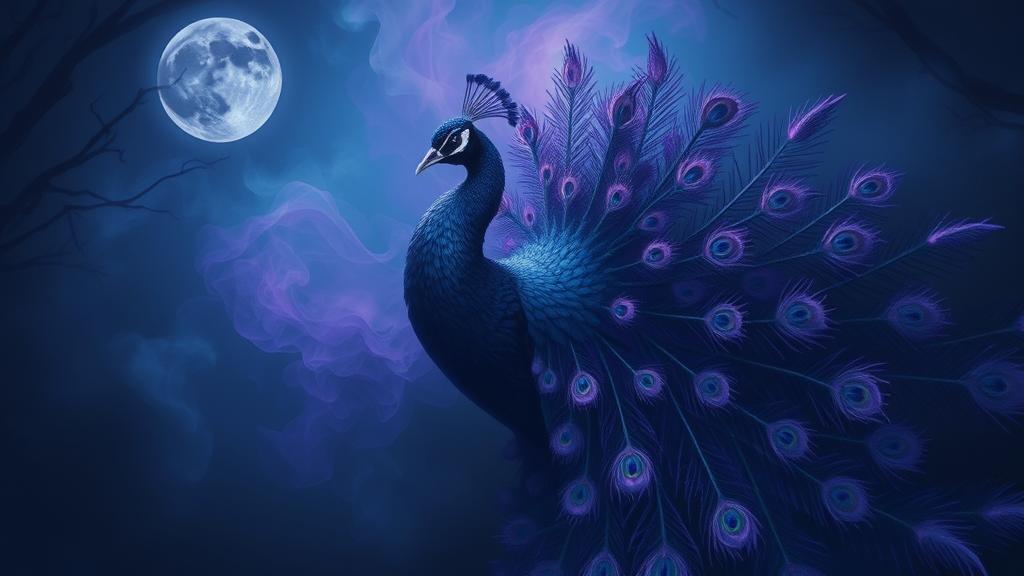
Peacocks scream. That’s the thing nobody tells you before they see one at a wildlife park or botanical garden. You expect that slow, heraldic walk and the tail fanned wide in silence. What you get is a sound like a child calling for help from somewhere very far away. The first time I heard it I turned around in a full circle looking for the emergency. There wasn’t one. The bird was fine. It was just announcing itself.
That shriek is what I think of whenever someone tells me they dreamed of a peacock. Not the tail. The announcement. Because that’s what this dream is almost always carrying: the part of you that needs to be seen, which is not the same thing as vanity, though people get those two confused constantly.
A peacock in a dream points to visibility, performance, and the version of yourself you put forward for others. The tail on display asks whose attention you’re seeking and whether the display is costing you something. Closed tail or a bird simply walking: the performance is either over or hasn’t started.
What the display is really about
The tail is the obvious part, and it’s a genuine symbol worth thinking about. But the tail is also the trap. People get so focused on the feathers, the iridescence, the specific beauty of the thing, that they skip past the question underneath: who’s watching? A peacock doesn’t fan its tail into an empty field. The display is always for someone. Your dreaming mind knows this.
Carl Jung wrote about the shadow, the parts of ourselves we push out of view to maintain the face we prefer. The peacock dream can work in both directions. Sometimes the bird is you performing something true, a genuine capacity that you haven’t let be visible yet in your waking life. Sometimes it’s you performing something hollow, maintaining appearances for an audience that may not even be watching anymore. The dream rarely tells you which. That’s your job.
Jung would also note that the tail’s eyes, those hundreds of watching circles, carry their own charge. Something with that many eyes is aware of itself in every direction. It’s not an entirely comfortable image when you sit with it.
The display is underway and you’re the audience. This is your mind showing you what you actually find impressive or enviable, which is worth knowing.
You’re in performance mode in some area of waking life. The question isn’t whether the display is beautiful. It’s whether it’s costing you something real.
The announcement is over or hasn’t started. Often arrives when someone has just stopped trying to impress someone else, or is on the verge of it.
A performance that’s lost its force. Something you’ve been presenting about yourself no longer holds the way it did, and part of you knows it.
The announcement itself, stripped of the visual. Someone or something is demanding to be noticed by you, possibly you.
Across cultures, the bird keeps its complexity
Artemidorus, working in the second century with more pragmatism than poetry, read peacocks as auspicious for actors and performers and somewhat ambivalent for everyone else. His reasoning was direct: a bird that exists to be watched belongs to the world of those who are watched. For a farmer, a peacock in a dream just meant something showy and possibly useless was about to enter his life. I find that reading more useful than it might appear.
In Hindu iconography the peacock carries Kartikeya and stands against the serpent, a bird of both beauty and fierce purpose. In Persian poetry it’s the king of birds, but one whose vanity caused its exile from paradise, depending on which version you read. The feathers have been omens of luck and omens of the evil eye in different European traditions, sometimes within the same country. The symbol is genuinely ambivalent. Don’t let anyone tell you it has a single clean meaning.
The tail on the wall
Brutally short section, because this part doesn’t need elaboration: if you dreamed of peacock feathers displayed in a house, decorating a room, you’re dreaming about a performance that has become permanent decor. Something that was once alive and displaying is now just… framed. Worth checking whether that’s a relief or a loss.
When it keeps coming back
A recurring peacock dream tends to map onto a recurring pressure in waking life. Antti Revonsuo’s threat simulation work suggests that dreams rehearse what feels genuinely important to navigate. Being seen, or failing to be seen, or being seen as something you’re not: these are real social stakes, and the dreaming mind treats them seriously. I think that’s right. The peacock isn’t a frivolous image. It’s an image about one of the most human things there is.
What I’ve noticed is that the dream often changes when the person changes their relationship to the performance, not when they perform better. Letting the tail down, in the metaphorical sense, tends to retire this dream more reliably than working harder at the display. You can also find related territory in dreaming of a lynx, which deals with watching without being watched, an interesting inversion. And if your peacock dream came with other animals nearby, the piece on an animal transforming may add a layer.
I still think about that scream. The tail gets all the attention, but the scream is the honest part: the bird announcing its own existence at full volume to anyone within range, beautiful and also a little desperate, a little too loud. Most of us know that feeling from the inside.
- Was the tail fanned for me, or was I the one displaying? That determines who’s seeking what.
- Who was in the audience, if anyone? Known faces or strangers changes the reading significantly.
- Is the display in my waking life costing me something I’m not accounting for?
- What would change if I simply stopped performing that particular thing?
One symbol, two traditions
Psychology keeps peacock inside your own story, a symbol your mind built from your days. The biblical tradition looks outward instead, and asks whether Scripture gives the image any voice at all.
A peacock in a dream almost never means what people expect. It's less about pride and more about what you're performing, and for whom. Here's what the display really points to.
You are reading this oneWhat does the Bible actually say about peacocks? Surprisingly little. Here's what Scripture does say, what it doesn't, and how to read a peacock dream honestly.
Read the full biblical meaning →Quick answers
What does dreaming of a peacock mean?
It almost always points to visibility and performance: the version of yourself you put forward for others, the need to be seen, or anxiety about how you’re being perceived. The tail on display is your mind making that dynamic literal. Whether it reads positively or cautiously depends on how the display felt in the dream.
Is a peacock dream a good omen?
Traditions disagree widely on this. Artemidorus thought it favorable for performers and ambivalent for others. In some cultures the feathers are lucky; in others they’re unlucky indoors. Psychologically, the more useful question is whether the display felt true or hollow, because that feeling tends to map accurately onto what’s happening in waking life.
What does it mean to be the peacock in a dream?
You’re in some form of performance mode, presenting something about yourself to an audience you care about. That’s not automatically negative. It may be that something genuine in you is finally getting to be visible. But if the display felt effortful or anxious, your mind may be flagging that the cost of maintaining the performance is getting high.
Why do I keep dreaming about a peacock?
Recurring peacock dreams usually track a recurring pressure around being seen or evaluated. If the social stakes around visibility haven’t shifted in waking life, the image tends to return. What tends to change the dream isn’t performing better but changing your relationship to the performance itself.