Animal Dreams
Dreaming of a Snake: which fear is it wearing?
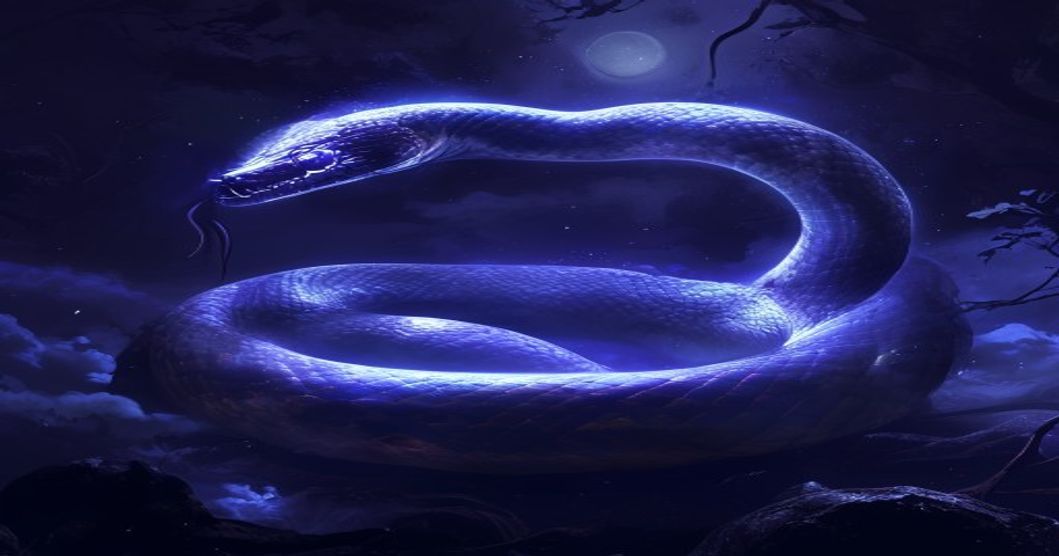
Why is it always so still? That’s what I keep coming back to. In almost every snake dream I’ve heard described, the snake isn’t chasing anyone. It’s coiled in a corner, threaded through grass, lying across a path. Waiting, or just existing. And the dreamer wakes up with a heart rate that makes no sense for having watched something sit motionless.
The snake dream is probably the most reported animal dream there is, and it gets that status not through drama but through atmosphere. You didn’t get bitten. Nothing happened. It was just there, and here you are at seven in the morning unable to stop thinking about it.
A snake in a dream rarely means literal danger. It almost always stands for something in your life that is powerful, cold-blooded in the best sense (operating without drama), and either threatening or transformative depending on your relationship to it. The stillness in most snake dreams is intentional: the symbol is asking you to look, not run.
The path it was lying across
I got my first real understanding of snake dreams from a colleague’s description, not from any book. She’d dreamed of a snake coiled directly in her front doorway. She couldn’t leave and she couldn’t move it. She stood there in the dream for what felt like a long time. She woke up shaking, was fine by noon, and three weeks later handed in her resignation from a job she’d stayed in four years too long. She didn’t connect the two things at the time. I did, because I’ve heard enough versions of that dream to recognise the shape.
The snake on the path, in the doorway, blocking the route: this is probably the most common variant, and it almost always points to a decision that’s been avoided. Not a bad decision or a good one. Just one that’s been lying there, patient as a reptile, while you found reasons to walk around it. The snake is rarely hostile in these dreams. It’s simply impassable. Your dreaming mind doesn’t need to dramatise. It just puts the thing you’re not doing squarely in front of you and waits.
Artemidorus, who spent the second century cataloguing the dream symbols of the ancient Mediterranean world with an almost comic thoroughness, treated the snake as an ambivalent figure: sometimes enemy, sometimes physician, almost always a force that exceeds ordinary life. He was working with a different cosmology than we are, but his structural instinct holds. The snake sits outside the categories. It’s neither tame nor exactly wild. It operates by its own rules, like something governed by older laws. If you’ve also been dreaming of an animal that’s wounded, pay attention to how the two figures relate in your inner landscape.
What four traditions made of it
| Tradition | How it reads the symbol |
|---|---|
| Ancient Greece | Snakes wound the staff of Asclepius, the god of healing. Dreaming of one in a temple of Asclepius was considered a medical consultation from the god himself. Threat and cure were the same figure. |
| Ancient Egypt | The Chester Beatty papyrus (~1200 BC) treats snake dreams as messages from outside ordinary time. A cobra in a dream was serious: proximity to divine power, which could protect or destroy. |
| Ibn Sirin tradition | The medieval Islamic dream interpreter Ibn Sirin read snakes as enemies, but specifically ones who operate quietly and close to home. The more domestic the setting, the more personal the adversary. |
| Kundalini (Hindu/yogic) | The coiled serpent at the base of the spine is dormant energy waiting to rise. A snake dream in this framework is less about threat and more about potential: something has begun to stir that will change you. |
What’s striking is how consistently snakes carry opposing meanings simultaneously. The same figure is poison and antidote, enemy and physician, obstacle and rising energy. That’s not confusion in the symbol system. That’s accuracy. Most of the things we most need to face in our lives have exactly that double quality: the conversation you’re afraid to have, the change you’ve been resisting. They look like threats from one angle and like medicine from the other.
The bite, the colour, the number
When the snake bites in a dream, the dream has moved from warning to reckoning. Revonsuo’s threat simulation theory, which I find genuinely useful as a framework even if I don’t follow every implication, suggests that the dreaming brain rehearses danger responses. A snake bite in a dream often corresponds to the moment a waking-life thing finally landed, whatever you’d been bracing for actually arriving. The pain in the dream tends to correlate with how long the avoidance has been going on.
Colour shifts the register rather than replacing the core meaning. A green snake tends to carry a more natural, organic quality, something growing in places you haven’t been tending. Black reads as unknown, as a force you haven’t yet seen clearly. A white snake is genuinely unusual in dream reports, and tends to carry something that feels almost sacred, outside the ordinary rules. Red is urgency, the same vital energy you’d find in certain birds that arrive with weight. Multiple snakes is its own reading: when the path is full of them, the dream is usually about an environment rather than a specific decision. Something is saturating your life, not blocking it.
Jung treated the snake as one of the oldest symbols of the unconscious itself: the thing that moves below the surface of the water, in the basement of the house, in the long grass. He wasn’t talking about something malevolent. He was talking about something that lives at a depth you don’t visit often. I’m sceptical of applying Jungian readings mechanically, but on the snake, the model does capture something real about why these dreams feel both alien and deeply familiar. You’re meeting something that’s been there the whole time.
Why it keeps coming back
Recurring snake dreams are some of the most persistent in the literature. The snake comes back because the path is still blocked, or because the decision hasn’t been made, or because the energy that wanted to rise hasn’t been allowed to. It’s not punishment. It’s information on a loop.
The snake usually stops appearing in roughly the same circumstances the empty room stops appearing: when the dreamer stops looking past the thing and starts looking at it. That sounds easy. For people dreaming of snakes, it rarely is. The symbol tends to attach to the exact things that are hardest to look at directly. That’s not the dream being cruel. That’s the dream being honest about the size of the thing.
If your snake dream came with a quality of long endurance, something heavy being carried across a long distance, the two images may be pointing at the same terrain from different angles.
What to do with a still snake
Not much. Don’t spend the morning googling specific colours. Don’t decide what it means before you feel what it means. Write down where the snake was. Write down whether you moved toward it or away from it, or neither. Write down what in your life right now is exactly that still, that patient, that capable of sudden movement if the conditions change.
My colleague handed in that resignation. She told me later she felt, on the day she did it, like stepping over something in a doorway. She hadn’t thought about the dream in weeks. I don’t know if the dream told her anything she didn’t already know. I think it might have just held the thing up in better light.
- Where exactly was the snake, and was it blocking something or simply present?
- Did I feel afraid of it, or was the feeling something else, maybe reluctant recognition?
- What in my waking life right now is that patient, that capable of abrupt change if pushed?
- If the snake was guarding something, what was on the other side?
One symbol, two traditions
The two schools are not reading the same book: psychology asks what snake is doing in your waking life, while the biblical tradition tests the image against Scripture and leaves the meaning with God.
Why does a snake dream stop you mid-morning and refuse to leave? Nora Vance traces the symbol across cultures and waking life to find what yours might mean.
You are reading this oneWhat the Bible actually says about snakes, from Eden to the bronze serpent, and how to read a snake dream with discernment instead of fear.
Read the full biblical meaning →Quick answers
What does dreaming of a snake mean?
Most often it stands for something in your life that’s powerful and operating quietly, either a decision you’ve been avoiding, an energy that wants to rise, or a threat you’ve been looking past. The symbol appears across almost every culture in dream interpretation, always with that double quality of danger and medicine. The feeling you wake with, and where the snake was positioned in the dream, tell you more than the snake itself.
Is dreaming of a snake a bad omen?
Dream tradition across cultures treats it as deeply ambivalent, not simply bad. The snake carries both threat and healing, obstacle and energy, in the same image. A snake that bites tends toward heavier territory than one that’s simply present. But even threatening snake dreams are usually pointing toward something real that needs facing, not predicting external misfortune.
What does it mean if a snake bites you in a dream?
Usually it means that whatever the snake represented has finally made contact. You’ve been in proximity to a difficult thing, a decision, a change, a confrontation, and the bite is the moment the avoidance ends and the reality lands. It can feel violent in the dream but people who’ve been through that version often describe waking up feeling strangely clear, even if shaken.
Why do I keep having snake dreams?
The snake recurs when what it represents hasn’t been fully looked at yet. Unlike some dream symbols that fade once you’ve named them, the snake tends to be patient and persistent. It comes back at the same threshold, waiting for the same thing. Recurring snake dreams tend to be attached to the most important unfinished business in a person’s inner life, which is both why they’re uncomfortable and why they’re worth taking seriously.