Animal Dreams
Dreaming of a Horse: freedom, will, and what carries you
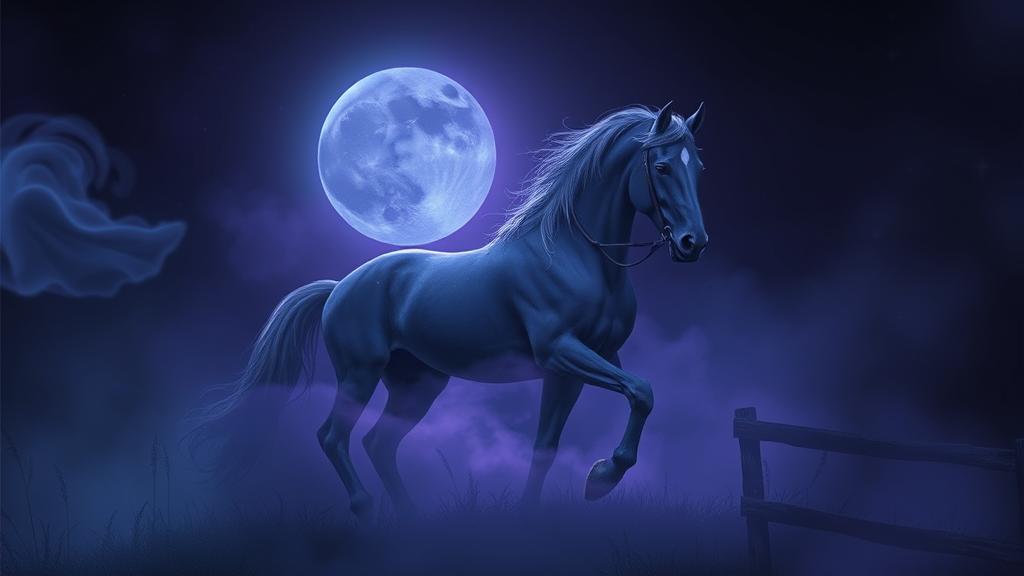
“I’m not afraid of it. It’s afraid of me. That’s why it won’t let me near.” My colleague said this about a horse in a paddock she’d stopped at on a weekend drive, and I’ve never forgotten the phrasing. Not because she was wrong, exactly, but because she might have had it exactly backwards. The horse had simply decided. It wasn’t interested. That kind of sovereignty, from an animal we spend centuries trying to own, is one of the things that makes the horse such a charged image in dreams.
I want to say up front that the horse is one of the symbols where I feel least certain. Not about the cultural history, which is long and consistent. But about what it means for any particular person, because the horse carries such different personal charge. For someone who has ridden, a horse in a dream feels completely different from the way it feels to someone who has only ever seen one through a fence. The animal comes pre-loaded with the dreamer’s own relationship to it. That matters more here than almost anywhere else.
A horse in a dream is usually about drive, freedom, or the energy that moves you through life. Whether you can ride the horse, whether it runs away or carries you willingly, and how you feel during the dream points toward your current relationship with your own momentum and will.
Reading the horse by what it does
- Notice whether you’re on the horse or watching itThis is the first and most useful distinction. On the horse, you’re in contact with whatever the horse represents: power, freedom, instinct. Watching it from outside, you’re observing that energy at a distance. Neither position is better. They’re just different questions the dream is asking.
- Notice whether the horse runs freely or is controlledA horse that gallops freely, that you simply ride or follow, tends to reflect energy moving without obstruction. A horse that won’t be caught, that throws you, or that bolts, tends to reflect energy or drive that’s outrunning your ability to direct it. The out-of-control horse is rarely about danger; it’s usually about pace.
- Notice the horse’s conditionA healthy, glossy horse carries a different reading from an exhausted or wounded one. Carl Jung wrote about the horse as a symbol of the natural, vital energies that carry the personality forward. A depleted horse tends to surface when those energies have been overused, suppressed, or simply haven’t been tended. You don’t have to love horses to feel what a limping one means.
- Notice the colorWhite horses carry the most obvious symbolic freight: purity, spiritual force, something almost unbearable in its beauty. Black horses are wilder, more instinctual. Brown or chestnut horses tend to be earthier, less mythologized. But your gut response to the color in the actual dream will be more accurate than any list I could make here.
- Notice how the dream endedDid the horse leave? Did you let it go? Did it stay near you even when it could have gone? Horses in dreams often function as a kind of energetic weather report, and the ending gives you the forecast for what comes next.
The ancient weight of the horse
Artemidorus, who catalogued animal dreams with a detail that still impresses me, gave the horse extensive treatment. He connected it to the dreamer’s rank and ambition. A beautiful, powerful horse pointed toward status and success in enterprise; a sick or injured horse suggested projects or ambitions that were faltering. He also noted something that feels psychologically modern: that a horse that throws its rider indicates a loss of control over something the dreamer thought they managed. The horse and the rider were a system. You couldn’t read one without the other.
When the horse refuses
A horse that won’t come, won’t be mounted, or walks away: Antti Revonsuo’s threat-simulation model is less useful here because refusal isn’t threat. What it is, I think, is the dream’s way of dramatizing a specific feeling: that the energy or momentum you need isn’t available to you right now, or isn’t cooperating, or has its own sovereignty the way my colleague’s paddock horse did. The animal that won’t let you near. Maybe it’s afraid of something in you. Maybe it’s just decided. The dream doesn’t always tell you which.
The piece on dreaming of a white horse goes deeper into that specific color’s symbolic register, which is distinct enough to deserve its own treatment. And if the horse appeared in a herd or alongside other horses rather than alone, dreaming of a herd explores what happens when the image becomes collective rather than individual.
What carrying actually costs
Here’s what I keep coming back to. We say a horse carries you. We don’t usually think about what that asks of the animal. And I think some horse dreams are less about the freedom-and-power register and more about that specific question: what is carrying me right now, and what is it costing? A person, a habit, a belief about yourself. Something running underneath the visible life, doing the work of transport, and maybe getting tired.
My colleague’s paddock horse never did let her near. She went back to the car, a little offended, and we drove on. I don’t know what the horse had decided, but it had clearly decided. And looking back, that feels right for this symbol: the horse that has its own mind about whether it wants to carry what’s being asked of it. If you dreamed of a peacock instead and want to explore what wild beauty looks like when it performs itself rather than withdrawing, the piece on dreaming of a peacock covers that particular register.
- Was I on the horse or watching it? How close or far did I feel from that energy?
- Was the horse willing or refusing? Freely running or struggling?
- What in my waking life carries me forward, and is it still able to do that?
- Did the horse feel like something I owned, something I shared, or something that was entirely its own?
One symbol, two traditions
The disagreement is honest: one school sees horse as self-communication, the other as an image to be discerned against Scripture. They can inform each other, but they do not merge.
Horses in dreams carry more symbolic freight than almost any other animal. Nora Vance on what the horse is really asking about drive, freedom, and the difference between riding and being ridden.
You are reading this oneHorses gallop through biblical prophecy, war poetry, and apocalyptic vision. Here's what Scripture actually says , and where it's quiet , about horses in dreams.
Read the full biblical meaning →Quick answers
What does it mean to dream of a horse?
A horse in a dream usually represents drive, freedom, or the energy that moves you through life. Whether you can ride the horse, and whether it cooperates or refuses, points toward your current relationship with your own momentum. A willing horse often reflects a period when your energy and direction are aligned; a horse that bolts or refuses often reflects the opposite.
What does it mean to dream of riding a horse?
Riding a horse that moves willingly under you is generally a positive image: a sense of being in contact with your own drive, and of that drive going somewhere useful. If the riding is difficult, the horse keeps throwing you or changing direction, the dream is usually about a loss of control over your own pace or ambitions.
What does a black horse mean in a dream?
Black horses tend to carry the wilder, more instinctual register of the symbol. Less associated with spiritual or heroic force and more with the raw energy that exists before it’s been named or directed. A black horse that runs freely can feel exhilarating; one that charges at you tends to reflect an instinctual drive that feels ungovernable.
Why do I keep dreaming about horses if I’ve never ridden one?
The horse doesn’t require personal experience to operate as a symbol. Its cultural and psychological freight, freedom, power, the relationship between will and momentum, is so pervasive that the mind uses it freely. What you bring to it is your intuitive response to the animal in the dream, and that’s usually more accurate than any dictionary definition.