Animal Dreams
Dreaming of a Tuna: abundance, depth, and the weight of plenty
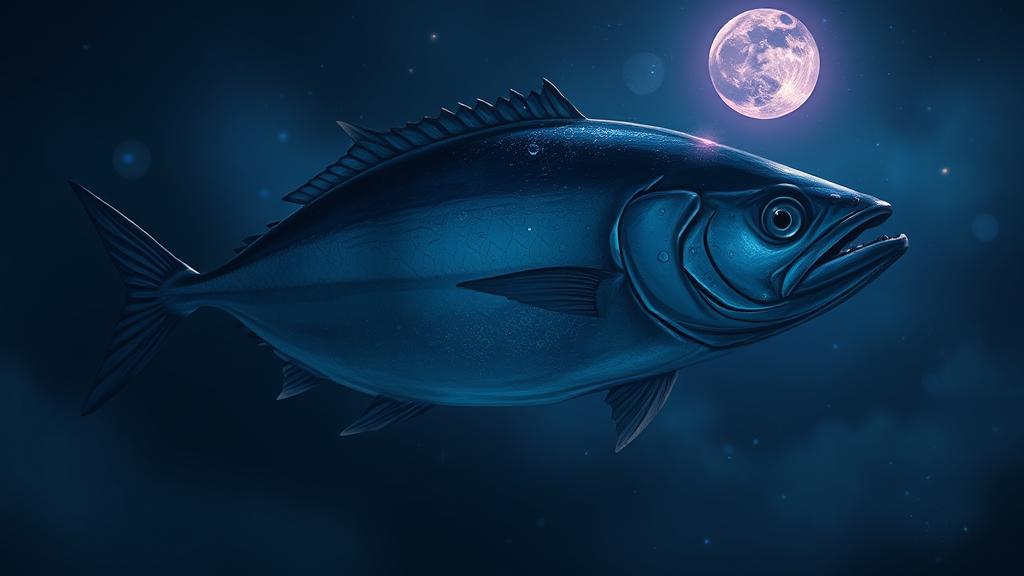
My clearest memory of fish is not a dream. It’s a fish market at six in the morning, the kind of place where the floor is wet before the sun’s up, and the tuna are laid out whole on ice, each one longer than my arm. The scale of them. The stillness. Something that large, out of its element, lit by fluorescents, still looks oceanic. I remember thinking: whatever those were in the water, they weren’t food yet. They were something else.
That quality, the something-else quality of a creature whose real scale you only understand when it’s stilled, is exactly what tuna dreams tend to carry.
What a tuna means in a dream
The tuna isn’t a common dream animal the way dogs or snakes are. When it shows up, it tends to arrive with weight. Not threat exactly, just gravity. It’s a creature of deep water and long distance, built for open ocean. In dreams, fish in general tend to represent what moves below the surface of conscious life, but a tuna is a specific kind of fish. It doesn’t hide in coral. It crosses whole oceans. The tuna dream is almost always about something in motion at a scale larger than your current view.
A tuna in a dream usually signals abundance, something large moving in your life below the surface, or the particular feeling of potential that hasn’t yet been brought to shore. The depth the tuna came from matters as much as the fish.
How the image has been read across time
- Ancient Mediterranean
Large fish in dreams, including tuna, were consistently read as signs of abundance and good fortune, particularly for fishing communities and merchants. Artemidorus treated a large catch as a favorable omen for those in trade.
- Medieval Islamic tradition
Ibn Sirin’s tradition read fish from deep water as signs of hidden knowledge or wealth not yet surfaced. A tuna specifically, being a traveler of open water, carried associations with distant prosperity.
- 19th century onward
As depth psychology developed, fish in dreams became linked to the unconscious itself. Jung treated them as symbols of what moves below the threshold of awareness, the thing felt but not yet named.
- Contemporary interpretation
Modern researchers like Domhoff note that fish dreams often cluster around transitions and periods of uncertainty. The specific quality of the fish, its size, its behavior, tends to mirror the scale of whatever is in motion in the dreamer’s life.
The depth it came from
Here’s the part that interests me most: in almost every account of tuna dreams I’ve read or heard, the dreamer notices the water as much as the fish. Whether the tuna is swimming away into darkness, circling below a boat, or lying still in water you can almost see through, the relationship between the fish and the depth it inhabits is the real image. The tuna doesn’t make sense without the ocean. And the ocean in dreams, almost universally, is emotion. Not neat, manageable feeling. The unbounded kind.
Jung would have called this the unconscious proper, not the personal layer but the collective depths. I’m honestly uncertain how far that framework needs to go to be useful; I think you can use it lightly. What moves in the deep water of your current life that you haven’t brought to the surface yet? A desire, a grief, a decision that’s been swimming around below your daily thinking. The tuna is often just that, the form your mind gave to something large that’s been moving for a while.
Catching versus watching
Whether you catch the tuna or just watch it matters quite a bit. Artemidorus was clear that a fish caught was different from a fish glimpsed, and that distinction has held. A tuna you pull from the water is something brought to clarity, abundance made actual, potential realized. A tuna you watch disappear into dark water is still potential, still swimming, not yours yet. Neither is better. They’re just different stages of the same thing.
Revonsuo’s threat simulation theory is less obviously useful here, since the tuna isn’t typically a threat animal. But his broader point, that dreams rehearse our relationship to things we haven’t fully processed yet, still applies. The tuna dream is less about threat rehearsal and more about scale rehearsal: your mind is working out what it would feel like to hold something that large.
When the tuna is dead
A dead tuna, like the one on the ice in my memory, is a different dream. It’s still powerful, still large, but it’s been brought out of its element. That can mean an opportunity that passed, or it can mean something large in your life that’s been made small and manageable by circumstance. The scale is still visible. The motion is gone. For the related territory of what fish symbolize when they’ve already stopped moving, the piece on dreaming of a dead fish goes into that more specifically.
And if the tuna dream felt less about the fish and more about what it means to encounter something wild that’s been brought to stillness, the dreaming of a tamed wild animal piece covers that particular feeling of something large made manageable, and what it costs.
I went back to that fish market years later, and it was closed. The building was something else. I stood there for a moment trying to locate it, that particular quality of scale-before-daylight, and couldn’t. Which might be the other thing tuna dreams carry: the feeling of abundance that existed, that was real, that you stood in front of once and didn’t quite know what to do with. Not all of it is still accessible. Some of it swam on.
- Was the tuna moving or still? That shift tells you whether the abundance is in motion or arrived.
- Could I see the depth it came from, or only the fish?
- Did I catch it, watch it, or was it already out of the water?
- What’s currently moving in my life at a scale I haven’t fully looked at?
Quick answers
What does dreaming of a tuna mean?
Tuna dreams usually point to abundance, to something large moving below the surface of your conscious life, or to potential that hasn’t been brought to shore yet. The depth the tuna inhabits in the dream tells you as much as the fish itself.
Is a tuna dream a good sign?
Generally yes, especially in older traditions. Artemidorus and the Islamic dream tradition both read large fish from deep water as favorable signs. The specific quality of the dream matters, though: a tuna swimming powerfully is different from one lying still.
What does it mean to catch a tuna in a dream?
Catching it usually means bringing something to clarity or realization. An opportunity made actual, a potential realized. It’s one of the more straightforwardly positive fish-dream scenarios.
What does a dead tuna in a dream mean?
Something large has been stilled. It might mean an opportunity that passed, or something that was once alive with energy in your life that’s now been brought out of its element. The size of the fish still matters: the scale of what you lost is visible in the dream.