Animal Dreams
Dreaming of a Salmon: What It Actually Means
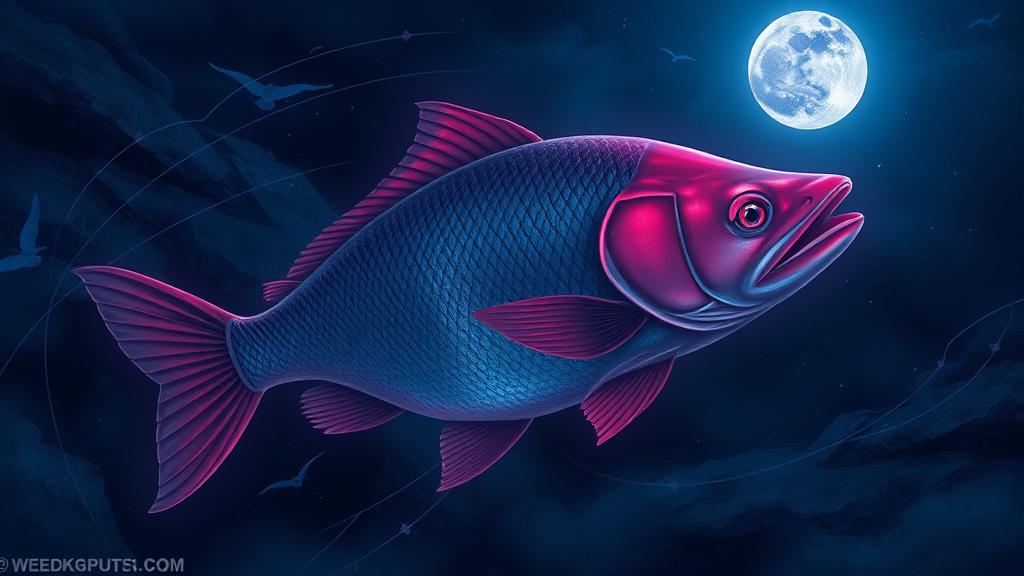
The fish counter at the market near my first apartment was cold enough that you could feel it from three stalls away. I’d walk past it every Saturday without stopping, watching the salmon laid out in rows, all that bright flesh pointed in the same direction. They looked purposeful even dead. I didn’t think about them consciously, but they stayed somewhere.
Salmon show up in dreams more often than you’d expect for a creature most of us only encounter on a plate or in a documentary. When they come, they’re rarely background. The dreamer watches one, or follows one, or holds one, or loses one into dark water. The fish doesn’t sit still. That restlessness is the whole story.
A salmon in a dream usually signals driven effort, a goal with real cost attached, or a pull toward origins. Whether that’s hopeful or exhausting depends entirely on whether the fish is moving upstream or has stopped.
What a salmon is doing in your dream
Most dream fish are ambient. A salmon is almost never ambient. What sets it apart from a generic fish dream is the salmon’s specific biography in our collective imagination: the run, the current, the whole against-the-odds trajectory. Almost everyone who dreams of one reports a salmon that’s going somewhere. The movement is the message.
If the fish is surging upstream, your sleeping mind is probably dramatizing effort you’re already making in waking life. Something you’re working toward that requires going against the current. A project, a relationship repair, a career shift, a physical challenge. The salmon doesn’t ask whether the effort is worth it. It just shows you the effort in its most stripped-back form: muscle against water.
If the fish is still, or drifting, or has already beached itself, the dream tips toward the other reading. Spent effort. Something you pushed hard for that has now reached its end point. Not necessarily failure. Salmon reach their destination and stop moving. That’s completion, which can feel like exhaustion from the inside.
Going upstream
The salmon is mid-run, fighting current. This tends to reflect active effort in waking life: something demanding, ongoing, that you haven’t resolved. The emotional tone tells you whether the effort feels sustainable or punishing. Swimming easily reads differently than thrashing.
Arrived or still
The fish has reached its goal, or it’s drifting without direction. This can point to a project completed (and the odd emptiness after), to momentum lost, or to something you started pursuing that no longer pulls you the way it once did. Worth sitting with.
The fish you couldn’t hold
A significant number of salmon dreams involve catching the fish, or almost catching it, or holding it and watching it slip back into water. I’d argue this variant is doing something different from the upstream dream. It’s not about effort. It’s about grasp.
Something you want, something you nearly had, something you had and let go of. Jung’s framework for dream symbolism placed enormous weight on the instinctual life, on the parts of ourselves that are slippery and cold and refuse to be domesticated. A fish that won’t stay in your hands is a classic image of something psychic that resists being pinned down and turned useful. An insight. An emotion. A part of your own character that keeps diving back into the deep. I’m aware that reads as fairly abstract, but when dreamers describe the feeling of losing the fish, they’re almost never just describing a fishing trip. There’s a pang to it.
Catch-and-hold, though, is its own register entirely. A salmon resting in your cupped hands, alive, is one of the stranger dream images because it requires so much stillness from the dreamer. Something wild, choosing to stay. That one tends to arrive during moments of surprising grace in waking life.
What old sources made of it
Artemidorus, writing in the second century, classified fish dreams partly by whether the fish was caught or escaped, partly by the quality of the water. His system is rigid and doesn’t map cleanly onto modern dreamers, but he understood something that gets lost in most pop-psychology interpretations: the condition of the fish matters. A vivid, leaping salmon reads differently than a pale, sluggish one. I’d accept that part without the rest of his scaffolding.
Antti Revonsuo’s threat simulation theory argues that many animals in dreams trace back to ancient threat categories, that our brains rehearse responses to creatures that once mattered for survival. A salmon doesn’t quite fit the predator mold, but it does fit the prey-that-got-away model, the rehearsal of a loss that cost you something. That framing accounts for the low-grade grief in the slipping-away dreams, even when the dreamer can’t articulate why losing a fish felt so significant.
What neither framework covers is the return. Because salmon dreams, when they’re vivid enough to stay, often carry a sense that the fish came from somewhere specific and is going back there. That origin-pull is probably the image your mind needs for something in your own life that has roots: a place, a family story, a self you set aside. The counter at that market near my old apartment, those fish laid out pointing in the same direction. I didn’t understand at the time that they were all aimed the same way. You don’t always know until later what direction you’ve been pointed.
Carrying the salmon
A short note on color, because it keeps coming up: the bright red-orange of a spawning salmon is striking enough that dreamers mention it specifically. If your salmon was that vivid, lurid almost, the color probably matters more than any interpretive category I’ve given you. Something alive and vivid and near its end at the same time. That’s its own kind of image.
If you want to explore the broader territory of animal dreams, the piece on dreaming of bees covers effort and collective drive in a different register, and dreaming of a talking cat gets at the slippery-inner-voice quality I was gesturing at with Jung above. For something closer to the shadow end of aquatic symbolism, dreaming of vermin is worth a look, though it pulls in a much darker direction.
I still don’t buy fish at markets. The cold air still stops me for a second. I don’t think that’s particularly meaningful. But I notice it, and noticing is usually where these things start.
- Was the salmon moving, still, or fading? That direction tells you something about where your effort currently is.
- Did you catch it, lose it, or just watch? The relationship to the fish is the relationship to the thing it represents.
- What current is your waking life asking you to swim against right now?
- Is there something you’re doing from old roots, from origin, rather than from choice?
Quick answers
What does dreaming of a salmon mean?
A salmon in a dream usually points to driven effort, a goal with real cost attached, or a pull toward origins and roots. The fish moving upstream suggests you’re working hard against resistance in waking life. A still or drifting salmon often marks the end of a major effort, which can feel like emptiness even when it was a success.
Is a salmon dream a good sign?
Generally yes, though it depends on condition. A surging salmon is almost always a sign of purposeful energy. A salmon that’s been caught or is bright and vivid tends to feel hopeful. A drifting or pale one might be asking whether your momentum has stalled somewhere.
What does it mean to catch a salmon in a dream?
Catching a salmon, especially holding it alive, tends to represent grasping something you’ve been reaching for. Losing it back into the water, which is just as common, often reflects something just out of reach: an insight, an opportunity, or a part of yourself that keeps slipping from conscious view.
Why does the salmon keep appearing in my dreams?
Recurring salmon dreams usually track ongoing effort. If you’re in a sustained push toward something demanding, the dream tends to continue until the situation resolves, or until you stop pushing. Sometimes the repetition is the dream pointing at something you haven’t quite named yet about where you’re going and why.