Animal Dreams
Dreaming of a Fish: What Your Mind Is Circling
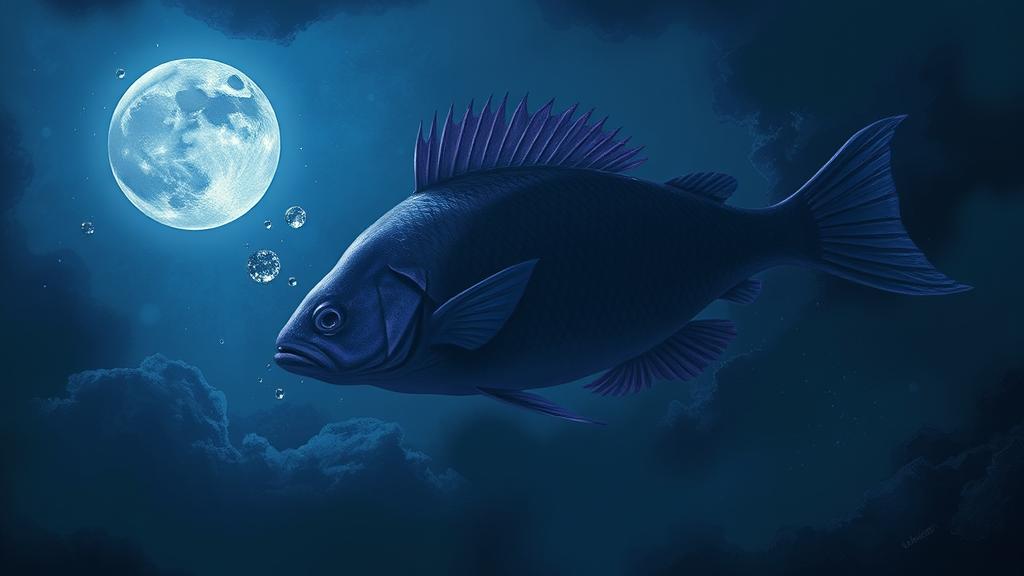
I’ve never fully trusted waiting rooms with fish tanks. There’s something about the way a fish circles the same arc of glass again and again while the humans around it shuffle magazines, flip phones, say nothing. The fish doesn’t know it’s being watched. It’s just moving through the only space it has. I’ve sat in enough of those rooms to have that specific motion filed away in some corner of my memory, available for dreams.
Confession: when a dreamer emails me saying they dreamed of fish, my first question is boring. Not symbolic, not cross-cultural. Just: was the fish in water? You’d be surprised how often the answer is no. Fish out of water, fish on a table, fish in hands, fish flopping on a kitchen floor. The location changes everything, and most interpretive guides gloss straight past it.
A fish in a dream tends to represent something moving beneath the surface of your conscious life: an emotion, an idea, or a part of yourself that you’ve only partly seen. Whether it’s healthy, trapped, or dying shapes the whole reading.
What water has to do with it
A fish in clear water, moving freely, is one of the more unambiguously positive images the dream world produces. Something in you is in its right environment. Whatever this fish represents, and that’s usually an emotion or an intuition or a creative tendency, it has what it needs. You might not even remember the dream as significant. Those often evaporate at breakfast.
Murky water is different. The fish is there but you can only sense it. You can’t quite see what’s under the surface. Most people know this feeling from waking life without ever needing a fish to demonstrate it: something is going on emotionally, or something is developing, and it hasn’t broken the surface yet. The dream is just honest about where things stand.
A fish out of water is where the interpretive terrain gets uncomfortable. Whatever this thing is, it’s in the wrong environment. Out of place. Struggling to function. The dreamer sometimes feels guilt about it, which is interesting. You didn’t remove the fish. But you’re watching it, and that watching feels like responsibility.
What cultures have made of this for a long time
| Tradition | How it reads the symbol |
|---|---|
| Ancient Egypt | Fish were associated with the god Osiris and with transformation through water. The Chester Beatty papyrus, dating to roughly 1200 BC, includes dream records in which fish signal both abundance and hidden knowledge. |
| Ancient Greece | Artemidorus devoted considerable attention to fish in the Oneirocritica, distinguishing between wild fish (instinct, nature) and kept fish (something contained or controlled). A leaping fish was a sign of vitality; a dead fish tended toward loss. |
| Jungian tradition | Jung treated water as the unconscious and fish as contents of the unconscious that are just becoming visible. Something is rising into awareness. Whether that’s welcome depends on the dreamer. |
| Islamic tradition | In Ibn Sirin’s tradition of dream interpretation, fish often signal livelihood, sustenance, and worldly provision. A large fish caught cleanly reads as good fortune; a fish that escapes points to a missed opportunity. |
| Modern Europe / pop | The “fish out of water” idiom has soaked so deeply into shared language that dreamers sometimes report it almost sheepishly, as if they embarrassed themselves by dreaming in cliche. They didn’t. The cliche exists because the image works. |
What kind of fish you’re dreaming
A goldfish is not a shark. The species carries its own emotional weather, and your mind chose this specific fish, probably not at random. A small, vivid fish often points to something delicate, something that requires attention to stay alive. A large fish, especially one you can’t quite see in full, points toward something powerful and not fully known in your own psyche. If you dreamed of something enormous moving in dark water, that’s almost certainly in the territory Jung would call the shadow: aspects of yourself that are real, significant, and still submerged.
Revonsuo’s threat simulation framework helps here too, even though fish rarely threaten us directly. The argument is that our brains evolved to notice large creatures in water as potential danger, to hold them in mind, to track them without fully knowing what they’re capable of. A large fish in a dream might activate that ancient wariness even when the fish itself is doing nothing wrong. You wake up unsettled without quite knowing why. That unease isn’t irrational. It’s old.
Dying, dead, and the ones you couldn’t save
Short section, because I think it deserves directness. A dead fish in a dream is almost never a good sign. I’d rather not dress it up. Something has ended: a feeling, a creative project, a way of being that used to be alive in you. The dream isn’t being cruel. It’s being accurate.
A dying fish, still moving, is different. There’s still time in that image. But the dreamer usually wakes with urgency, and that’s probably appropriate.
The one circling the glass
The fish in a tank is probably the one that sits strangest with me, maybe because of those waiting rooms. A fish in a tank is alive and not free. It has its circuit, its light, its measured water. Dreamers who get this image are often describing something inside themselves that’s functional but contained, something with a range of motion that ends at glass. Worth asking what you’ve kept in a tank in your waking life. Not always a bad thing. Sometimes containment is care. But sometimes you already know it isn’t.
The fish topic branches in several directions worth following. If what drew you here was the scale or strangeness of the creature rather than the water, the piece on dreaming of a red snake covers instinctual energy in a more charged register. For the part of this that touches on swarms and multiples, dreaming of a swarm of bees goes at collective drive differently. And if it’s the web and the entrapment imagery that feels right, dreaming of spiders has a lot to say about what we build and what catches us.
That waiting room was a dentist’s office, if I’m being specific. I must have sat there a dozen times before I noticed the fish had been the same three fish for years. Either they were extraordinarily hardy, or someone kept replacing them with identical ones, which is somehow worse. I never asked. Some questions are better left in the waiting room.
- Was the fish in water? If not, what environment was it in, and does that environment map onto anything in your waking life?
- Was the fish healthy, dying, or dead? That condition is probably the actual message.
- Could you see it clearly or only sense it moving? Clarity versus murk tells you something about your own access to what the fish represents.
- Did the fish have a specific species or size? Something large and half-seen is different from something small and vivid.
One symbol, two traditions
Psychology keeps fish inside your own story, a symbol your mind built from your days. The biblical tradition looks outward instead, and asks whether Scripture gives the image any voice at all.
Fish dreams are deceptively quiet. Nora Vance traces what different cultures have made of them, and what the fish moving in your dream might actually be doing.
You are reading this oneFish appear across both Testaments in Scripture, from Jonah to the miraculous catch. Here is what the Bible actually says about fish and what it doesn't.
Read the full biblical meaning →Quick answers
What does it mean to dream of a fish?
A fish in a dream typically represents something moving in the unconscious: an emotion, an intuition, or a creative current that hasn’t fully surfaced. The condition of the fish and the state of the water do most of the interpretive work. A healthy fish in clear water is generally positive; a fish out of water or in murky conditions tends to point at something out of place or not yet resolved.
Is dreaming of fish a good omen?
In most cultural traditions, fish in dreams have been associated with abundance, hidden knowledge, and things coming to the surface. Whether yours reads as good depends on whether it was alive and free. A dead or trapped fish points toward something lost or contained; a vivid, moving fish is usually read positively.
What does a dead fish in a dream mean?
A dead fish tends to signal that something has ended: a feeling, a creative phase, a relationship energy, or a part of yourself that was once alive. It’s rarely metaphorical decoration. The dream is usually being direct about a loss, even one you haven’t fully acknowledged yet.
Why do I keep dreaming about fish?
Recurring fish dreams often track something in the unconscious that’s trying to break the surface and hasn’t yet. You might be avoiding a feeling, circling a decision, or carrying something emotionally that hasn’t been acknowledged. The repetition tends to soften once the underlying thing gets named.