Animal Dreams
Dreaming of a Duck: What the Surface Hides
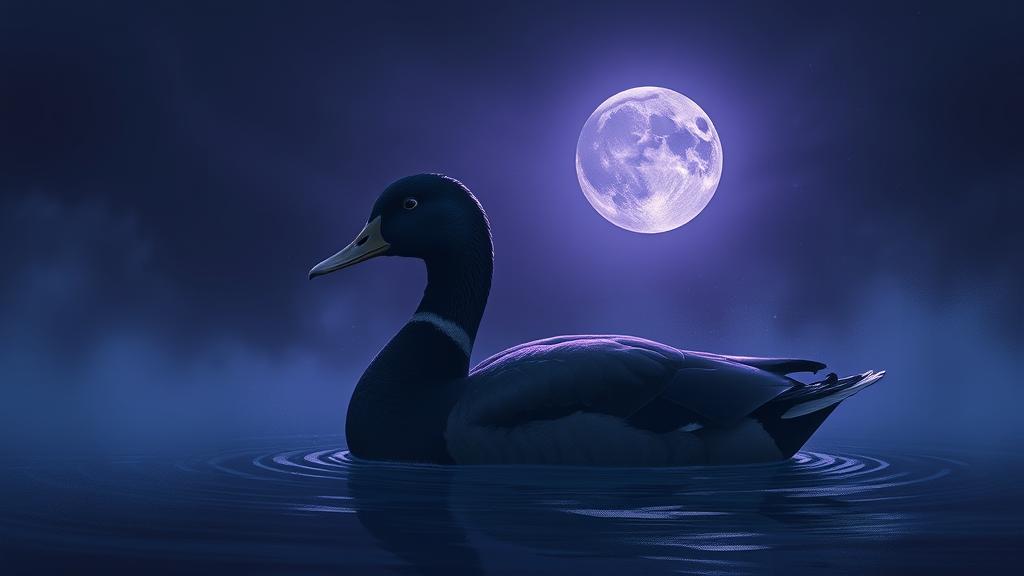
Does a duck dream ever actually disturb you? Most people say no, and I think that surface calm is itself the subject. A duck sits on the water looking completely at ease while its feet do something frantic and invisible. Your mind doesn’t choose that image accidentally.
I started keeping notes on duck dreams after noticing a pattern: the people who reported them were almost always, in some area of their lives, maintaining a composed exterior over something effortful. A new parent who’d mastered the art of looking fine. A person holding a difficult marriage together with invisible work. Someone three months into a job they hadn’t told anyone yet they were struggling with. The duck was their dream’s editorial comment.
A duck in a dream most often points to the gap between surface and depth: what you’re presenting and what’s actually happening underneath. Whether it reads as resourcefulness or exhaustion depends on how the dream felt and what the duck was doing.
How to read what the duck is actually doing
- Notice the water firstCalm water beneath a calm duck is genuine equilibrium, something is working, the effort is proportional to the result. Choppy or murky water under a calm duck is the tell: the composure is real but the conditions aren’t.
- Watch whether the duck divesA duck that ducks its head underwater and comes up again is dealing with something and coming back. It’s a good sign. It’s saying the depth is navigable. A duck that won’t go near the water might be avoiding the depth entirely.
- Notice if it’s alone or in a groupDucks in a flock dream differently than a solitary duck. The solitary one tends to carry the weight of isolation or self-sufficiency. A flock of ducks can mean you’re moving with others and not sure if that’s a comfort or a herd.
- Check the colorWild-plumage ducks are one thing. White domestic ducks carry a different register, domestic, kept, watched. Black ducks are rarer in dreams and tend to arrive with heavier emotional weather. What color was yours?
- Ask where the duck is goingA duck moving purposefully, paddling somewhere, is different from one floating. Purposeful motion means you’re in motion too, even if it doesn’t look like it from outside. Floating means something is being left to current.
The effort that doesn’t show
Revonsuo’s threat-simulation reading doesn’t map well onto a duck dream; there’s rarely a threat. But the simulation angle still has something: I think the dream is rehearsing the feeling of maintaining effort that’s invisible to observers. The duck is swimming. It looks effortless. It is not effortless. If this dream found you at a moment when you’re holding something together without anyone seeing what it costs, you probably already know what it’s about.
Jung read birds as psychic messengers but he was particularly interested in what the bird’s habitat said about the territory of the dream. A bird of the water, he’d say, is about the boundary between what’s conscious and what’s below the surface. The duck lives on that boundary. It’s not an underwater creature, not a land creature, not fully of the air. It occupies the edge. I find that genuinely useful for dreams where you’re in an in-between place: not one thing, not another.
If you’ve been in a transitional season, the kind that doesn’t have a clear name or timeline, the dreaming of a stork article handles a different bird of the waterline, one that’s more about arrivals and crossings. It’s worth reading alongside this one.
What Artemidorus would say
Not much specifically about ducks, but his method is always the same: observe the animal in its natural behavior, then apply that to the dreamer. A duck navigates between surface and depth without drama. It’s weatherproofed, the water runs off. That quality, being made so that what would drench others just rolls off, is either a real gift or a form of numbness, and Artemidorus would ask the dreamer to determine which.
What rolls off you right now? If the answer is everything, that’s not the same as resilience.
The dreams that arrive with other animals
Duck dreams sometimes share the landscape with other animals, and the pairing shifts the reading. A duck alongside a dragonfly is a dream using two surface-skimmers, two animals that move across the boundary between elements, and that tends to amplify the in-between quality. If there was a snake in the water near the duck, the register changes: something is under the surface that’s not the duck’s own effort, something that didn’t come from you. The dreaming of a white snake article handles that particular combination.
I notice I’m drawn to the solitary duck on dark water. That’s probably the image I’d dream, if I’m honest. The one that’s managing, that’s moving, that’s not asking anyone to notice how hard it’s working. I don’t know what that says about me. I’ve got some guesses.
- Was the water calm or disturbed? The surface of the water is probably the surface you’re presenting in waking life right now.
- Did you watch the duck or were you the duck? Observer versus subject changes the reading almost entirely.
- Is there something you’re maintaining that looks easy from outside and isn’t? Is anyone allowed to know that?
- Where was the duck trying to go, or was it just staying in place?
Quick answers
What does it mean to dream of a duck?
Usually it points to the gap between what you show and what’s happening underneath. The duck’s surface calm over invisible effort is the key image: are you managing well, or managing impressions of managing well?
Is a duck dream a positive sign?
Often yes, ducks are adaptive, they navigate multiple elements, they don’t capsize easily. But the dream can also flag exhaustion: the composure is real, but what’s it costing you?
What does it mean to dream of ducks on water?
The state of the water matters enormously. Still water under a calm duck suggests genuine equilibrium. Dark or choppy water under that same calm surface is the dream naming the gap between appearance and reality.
What if I dream of a duck diving under the water?
That’s generally the constructive version. Something is going below the surface to find what it needs and coming back up. It suggests you’re willing to engage with what’s underneath, which is different from someone who’s just floating on top of it.