Animal Dreams
Dreaming of a Swan: Grace, Transformation, and What Hides Beneath
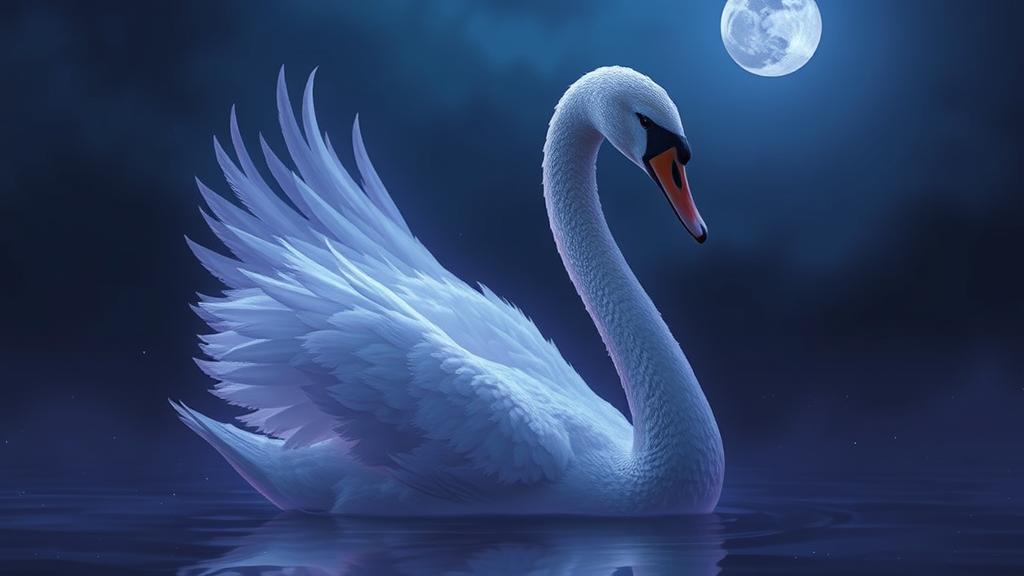
I have a hard time trusting beautiful things that don’t show their effort. Swans especially. I was eleven the first time I watched one from a canal bridge, mesmerized by that white calm, and my uncle said without looking up: they kick like mad underneath. I didn’t believe him. I crouched down, looked, and there it was: those dark feet churning the water in a controlled panic while the bird above floated like it had nowhere to be. I’ve thought about that moment more times than I should.
A swan arrives in dreams carrying that exact split. Whatever is shown on top is not the whole animal. That’s not a metaphor I invented , it’s just what swans do, and your dreaming mind chose this particular creature for a reason.
A swan in a dream usually speaks to something beautiful that’s costing you more than it looks. It can signal grace under pressure, a transformation you’re partway through, or an ideal you’re holding yourself to that may be heavier than you admit. The bird’s behavior and your feeling toward it carry more weight than the swan itself.
The part you see and the part you don’t
What the surface shows
Elegance. Stillness. An image of things going right. This is the version of yourself, or your situation, that other people see , or that you present. A white swan gliding undisturbed in a dream often reflects a public composure you’ve worked hard to maintain. The dream isn’t criticizing it. It’s acknowledging the labor.
What’s happening underneath
Effort that goes unwitnessed. Anxiety kept off the face. A transformation that’s been brutal and quiet. The feet kicking in the dark aren’t a flaw in the bird. They’re the mechanism. Your dream may be the only place that gets to see them, and sometimes that’s why it chose a swan in the first place.
Most dream symbols arrive as a single image. The swan is unusual because it’s almost always two images at once. Which one pulled your attention , the surface or what was underneath , is probably the more honest answer to what your sleeping mind was trying to tell you.
What Artemidorus noticed two thousand years ago
Artemidorus, writing in the second century, catalogued bird dreams with the kind of systematic patience that makes you wonder what he was personally working through. For him, a swan was a singer before it was anything else , associated with clarity of voice and with things arriving at the right moment, since swans in ancient tradition were said to sing most beautifully just before dying. He’d read your dream as a question about expression: what are you getting ready to say, or what are you leaving unsaid while the moment is still yours.
I’m not sure that reading fits every swan dream, but it fits more of them than you’d think. A lot of people who tell me about swan dreams are at a threshold , something is almost finished, almost launched, almost spoken , and the bird appears in that almost.
Transformation that’s halfway done
Jung’s reading is the one that has probably worn the best, though I say that while keeping one eyebrow raised. He was drawn to the swan as a figure of transformation in process , not the caterpillar-becoming-butterfly kind of clean change, but something longer and stranger. The ugly duckling story isn’t a fairy tale for children in his framework; it’s a map of how much misrecognition happens during change. You don’t look like what you’re becoming. You look awkward and wrong, and the transformation is happening anyway, invisible to everyone including you.
If the swan in your dream was not yet fully white, or was moving awkwardly, or you weren’t sure at first it was a swan , that version tends to belong to people mid-transformation who are struggling to recognize themselves in the process. It’s worth sitting with that specific discomfort rather than rushing past it. Also worth reading alongside what it means to dream of a tamed wild animal, which covers a very similar kind of ambivalence about wildness being held in check.
When the swan turns threatening
Swans attack. This is something people forget until a swan comes straight at them, neck low, wings wide, hissing. If your dream swan was aggressive , coming toward you, cornering you, not the serene gliding version , the reading flips. Anke Revonsuo’s threat-simulation research would file this one straightforwardly: the dream is rehearsing a confrontation. Something that looked controlled and beautiful is showing you its teeth. That thing is usually not an actual swan.
The color and the water matter
White swan on calm water: the classic reading, composure and idealism, possibly perfectionism you’re paying for. White swan on turbulent water: the same ideals under strain. A black swan, which appears in dreams more often than you’d expect, is a darker twin to the transformation theme , something that breaks a category, an outcome that shouldn’t have been possible. Dark water with no swan visible, just knowing one was there: I’d read that as an intuition about something beautiful that’s keeping its distance.
The water also connects to the way red snake dreams work , another animal that moves through a medium we can’t fully enter, carrying weight that exceeds its size. And if your swan appeared alongside other birds, you might find the notes on dreaming of a swallow useful for the contrast: swallows are about return and belonging, swans about becoming.
- Was I watching the surface or did I see underneath? What was the dream actually showing me?
- How did I feel toward the swan , admiration, unease, longing, threat?
- Is there something in my life that looks composed from the outside while I’m kicking hard under the surface?
- Am I partway through a change that doesn’t look like anything yet from the outside?
One symbol, two traditions
Read side by side, the two traditions pull in different directions: swan as a signal from your own mind, or swan as an image to test against the text. Knowing which question you are asking is half the interpretation.
A swan in a dream rarely means what you expect. Here's what the image actually holds, from the stillness on the surface to the furious paddling underneath.
You are reading this oneThe swan carries enormous symbolic weight in Western culture, but the Bible is nearly silent about it. Here's what Scripture actually says about the themes a swan brings to a dream.
Read the full biblical meaning →Quick answers
What does dreaming of a swan mean?
A swan in a dream usually carries the tension between outward grace and hidden effort. It can point to a transformation in progress, something beautiful that’s costing you privately, or an ideal you’re holding tightly. The mood and behavior of the swan in the dream shifts the reading considerably.
Is a swan in a dream a good sign?
Generally yes, though not simply. A gliding swan often signals grace, capability, or a beautiful phase in your life. But the dream’s tone matters. An aggressive swan or a swan in dark water is telling you something different about the same qualities , beauty that has turned, or beauty that’s also a threat.
What does a black swan in a dream mean?
Black swans in dreams often point to an impossible-seeming outcome that happened anyway, or to a part of yourself that breaks a category. Where a white swan is about idealism and transformation, a black swan is about the exception, the unlikely thing, what doesn’t fit the expected pattern.
Why do I dream of a swan attacking me?
Aggression in a dream swan suggests something that appeared composed or beautiful has shown its real force. The threat-simulation reading is practical: something in your waking life that seemed under control is pushing back. It’s worth considering what you’ve been treating as safe that perhaps isn’t.