Animal Dreams
Dreaming of a Rabbit: Luck, Fear, and the Speed of Disappearing
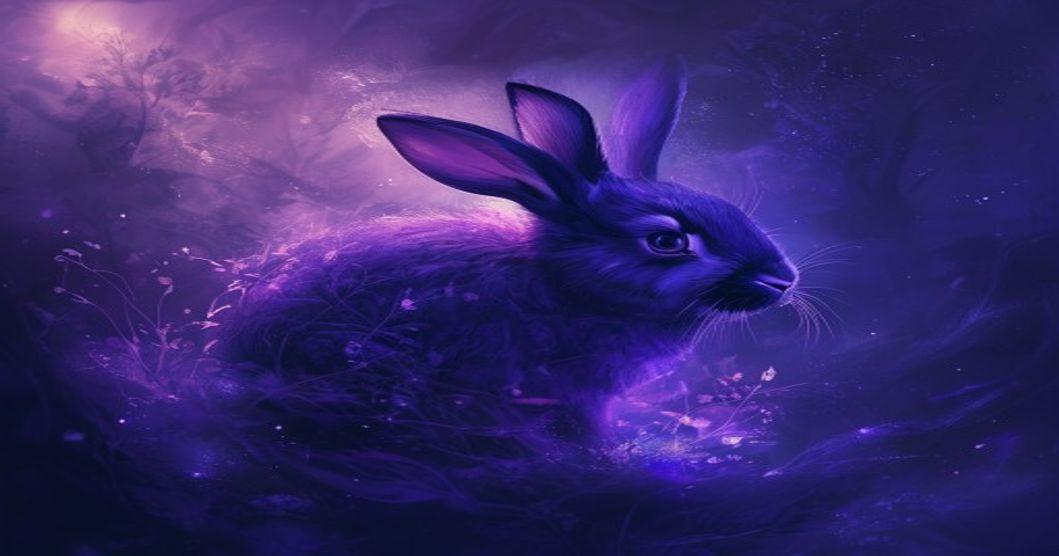
I’ll admit that for years I was too quick to file this one under ‘positive symbol and move on.’ A rabbit, soft-looking, harmless, usually somewhere pleasant. Easy to write up. Easy to get wrong.
Then I started paying closer attention to what people actually felt in these dreams, not the rabbit’s qualities, but the dreamer’s experience. And the feeling is, surprisingly often, not warmth or luck. It’s the feeling of almost. Almost reached it. Almost held it. It was right there and then it was gone with that specific, gut-punch speed that rabbits have.
That’s a different dream entirely.
Dreaming of a rabbit most often points to something desired but elusive, something that came close and vanished. It can also signal fertility, new creative energy, or a vulnerability you’re protecting. The key question isn’t what the rabbit looks like. It’s whether you were chasing it, watching it, or whether it came to you.
How humans have dreamed of rabbits
- 2nd century
Artemidorus, in the Oneirocritica, treated hares and rabbits as signs of timidity but also of unexpected luck, the animal that survives by speed and concealment rather than strength. He considered them generally auspicious, particularly for those hoping for children.
- Medieval period
Across European folk traditions, the hare became associated with the moon, with rebirth, and with a kind of trickster energy. The Easter connection comes partly from this older layer of lunar symbolism. Rabbits appear in marginalia of illuminated manuscripts with surprising frequency, and not always in flattering contexts.
- 19th-century folklore
Saying ‘rabbit rabbit’ on the first of the month as a luck charm had spread through much of the English-speaking world by the late 1800s. The rabbit as luck token was genuinely widespread, which tells us something about how deeply the symbol of fertility and sudden good fortune had embedded itself.
- Jung and the 20th century
Carl Jung would have categorized the rabbit among trickster and prey archetypes, the creature that holds power through elusiveness rather than confrontation. In his reading of the shadow and the anima, small fleeing animals often represent aspects of the self that have been driven underground by shame or social expectation.
- Contemporary dream research
Modern researchers tend to look past the symbol and toward the emotional signature. What does the rabbit actually make you feel? That question, boring as it sounds, is more diagnostic than any catalogue of traditional meanings.
The feeling of almost
This is the part that took me longest to articulate, and I want to stay with it. There’s a particular flavour of dream grief that isn’t about loss exactly. It’s about the gap between you and a thing that was close enough to see. The rabbit dream, in its most common form, is a dream about that gap.
Whether it’s an opportunity, a relationship, a version of yourself you were nearly being, the rabbit’s talent for disappearing is the talent your mind chose to model it with. It was right there. It had its eyes on you. Then it was gone, and the field was just a field.
Antti Revonsuo’s threat simulation framework applies in an unusual way here. The rabbit isn’t a threat in the conventional sense. But its disappearance simulates something the nervous system treats as threatening: the withdrawal of something you needed. Your dream is rehearsing that specific loss, which is its own kind of preparation.
The shadow the rabbit casts
Jung would be interested in the rabbit not as a lucky charm but as a prey animal, and what that means. Something that survives by not being seen. Something that has learned to hide its presence so thoroughly that even when it’s in the open it looks like it could vanish at any second. I’m genuinely uncertain about how far to push the Jungian reading here, but I find myself returning to it because it fits what people describe: the rabbit in the dream feels both there and about to not be there, simultaneously present and already gone.
That’s a particular kind of psychological experience. It’s how we hold things we’re afraid to want.
When the rabbit comes to you
This version is genuinely different and I don’t want to conflate it with the chasing dream. When the rabbit approaches, sits near you, or lets you hold it, something has changed. The elusive has become available. This dream tends to arrive when you’ve finally stopped pushing away something you needed, when you’ve made enough internal space that the thing could actually come in.
It’s a good dream. Not many animals in the symbolic vocabulary come to you on their own terms. Let the rabbit arrive.
The one that was there and then wasn’t
I’ve heard the chasing version described as having a particular quality of pale winter light. People mention it specifically, the colour and angle of the light in the dream, often before they mention the rabbit. I don’t know what to make of that, and I’m not going to pretend I do. But I’ve noticed it enough times to record it.
Rabbits carry deep associations with fertility across cultures too, not only in the sense of children. Creative output, new projects, something seeding itself in the dark. That reading is available if it fits your life right now. If you’ve been reading about other animal dreams, dreaming of an otter sits in interesting contrast: both animals carry a quality of ease, of things going the way they were built to go. The difference is the otter stays visible. The rabbit doesn’t.
The rabbit goes because that’s what rabbits do. The question the dream is actually asking is what you’d have done if it had stayed. If you’d held it, what then? Sometimes the thing we’re chasing is most useful to us as a direction rather than a destination. If that’s what your rabbit is, the dream is already doing its job.
For more on dreams where creatures symbolize aspects of the self that are difficult to hold, the piece on dreaming of spiders covers related ground, if from a much darker angle.
- Were you chasing the rabbit, watching it, or did it come to you? Those are three different dreams.
- Is there something in your waking life that feels like it was almost within reach?
- What would you actually do with the thing you’re chasing, if you had it?
- Is there something you want that you haven’t let yourself fully want yet?
One symbol, two traditions
A psychologist asks what rabbit felt like and what it echoes in your week. The biblical reader asks a different question entirely: what does Scripture say when this image appears, and what does it stay silent about?
Rabbits in dreams mean more than luck. Nora Vance traces the symbol's history and unpacks what it says about anxiety, fertility, and the things you almost reached.
You are reading this oneThe rabbit appears only once clearly in the Bible. Here's what that passage actually says, what Scripture is silent about, and how to apply biblical wisdom to your dream.
Read the full biblical meaning →Quick answers
What does it mean to dream of a rabbit?
It depends on the direction. If you were chasing the rabbit, the dream is most likely about something desired and elusive. If the rabbit came to you, it points to something becoming available that previously felt out of reach. The fertility reading is also historically strong, but applies more broadly than just children.
Is dreaming of a rabbit good luck?
The luck association is genuinely old and cross-cultural, so it’s not nothing. But in terms of what the dream is processing, luck is usually the surface. Underneath it there’s almost always something about desire, elusion, or new possibilities. Worth looking at both layers.
What does it mean to catch a rabbit in a dream?
You’ve closed the gap. Something that felt elusive has become graspable. Whether you hold it or it escapes even then tends to reflect how settled you feel about actually having the thing you’ve been pursuing.
Why was I running after a rabbit in my dream?
Because something in your waking life has that rabbit-quality: visible, desirable, moving just fast enough to stay ahead of you. The dream isn’t telling you to run faster. It might be asking whether you know what you’d do if you caught it.