Animal Dreams
Dreaming of a Cat: what your sleeping mind is watching
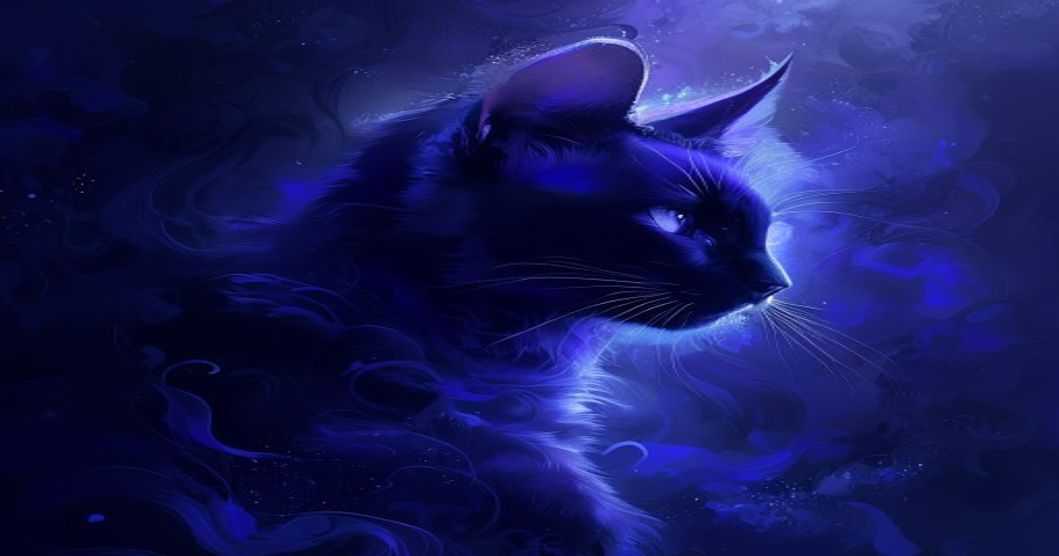
Confession: I didn’t like cats for most of my adult life. Something about the way they look at you without needing anything from you. I found it unsettling. Then a colleague’s cat jumped onto my lap during a long afternoon meeting at her house, didn’t ask permission, settled its full weight there, and fell asleep. I didn’t move for forty minutes. I let the meeting run on around me. That weight. That complete indifference to whether I was comfortable with it. I thought about it for days.
I bring this up because cats in dreams operate on the exact same logic. They don’t come to you with an obvious message. They arrive on their own terms, look at you for a moment, and leave you holding a feeling you can’t quite name. If you’ve been trying to pin down what your cat dream meant, the difficulty is part of the meaning.
A cat in a dream most often stands for something in your life that runs on its own terms: an instinct you haven’t trusted, a side of yourself that won’t be managed, or an emotional presence that’s both comforting and just slightly out of reach. The feeling the cat left behind is the interpretation.
The weight on the lap
Dreams with cats tend to organize themselves around that quality of uninvited arrival. The cat doesn’t knock. It’s simply there, on the couch, on the table, sitting in the doorway watching you do something mundane. People describe this to me with a particular half-embarrassment, because they can feel that the dream mattered and they can’t explain why. Nothing happened. The cat was just there.
That quality, ordinary presence that somehow carries weight, is precisely why the cat has followed humans into their dream lives for thousands of years. Artemidorus, the second-century Greek interpreter who catalogued dream symbols with the thoroughness of a tax inspector, treated the cat as an interloper: something that enters domestic space from outside its usual rules. He wasn’t wrong about the structure of it, even if his specific readings feel dated. The cat appears in the home, which is the self, and it doesn’t behave like a guest.
Jung would have called the cat a carrier of the instinctual life, those parts of the psyche that predate language and resist being organized into a schedule. His model of the house as the self, with each room mapping to a different layer of the inner life, suggests that the cat entering your dream home is the instinctual layer walking through the rooms you thought you had tidy. I’m cautious about applying Jungian templates too neatly, but on the cat, the old reading fits the shape of what people actually report dreaming.
There’s a specific version worth pausing on: the cat that appears from nowhere and settles near you without asking. Almost everyone who describes it says the same thing in different words. It felt like something accepted me. Not approved of me, not chose me, just settled near me the way a thing settles when it has nowhere it’d rather be. That version of the dream tends to arrive in the middle of long seasons of having to perform competence, to be correct, to justify your presence in rooms. The cat doesn’t care about any of that. It chose your lap by its own calculation, and the calculation had nothing to do with your credentials. If you’ve been carrying the exhaustion of taming something wild in yourself, that settling weight is worth sitting with.
When the cat is threatening
Not all cat dreams are peaceful. The hissing cat, the cat that attacks, the cat you can’t control: these versions tend to show up when the instinctual thing you’ve been ignoring has moved from asking to demanding. Anita Revonsuo’s threat simulation framework, which I find genuinely useful even when I don’t agree with everything downstream of it, suggests that the dreaming brain rehearses responses to things that feel dangerous. A threatening cat in a dream is often something in your inner life that you’ve tried to manage from a distance for too long, and that has now stopped cooperating.
The shape of the threat often tells you where to look. A cat scratching at a door you’re holding shut is different from a cat that turns and bites mid-stroke. The first is about something kept out. The second is about something you thought you had gentled.
A cat that settles near you
Usually signals acceptance without conditions: an inner quality or instinct that doesn’t need your approval to be real. Often arrives during high-performance seasons, as though the dream is sending a counterweight. Peaceful but not flattering. The cat chose your couch, not you specifically, and you felt it anyway.
A cat that threatens or attacks
Points toward something instinctual that’s been cornered or ignored past its patience. The more domestic the cat looks before it turns, the more likely it represents something you thought you’d integrated. Attacking dreams of this kind often arrive the week after you’ve suppressed a response that wanted to come out.
There are a few other variants that come up often enough to deserve a mention. A lost or injured cat frequently maps to a creative impulse or a side of you that’s been neglected; the emotional register is closer to guilt than grief, and most people recognize it as soon as I name it. A cat that speaks is rarer, and the content of what it says matters enormously, more than the symbol itself. And if you’ve been dreaming of a larger, wilder cat, the same instinctual logic applies at a different scale.
The independence thing
Short section, because this doesn’t need elaborating: cats in dreams almost always bring with them some version of the question of independence. Either yours, or someone else’s. If the cat in your dream won’t come when you call, look at where in your life you’re trying to coax something toward you that has its own direction. It’s not asking you to stop wanting it. It’s showing you how it moves.
What the colour sometimes adds
Colour in dreams tends to amplify rather than direct. A black cat doesn’t automatically mean bad luck; that’s cultural overlay, not psychological function. Black tends to read as the unknown: something present but not yet visible to you. White can read as clarity or as coldness, depending on the feeling tone. A red cat, which sounds unusual but comes up more than you’d expect, is often covering very similar ground as dreaming of a red snake: urgency, energy, something vital that wants attention.
Orange and ginger cats, in my experience of reading about these dreams, tend to carry warmth and a kind of benign disruption. The tuxedo cat that appears in formal spaces in dreams, half formal itself, half chaos, is one of my quieter favorites. It’s the instinctual life wearing a collar it finds beneath it.
Recurring cats and what they’re waiting for
When the same cat shows up again and again, same markings, same behaviour, the dream is usually flagging something your waking life hasn’t acknowledged yet. The cat is patient in a way that’s almost annoying. It’ll sit in the corner of your dreams for months. It’s not threatening. It’s waiting.
What it tends to be waiting for is recognition. Not action, necessarily. Just: yes, I know that part of me exists. The recurring cat almost always fades once whatever it represented has been named. I can’t explain the mechanism. I don’t think naming causes the cat to leave, exactly. I think the naming and the leaving both happen because something shifted, and the dream reports the change before you consciously register it.
I thought about that forty-minute meeting for days, and I still don’t know exactly what the weight meant. I just know I stopped finding cats unsettling after that. Something accepted something, in a direction I still couldn’t map. My next cat dream, a few months later, was the settling kind. I woke up feeling neither alarmed nor enlightened. Just accompanied.
- What was the cat doing when I noticed it, and was I comfortable or unsettled?
- Is there something in my life right now that won’t be organized or managed, that just operates by its own rules?
- Did the cat choose me, or was I trying to get it to come to me, and what does that feel like in waking life?
- If this cat comes back, what would I say to it?
One symbol, two traditions
A psychologist asks what cat felt like and what it echoes in your week. The biblical reader asks a different question entirely: what does Scripture say when this image appears, and what does it stay silent about?
A cat dream isn't about cats. It's about the part of you that operates by its own rules. Nora Vance unpacks the confession most people don't say aloud.
You are reading this oneCats don't appear in the Bible. That fact itself is the honest starting point for a cat dream. Here's what Scripture's silence means and what principles still apply.
Read the full biblical meaning →Quick answers
What does it mean to dream of a cat?
Most often it points to a part of yourself that operates by instinct rather than reason: something you can’t fully manage or predict. The emotional tone of the dream matters more than the cat’s behaviour. A peaceful, settling cat tends to represent self-acceptance or an instinct you’re finally trusting. An aggressive or elusive cat suggests something that’s been ignored or cornered.
Is dreaming of a cat good or bad?
Neither, automatically. Cats in dreams carry the same ambiguity they carry in waking life: they can be deeply comforting or quietly threatening depending on the moment. The feeling you wake with is a better guide than the symbol itself. If you woke unsettled, something in the dream wanted your attention. If you woke calm, even oddly moved, take that seriously too.
What does a black cat in a dream mean?
Black tends to amplify the cat’s natural quality of mystery rather than signalling bad luck, which is a cultural story rather than a psychological one. A black cat in a dream usually stands for something real in your inner life that you haven’t yet seen clearly. Not dangerous, exactly. More like a presence in a dim room that you know is there.
Why do I keep dreaming about the same cat?
Recurring cats almost always flag something that hasn’t been named yet. The dream isn’t escalating; it’s waiting. In most cases the recurrence stops once whatever the cat represents has been acknowledged honestly, not fixed, not resolved, just recognized. That sounds imprecise because it is. But it’s what people report, again and again.