Animal Dreams
Dreaming of a Wolf: Pack, Threat, and What It Wants
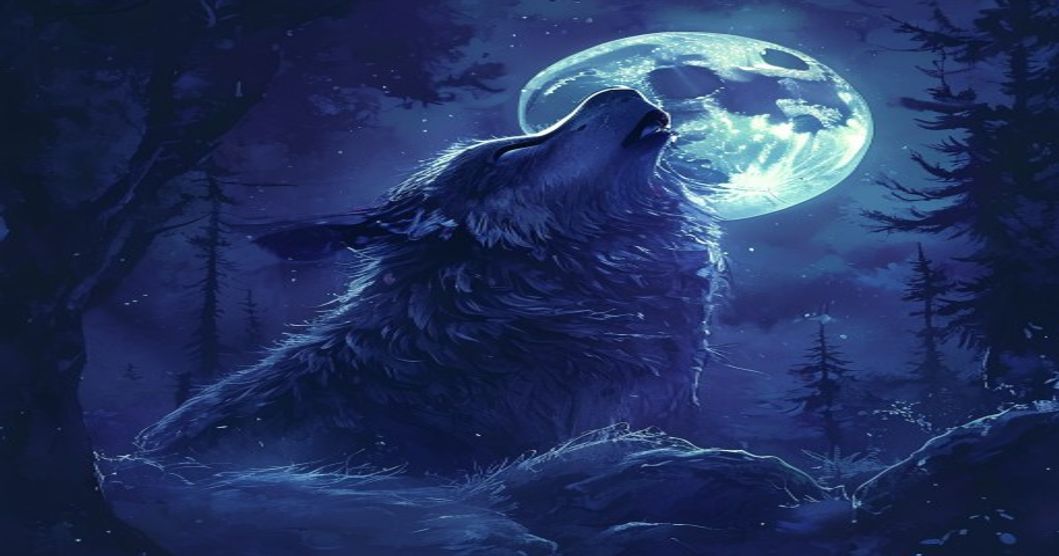
Wolves went extinct in Britain in the eighteenth century. They’ve been gone longer than the industrial revolution, longer than the United States has existed, and yet the wolf still shows up in British dreams, in European dreams, in the dreams of people who’ve never set foot near a forest in their lives. That fact tells you something. The wolf isn’t stored in lived experience. It’s stored somewhere deeper, in whatever part of the brain keeps running older software.
I’ve noticed that people who dream of wolves almost never describe the dream as random. It comes with weight. The wolf is precise. It’s in a specific place, doing a specific thing, looking at you in a way you can still feel after you wake.
A wolf in a dream usually carries one of three charges: a threat that demands a response, a wildness in yourself that you’ve been domesticating too hard, or the pull of belonging to something larger than yourself. The wolf’s behavior, its distance, its pack, its stillness or movement, is where the actual meaning lives.
How cultures have read the wolf for thousands of years
| Tradition | How it reads the symbol |
|---|---|
| Ancient Rome | The she-wolf nursed Romulus and Remus. The wolf was ferocity in service of founding something. Not enemy. Fierce origin. |
| Norse tradition | Fenrir is bound because his strength exceeds what the gods can manage. The wolf is power that civilization contains but can’t really domesticate. |
| Slavic folklore | The wolf as guide between worlds. It knows the forest that ordinary people don’t enter. Sometimes it helps, sometimes it devours. |
| West African traditions | The wolf appears less centrally, but canine-adjacent figures as threshold guardians recur. The animal that crosses between the village and the wild. |
| Artemidorus (2nd c.) | He read wolves as enemies who are open about their hostility. Unlike foxes, which deceive, wolves threaten directly. He advised fear. He wasn’t wrong about the intensity. |
| Contemporary dreamers | Most people report the wolf as watchful rather than attacking. The fear is of what it might do, not what it is doing. That anticipation is almost always the point. |
Alone or in a pack: the difference is everything
A lone wolf in a dream and a pack of wolves are two quite different messages. The lone wolf tends to be about you: solitary instinct, an independence that’s either necessary or isolating, or a power that hasn’t been integrated into your everyday life yet. It watches. It doesn’t explain itself. It doesn’t need the group’s approval.
A pack is about belonging, and about the cost of it. Are you inside the pack or outside it? Running with wolves has one feeling entirely. Being circled by them has another. Some people dream of a pack that accepts them, and wake with a specific ache for that kind of closeness, a closeness with stakes, where loyalty is real because the world is actually dangerous. That ache is worth examining. You might be finding the same pull in a lion dream, just expressed differently.
What the wolf was doing
A wolf running at you and a wolf standing still at the tree line are not the same dream. The charging wolf is the most obvious form: something is coming, you haven’t been able to stay ahead of it, the threat feels close. That can be external pressure or it can be something internal that you’ve been trying to outrun. Revonsuo’s threat simulation theory would say the dream is rehearsing a response to a real pressure your system has already identified. The question isn’t whether the wolf is real. It’s what your nervous system has categorized as wolf-shaped in your waking life.
The still wolf, watching from a distance, is the version people find hardest to read and hardest to forget. It doesn’t attack. It doesn’t leave. It just holds its position and waits. I think that version lives closest to what Jung would call the shadow: the part of the self that hasn’t been admitted, that stands at the edge of consciousness and waits to be acknowledged. Ignoring it doesn’t make it leave. Occasionally it just moves closer.
The wolf you might be
A significant number of wolf dreams aren’t about an external threat at all. They’re about a quality in the dreamer. Wild, territorial, loyal-to-a-fault, capable of a fierceness that social life doesn’t usually have a slot for. Jung’s framework treats animal dreams partly as the psyche showing you an energy you’ve disowned. The wolf might be the part of you that doesn’t want to be managed. The part that would rather run than explain itself. If the wolf in your dream felt like something you recognized, rather than something foreign, that’s probably the version you’re working with. It’s related to what happens in dreams of a panther: a power that isn’t hostile, just uncontained.
The wolf that keeps coming back
Recurring wolf dreams almost always cluster around something that hasn’t been confronted yet. Either the external pressure (the thing the wolf represents) is still unresolved, or the internal quality (the wildness, the fierceness, the territorial instinct) is still being suppressed. The dream comes back because the situation hasn’t changed. And also because some animals in dreams are patient in ways that human problems rarely are.
My own recurring wolf dream ran for about six months during a period when I was doing work I’d outgrown but couldn’t see my way out of. In every version the wolf was at a different distance. By the end it was close enough that I could see its breath. I still don’t think the dream was telling me to quit. I think it was telling me I’d already decided.
- Was the wolf alone or in a pack? And where were you in relation to that structure?
- Did the wolf feel external to you, or did it feel like something you recognized in yourself?
- What was it waiting for? Or what was it doing just before the dream cut?
- Is there something in your waking life you’d describe as wolf-shaped, circling, patient, not yet arrived?
One symbol, two traditions
A psychologist asks what wolf felt like and what it echoes in your week. The biblical reader asks a different question entirely: what does Scripture say when this image appears, and what does it stay silent about?
Wolves in dreams carry ancient weight. This guide unpacks what the wolf's presence, absence, and behavior reveal about instinct, belonging, and the parts of you that still run wild.
You are reading this oneWhat does the Bible really say about wolves? Real passages, honest gaps, and how to bring a wolf dream into prayer and discernment.
Read the full biblical meaning →Quick answers
What does it mean to dream of a wolf?
A wolf in a dream usually signals one of three things: a threat or pressure you haven’t fully faced, a wildness or instinct in yourself that hasn’t been given room, or a question about belonging and loyalty. The wolf’s behavior in the dream, where it is and what it’s doing, carries most of the meaning.
Is dreaming of a wolf a bad sign?
Not necessarily. The wolf is intense, but intensity isn’t the same as danger. Dreaming of a wolf that accepts you or runs alongside you can point to integration, to a fierce part of yourself coming into use. The wolf as pure threat is one reading. The wolf as necessary wildness is another.
What does it mean if a wolf was chasing me in a dream?
Being chased by a wolf often reflects a pressure, threat, or internal force you’ve been trying to stay ahead of. It might be external stress, an obligation closing in, or something in yourself you haven’t been willing to turn and face. The chase tends to stop when you stop running.
What does a white wolf mean in a dream?
White wolves appear far less often than grey or black, and almost always in dreams with a different quality: more luminous, more archetypal, less threatening. A white wolf often feels like a guide rather than a threat. Some people describe it as the most powerful dream they’ve had, though they can rarely explain why.