Animal Dreams
Dreaming of a Dog: Loyalty, Loss, and What Follows You Home
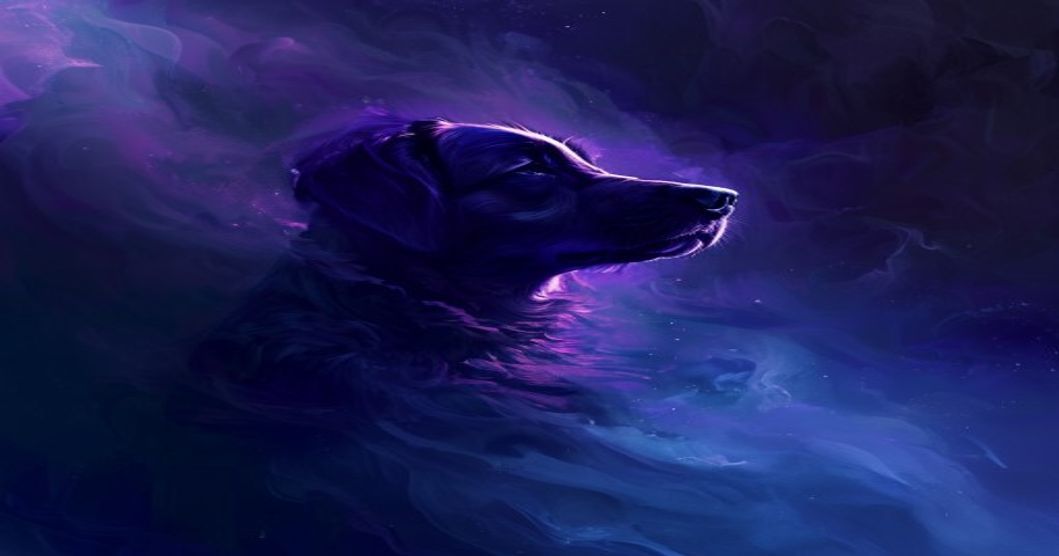
A dog follows you down a street you don’t recognize, and you don’t stop to acknowledge it, but you know it’s there the whole time. You turn a corner. It turns. You cross a road. It crosses. And when you finally wake up, the feeling that stays isn’t fear or warmth. It’s that specific weight of being accompanied.
Not everyone’s dog dream is gentle. But most of them have that quality, that sense of something tracking your movements, something that knows your scent.
A dog in a dream usually touches loyalty, trust, and the relationships in your life that involve consistent care in either direction. Whether you’re the one being followed, the one who’s lost a dog, or the one being bitten changes the reading entirely. The dog’s condition and behavior matter more than its breed or color.
The long history of the dog that shows up uninvited
- ~1200 BCE
The Chester Beatty papyrus includes among its dream interpretations the motif of dogs appearing to sleepers as guides or messengers. They weren’t pets in the modern sense; they were threshold animals, creatures of passage.
- 2nd century CE
Artemidorus, in the Oneirocritica, gave dogs a notably ambivalent reading: a dog that follows can signify a loyal friend or a flatterer, depending on whether it’s your own dog or a stranger’s. The distinction he made, owned versus unknown, is still worth using.
- Medieval and early modern
Across European dream-books, dogs carried consistent associations with guardianship and warning. A barking dog was a caution; a silent dog that watched was harder to classify, and people found that unsettling in ways they couldn’t quite name.
- 20th century
Jung’s framework brought the dog into the symbolic ecology of the self, as an instinctual, loyal aspect that can be trained or ignored. The dog, in his reading, doesn’t judge you. It simply follows, faithfully, whatever direction you’ve set.
- Contemporary research
Dream researchers working in the Jungian and continuity traditions observe that dog dreams often cluster around periods of change in close relationships, particularly when trust has been recently given, broken, or is being decided on.
What I find useful in that long thread is the consistency of one idea: the dog dream is about relationship. Not romance, not family in the abstract. The specific quality of being in relationship with something that needs your presence, and that offers its presence in return.
What the dog’s behavior is actually saying
People want to know about the breed, or the color, whether a black dog is ominous or a white dog is pure. I’d gently set those questions aside. The behavior is what matters.
A dog that follows without being called is your mind placing loyalty somewhere in the frame. Something is tracking you. That could be a relationship you haven’t fully acknowledged, a habit that’s still with you, a responsibility that keeps showing up. The following-dog dream is rarely dark. But it’s asking you to look behind you.
A dog that’s lost, or that you’re searching for, tends to arrive when something trustworthy has gone missing from your life. Not necessarily a person. Sometimes a quality in a relationship, reliability, warmth, the sense that someone has your back. Dreams of a dead dog carry a specific grief that the lost-dog dream doesn’t: the finality is different.
A dog that bites is the one that surprises people most, because dogs in waking life feel safe. Revonsuo’s threat-simulation work is actually pretty useful here: a biting dog in a dream is often the mind rehearsing a betrayal it fears, or processing one that’s already happened. Someone who should have been loyal wasn’t.
Whose dog is it
Artemidorus had an instinct worth borrowing: the dog you own and the dog you don’t are different dreams.
Your own dog, or one you clearly recognize as yours in the dream, points inward. It’s the loyal part of you, the instinctual part, the capacity for attachment that you’ve trained or neglected. Jung would say it’s the aspect of the self that operates below language: the part that knows things through smell and proximity and the sound of footsteps it recognizes.
An unknown dog is about a relationship or connection outside you. A stranger’s dog that warms to you quickly is usually a hopeful sign for a new alliance. A stray that follows you home is more ambiguous: it might be an opportunity, or it might be a responsibility you didn’t ask for and haven’t decided whether to accept.
Occasionally the dog in the dream stands in for a specific person so clearly that the dreamer knows it immediately. That kind of dreaming tends to happen when the person the dog represents has qualities, loyalty, dependability, a slightly mute devotion, that your waking mind hasn’t found the right words for. Dreams of an animal saving you often work the same way: the rescuer is someone in your life, wearing the animal’s shape because the emotional truth is cleaner that way.
The animal that doesn’t fit this frame
Dog dreams rarely get confused with other animal dreams, but jaguar dreams can sometimes blur the edges, because jaguars also carry a stalking presence. The difference, once you’ve felt both, is obvious: the dog follows with warmth. The jaguar follows with intention. One is about relationship. The other is about power. Your body usually knows the difference before you do.
What you’re actually being asked
Dog dreams, at their core, are asking about care. Specifically, whether you’re extending it, receiving it, or somewhere in between. That street in my opening, the one you’re walking while something follows without being called, that’s not a threat. It’s an inventory.
What’s currently following you that you haven’t turned around to look at? What are you loyally trailing, your whole self leaning forward, that maybe doesn’t deserve that kind of tracking? I don’t have a clean ending for this, partly because these dreams rarely resolve neatly, and partly because the dog question is one I’m still answering myself.
- Did I recognize the dog? If so, who does it remind me of?
- Was I walking toward something or away from something when the dog appeared?
- What relationship in my life currently has the quality of loyalty that doesn’t explain itself?
- How did I treat the dog in the dream, and would I treat a person that way?
One symbol, two traditions
The two schools are not reading the same book: psychology asks what dog is doing in your waking life, while the biblical tradition tests the image against Scripture and leaves the meaning with God.
Dogs in dreams almost never mean what people expect. They're rarely about pets. They're about loyalty, trust, and the attachments that have outlasted their welcome or haven't arrived yet.
You are reading this oneDogs appear throughout the Bible, almost always negatively. Here's what the text actually says, why it says it, and how to think carefully about a dog dream.
Read the full biblical meaning →Quick answers
What does it mean to dream of a dog?
Dogs in dreams almost always point to loyalty, trust, and the quality of attachment in your close relationships. The dog’s behavior, following, biting, lost, or friendly toward a stranger, matters more than what kind of dog it is. It’s usually about connection, not the animal itself.
What does it mean when a dog bites you in a dream?
A biting dog is often about betrayal or violated trust. Something that should have been safe wasn’t. The dream can be processing a recent experience of disloyalty, or anticipating one you’re already half-aware of. The bite is your mind naming what your waking self has been reluctant to say directly.
What does it mean to dream about your own dog?
Dreaming of a dog you actually own or have owned tends to be more personal than symbolic. If the dog is alive and well, it often reflects the relationship itself. If the dog is dead or acting strangely, the dream is usually about grief, change, or something in your life that had that dog’s qualities of reliability and is now absent or altered.
Why do I keep dreaming about a dog following me?
A recurring following-dog dream usually means there’s something persistent in your life, a relationship, a responsibility, a feeling, that you haven’t fully turned to face. The dog keeps following because you keep walking without acknowledging it. Naming what’s actually tracking you, in waking terms, tends to let the dream go quiet.