Animal Dreams
Dreaming of a Flamingo: Standing Out, Balance, and the Color That Won't Dim
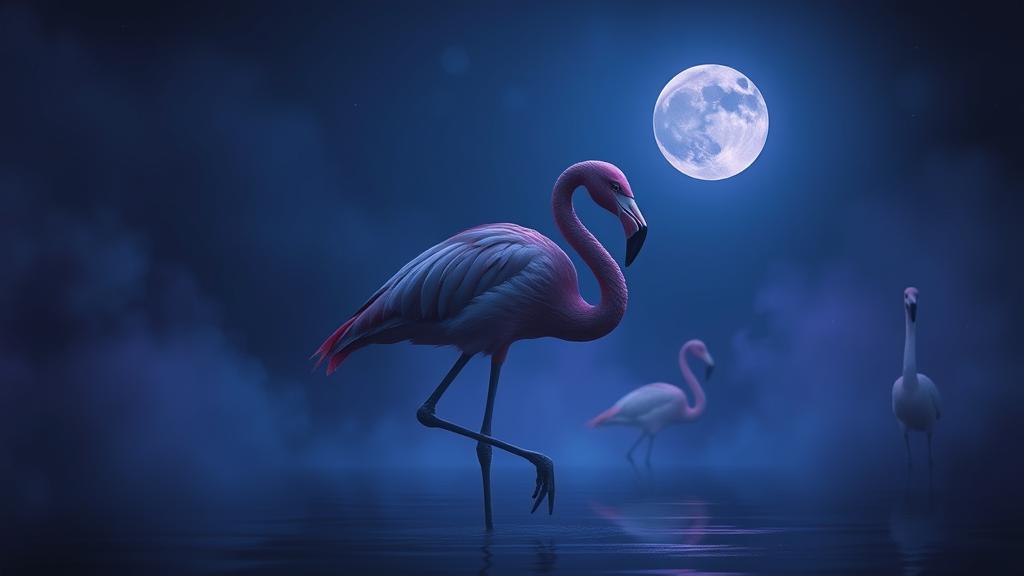
You’re in a gray city, recognizable but not quite yours, and a flamingo is standing in the middle of an intersection. Not threatening anything. Not moving. Just there, pink and completely still, while the world continues around it.
That particular unreality, the vivid single thing in an ordinary setting, is how flamingo dreams often arrive. The bird doesn’t do anything dramatic. It’s just intensely, unapologetically visible. And that visibility is the entire message.
I’ve heard versions of this dream from people at different points in their lives and the common thread isn’t the flamingo’s behavior. It’s the fact that nobody in the dream seems to be dealing with it the way you’d expect. The city goes on. The flamingo stands. You’re the only one who can’t stop looking.
A flamingo in a dream most often signals something about visibility, standing out, or the tension between being conspicuous and being accepted. It can point to a part of yourself that’s vivid and unusual and not quite sure whether that’s an asset or a liability. The color, the stillness, the improbable single leg: these are a dream language about balance, distinctiveness, and whether you’re letting yourself be seen.
The color is not decorative
A flamingo is pink because of what it eats. The carotenoids in shrimp and algae work their way into the feathers. A flamingo in captivity, fed the wrong diet, turns white. The color is earned, metabolized, and then displayed. I find that genuinely interesting in the context of a dream: the vivid thing isn’t a costume. It’s a consequence of how the animal has been living.
So when a flamingo appears in your dream and the color is what holds your attention, it’s worth asking what you’ve been metabolizing lately. What has been working its way through you and starting to show? Intensity, creativity, grief, joy: these things have a way of surfacing in the body, in the face, in how you hold yourself, whether you want them to or not. The flamingo doesn’t get to choose whether its diet shows.
History gave it mixed reviews
Artemidorus didn’t have a flamingo entry, which I find quietly amusing. The bird existed in his world, there are Roman records of flamingo tongues at banquets, but it didn’t make his dream taxonomy. I don’t think that’s because it wasn’t significant. I think it’s because the bird was rare enough to defy easy categorization. When something doesn’t fit the existing schema, you either expand the schema or you skip it.
Egyptian iconography did engage with the flamingo. The bennu bird, connected to the sun and to regeneration, has been identified by some scholars as flamingo-adjacent, a large, vivid water bird that appears at moments of transformation. I hold that connection loosely. It’s not a clean equation. But the flamingo as a creature of transformation, something to do with renewal and the turning of cycles, has floated in symbolic language for a long time.
- Ancient Egypt
Large vivid birds, possibly flamingo-inspired, appear in texts near solar and regeneration imagery. The bennu connection is contested but persistent.
- Classical Mediterranean
Roman accounts note flamingos as exotic. Artemidorus, cataloguing dream animals in the 2nd century, omits them. Rarity may have put them outside the standard schema.
- Renaissance and early modern
Flamingos appear in European menageries as objects of wonder. Their improbable form made them popular symbols of the exotic, the rare, the costly.
- 20th century onward
Jung’s framework of animal dreams as shadow or instinct doesn’t map cleanly onto flamingos. The bird is less about instinct than about display, which opens different questions about persona and visibility.
- Contemporary dream reports
Flamingo dreams cluster around themes of visibility, identity, and belonging. The dream often arrives when someone is navigating a conspicuousness they haven’t chosen or isn’t sure they want.
Standing on one leg
The posture is part of the symbol and you can’t ignore it. A flamingo asleep or resting stands on one leg. Researchers aren’t entirely certain why, but the leading thinking involves thermoregulation and structural efficiency: it costs less energy to stand that way than it does to stand on two legs. The animal is not performing balance. It’s conserving it.
That distinction matters in a dream. If the flamingo was balanced and still, the dream might be asking about the places in your life where you’ve found a genuine equilibrium, even an unusual-looking one. Balance doesn’t have to look stable to others to actually be stable. Conversely, if the bird was struggling, off-balance, or about to fall, the dream was doing something else entirely.
Carl Jung would probably have read this animal through the lens of the persona, what we display versus what we are. The flamingo’s color is real, earned, metabolized. Its balance is real, functional, efficient. But to a casual observer both look like performance. That gap, between genuine self-expression and how it reads to other people, is rich territory for a dream to explore.
The visibility question
Most flamingo dreams I’ve heard about arrive in one of two life seasons. The first is when someone has been invisible for too long, doing good work that no one has noticed, existing in a gray intersection while the world goes on around them, and something in them is starting to insist on being seen. The flamingo shows up as a kind of permission slip.
The second is the opposite: someone who’s become conspicuous in a way they didn’t plan, who’s being looked at and isn’t sure they wanted that. A promotion, a public situation, a personal change that’s visible to others. The flamingo stands in the intersection and everyone’s going to walk around it. The question the dream is asking isn’t whether you’ll be seen. It’s how you’re going to stand while that happens.
Antti Revonsuo’s threat simulation framework doesn’t fit here neatly, and I think that’s actually informative. The flamingo isn’t a threat. It doesn’t chase, hide, or attack. It’s a dream that bypasses the survival register entirely and goes straight to the social one: status, visibility, belonging, display. That’s its own kind of useful.
There’s something in the flamingo dream that I haven’t fully resolved: it can be joyful or it can be lonely, and sometimes both at once. The bird stands in the intersection fully itself and the world just flows around it. That can feel like freedom. It can also feel like a specific kind of aloneness that comes from being genuinely different from the setting you’re in. Both are true. The dream probably knows which one applies to you better than I do.
If the flamingo felt threatening or the dream had a darkness to it, you might find more traction in dreaming of a jaguar which handles intensity and visibility from a different angle. And for the question of how animals show up in dreams as helpers or guides, dreaming of an animal saving you sits nearby in theme, even if flamingos rarely play the rescuer. Also worth sitting with: dreaming of a dead dog if the flamingo dream had an undertone of grief or something that was vivid and is no longer.
- Was the flamingo in an environment where it belonged, or was it somewhere completely wrong for it? Which of those is closer to how I’ve been feeling?
- Did the bird’s color feel vivid and vital, or garish and exposed? My emotional read of the color is almost certainly the point.
- Is there something inside me that’s been metabolizing quietly and starting to show on the outside?
- Am I in a season of wanting to be seen, or a season of having been seen without choosing it?
Quick answers
What does it mean to dream of a flamingo?
A flamingo dream most often touches on visibility and distinctiveness, either a desire to be seen or an experience of conspicuousness you haven’t fully processed. The bird’s stillness and color both matter: stillness suggests balance or composure, and the pink color in dream language tends to point to something genuine showing on the surface.
Is dreaming of a flamingo a good sign?
It’s almost always a meaningful one. Flamingo dreams tend to arrive in transitional seasons, when something about how you’re perceived is changing, when you’ve been invisible and something is insisting on visibility, or when you’re adjusting to being seen in a new way. None of those is inherently bad.
What does it mean to dream of a flamingo in an unusual place?
That contrast is often the whole message. The flamingo out of its habitat, standing in a city, inside a building, somewhere completely wrong, tends to reflect a sense of not quite fitting a setting while still being entirely, vividly yourself. It’s a dream about the friction between distinctiveness and belonging.
Why did I dream of a flamingo standing on one leg?
The one-legged posture is about balance rather than performance. If the bird seemed stable and calm, the dream was probably noting a balance you’ve found that looks precarious to others but actually works. If the bird was struggling, the question is more about what’s tipping and what needs to be set down.