Animal Dreams
Dreaming of a Llama: Boundaries, Altitude, and the Animal That Spits
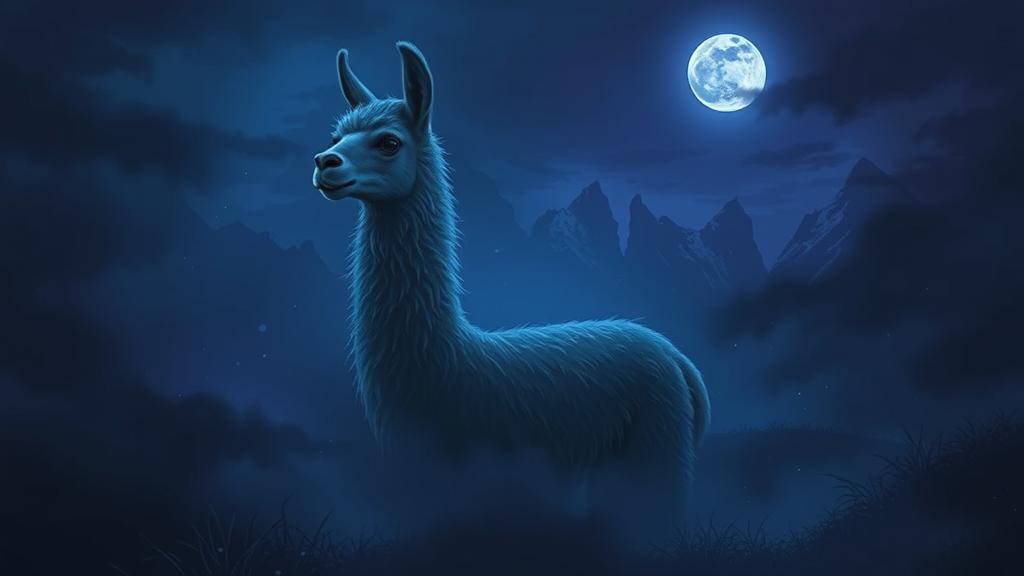
Llamas don’t bluff.
Every other large animal in the dream repertoire has a threat display: the horse rears, the dog growls, the bull lowers its head. The llama does something different. It stares at you with an expression of absolute equanimity, and then, if you’ve crossed a line it’d clearly been drawing, it spits. No escalation. No warning growl. You pushed it past its limit and now you know where that limit was.
When a llama shows up in someone’s dream, that quality is almost always the point.
A llama in a dream most often signals a boundary issue, either one that’s been crossed, one you’ve failed to enforce, or one you need to find. High-altitude associations (llamas are Andean mountain animals) add a secondary layer: clear thinking, elevated perspective, the view from above the problem.
An animal that knows its limits
The llama’s specific geography matters. It’s not a plains animal, not a lowland grazer. It’s designed for altitude, thin air, cold. It functions where other domesticated animals can’t. In a dream, that altitude reads as perspective: the capacity to stand above the tangle, see the whole terrain, not be overwhelmed by the noise at ground level.
This is the image I keep coming back to: the llama as the part of you that has already climbed above the situation and is waiting for the rest of you to catch up. Calm at height. Capable in conditions that are genuinely harder than average.
Jung wrote about animals in dreams as pre-civilised parts of the psyche, older and less managed than the conscious personality. The llama is an interesting case because it’s a domesticated animal with an undomesticated refusal point. Tame up to a threshold, and absolutely not beyond it. That’s not a contradiction. That’s a very specific psychological type.
What the spit means
If the llama spat at you, or spat at someone else in the dream, the boundary enforcement reading is almost certainly correct. Something, someone, some situation has crossed a line. The dream isn’t asking you whether this is fair. It’s showing you the limit that already exists.
The question to sit with isn’t “why is this creature hostile” but “where is the line, and who crossed it, and what happens next?” Revonsuo’s threat simulation framework would read the spitting llama as exactly the kind of social-boundary rehearsal that dreams are built for: your sleeping mind running the scenario of the limit being tested, checking whether you know how to respond.
- Notice what triggered itIn the dream, what caused the llama’s reaction? What action, statement, or approach preceded it? That’s where the real boundary is located.
- Identify whose boundary it isWere you the one who got spat at, or were you watching someone else cross a line with this animal? The perspective shifts everything.
- Ask about the aftermathDid the dream continue after the spit? Did you back away, freeze, laugh, or escalate? That response is usually more revealing than the spit itself.
- Follow the altitudeIf the llama was above you, on higher ground, or if the whole scene felt elevated, the dream may be less about conflict and more about perspective: something you need to see from higher up.
- Check what you’ve been toleratingLlamas are famously tolerant until they’re not. If the dream has a quiet, patient quality before the boundary moment, ask what you’ve been absorbing without reaction in waking life.
The quiet llama
Not all llama dreams have the spit. Some are simply quiet: the animal standing at altitude, or walking beside you, or watching from a ridge. This version has a different register entirely. It’s not conflict. It’s company. The llama as a calm presence at height, reliable in thin air, is your mind lending you an image of your own capacity to function in difficult conditions without drama.
If this is your version, it’s worth reading it generously. The dream isn’t warning you. It’s reminding you of something you already are.
For other animal dreams that deal with the moment of sudden force or aggression, the piece on dreaming of a roaring lion covers that territory in depth. And for the cousin of the llama dream that involves communication, something speaking when it shouldn’t, there’s the writing on dreaming of a talking dog, which is a completely different kind of surprise.
Andean roots
I’m usually careful about reaching into traditions I don’t have deep knowledge of, but it seems wrong to write about the llama without acknowledging that in Andean cosmology this animal carries genuine spiritual weight. In Inca ritual and in Quechua traditions, the llama was a sacred animal tied to the sun, to mountains, to the passage between earthly and elevated realms. The altitude reading isn’t something I invented. It comes from people for whom llamas were genuinely the animal that connected the human world to the high places.
Artemidorus didn’t have llamas, writing in Roman Asia Minor. But his approach to exotic animals, creatures outside a dreamer’s ordinary world, was consistent: rarity in the dream usually means the symbol is emphatic. Your mind doesn’t reach for an unusual animal unless it means something specific.
The giant spider dream does a similar thing with the emphatic-unusual register: see dreaming of a giant spider if you’re curious how that version plays out.
The thing I keep not saying directly: if you dreamed of a llama and you know, reading this, which boundary you’ve been failing to enforce or failing to respect, you don’t need more theory. You already have the answer. The dream handed it to you in the form of an animal that doesn’t bluff and doesn’t explain itself.
What it does is wait. Until you decide whether you’ll cross the line or not.
- Did the llama spit, or was it quiet? The two versions are almost different dreams.
- If it reacted, what caused it? That moment is the location of the actual boundary.
- Were you at altitude, or was the llama above you looking down? Elevation in the dream usually means perspective.
- Is there something in your waking life you’ve been tolerating past your own limit, the way a llama is calm until it simply isn’t?
Quick answers
What does it mean to dream of a llama?
Llama dreams most often point to boundaries: ones crossed, ones you haven’t enforced, or ones you need to find. The animal’s altitude associations add a secondary reading of elevated perspective and clear thinking. The llama’s behaviour in the dream, particularly whether it spat or remained calm, is the clearest guide.
Is a llama in a dream a bad sign?
Not inherently. The boundary-enforcement reading can be clarifying rather than threatening. A calm llama at height is a genuinely positive image: capability in difficult conditions, perspective above the noise. The spitting version is more pointed but still informational rather than ominous.
What does it mean if a llama spits at me in a dream?
It’s the dream’s clearest signal: a limit has been reached or crossed. The question to ask is what action or approach preceded it in the dream, because that’s where the real boundary is located. The spit is the response. The trigger is the message.
Why is the llama’s altitude important in dream interpretation?
Llamas are Andean mountain animals, built for thin air and high ground where other domesticated animals can’t function. In Andean traditions they connect the earthly and elevated realms. In a psychological reading, altitude in dreams often signals perspective: the capacity to see above the problem. A llama at height is your mind lending you an image of your own ability to function in genuinely hard conditions.