Animal Dreams
Dreaming of a Zebra: The Question the Pattern Asks
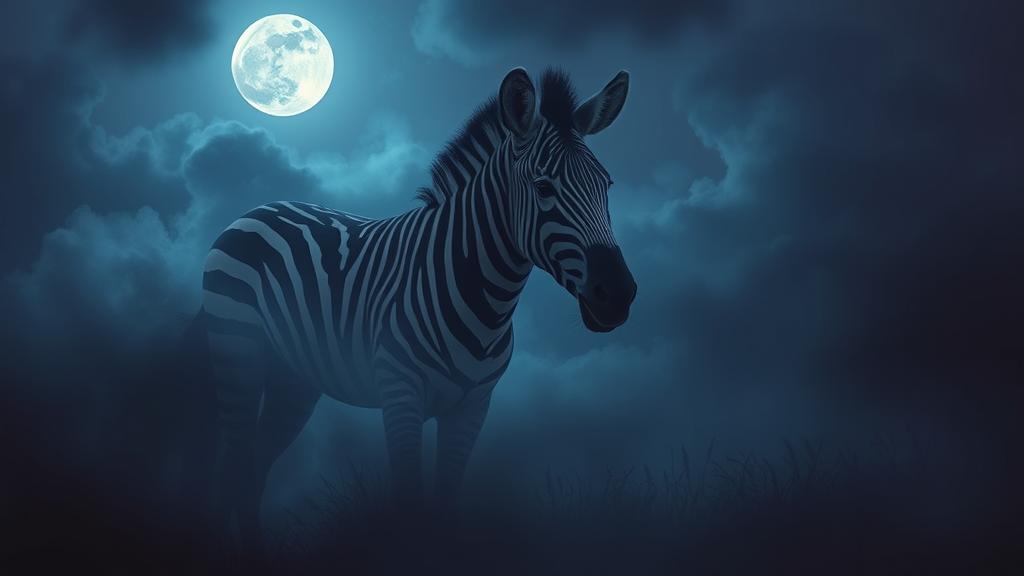
“Which one’s yours?” the kid asked, pointing at the herd on the screen. Documentary, afternoon, the kind of day where you’re watching something without really deciding to. The adult beside her said she couldn’t tell them apart. The kid studied the screen for another few seconds and said: “They can.”
That exchange won’t leave me. Because the zebra’s stripes, which look from the outside like the ultimate camouflage within a herd, are apparently individually distinct enough that zebras recognize each other by them at close range. The pattern that makes them invisible to predators is also the pattern that makes them known to each other. That’s the dream’s whole question, really.
The short version
A zebra in a dream usually raises the question of how you’re navigating the tension between fitting in and being distinctly yourself. It’s not an either/or. The zebra’s stripes serve both functions at once. The dream is asking whether yours do.
How to work through what you saw
- Notice your position in the dreamWere you watching the zebra from outside, moving alongside a herd, or somehow in the herd yourself? Your position tells you whether the dream is about observing a dynamic or living inside it.
- Read the herd or its absenceA single zebra alone is a genuinely different dream from a herd. Alone, the zebra is exposed and conspicuous, its camouflage is meaningless without the group. In a herd, the stripes dissolve into the pattern of others. Which version were you looking at?
- Pay attention to what the zebra was doingGrazing quietly is one thing. Running from a predator is another. The behavioral register of the dream shifts the emotional weight considerably, and Revonsuo’s work on threat simulation is worth thinking about here: the chase version is the dream rehearsing a specific kind of exposure fear.
- Consider the black and whiteNot symbolically, just: how did the contrast feel? Were the stripes sharp and clean, or blurred with motion? Clarity in the pattern tends to accompany dreams about a genuine choice available to you. A blurred or muddy pattern often comes when you’re not sure which side of a tension you’re actually on.
- Ask the belonging question honestlyThe zebra is, more than almost any other animal, an image of collective identity. Jung would have recognized this as the persona in animal form, the pattern you wear in public. The question his framework pushes toward: does your pattern still fit the herd you’re running with?
What Artemidorus would have noticed
Artemidorus didn’t encounter zebras, strictly speaking, but his Oneirocritica has detailed handling of striped and patterned animals, which he read in terms of duality and the presence of contrasting forces that cannot be separated from each other. He’d have had a practical reading for this animal: not a symbol of confusion, but of two things that have learned to coexist in a single body. The question would be whether that coexistence was stable or strained.
I think about that a lot in the context of readers who describe dreaming of a zebra during professional transitions, moments when they’re code-switching between two worlds and not entirely sure the pattern they’re wearing is authentic in either one.
When it’s running
A running zebra, especially one in a panicked herd, is the threat version. The camouflage-in-motion quality of zebra stripes, the way they blur and strobe when the herd runs, is thought to actually confuse predators’ tracking. That’s a very specific kind of defense: not hiding, not fighting, but making yourself hard to isolate. Dreams about running zebras often belong to people who are currently doing exactly that in their waking lives.
Readers who’ve also been dreaming of a white horse in the same period might find the comparison useful: the white horse is singular, visible, fully committed to being seen. The zebra doesn’t make that choice. The pattern does it for them, and whether that feels like freedom or constraint tells you something important.
There’s a version of this dream I haven’t fully worked out. The zebra that’s alone and completely still, not grazing, not running, just standing. The documentary kid would have known which one it was immediately. I’m not sure what the stillness means yet, other than that it feels different from all the other versions, less like a question about belonging and more like something waiting to be recognized for exactly what it is. If that’s the one you had, I’m curious what it meant to you. I’m genuinely not sure I’ve seen enough of them to say.
For those who dream frequently of a peacock, the zebra often arrives as a kind of counterweight: the peacock’s display is the opposite logic from the zebra’s stripes. One says: look at me and only me. The other says: find me in the pattern if you can. Dreams containing both animals are usually working through something about visibility and the cost of being unmistakable.
- Was the zebra alone or in a herd, and did I feel part of the scene or watching from outside it?
- Am I currently wearing a pattern that serves me in one context but makes me invisible in another?
- Is there a group I’m running with partly because the movement makes me harder to single out?
- What would it mean to be recognized individually, not as part of the pattern?
Quick answers
What does dreaming of a zebra mean?
It usually points to the tension between belonging and individuality, specifically the question of whether the pattern you present to the world is helping you blend in, helping others know you, or both at once. The context of the dream (herd or alone, still or running) shifts the reading considerably.
Is a zebra in a dream a good sign?
Generally yes, though it depends on tone. A calm zebra in a herd is often about finding your place or recognizing that you do belong somewhere. A panicked running herd has a more anxious quality, usually pointing to a fear of being singled out or exposed.
What does it mean if I was inside the zebra herd?
Being inside the herd typically signals something about group identity and how you navigate it. Jung’s framework around the persona is useful here: the dream may be asking whether the pattern you wear with your group is still genuinely yours, or whether it’s become a covering you’ve stopped examining.
Why did I dream of a single zebra standing alone?
A solitary zebra is conspicuous in a way that a herd never is: the camouflage only works in company. This version of the dream often arrives during periods of isolation or when you feel exposed without the context that usually surrounds you. It might also be pointing to something distinctive about you that becomes visible precisely when the crowd moves away.