Animal Dreams
Dreaming of a Kangaroo: Leaps, Pouches, and What You're Carrying
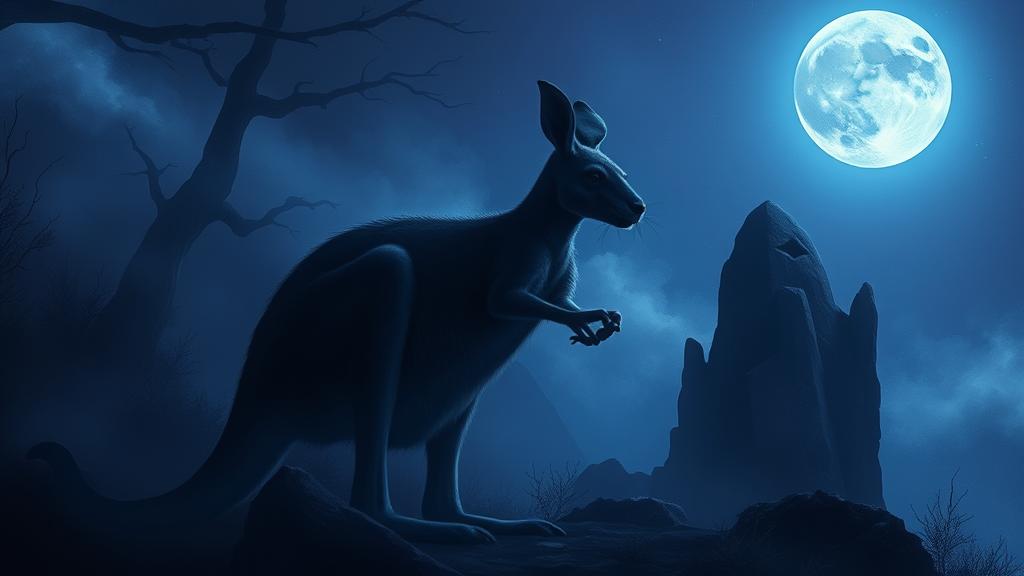
What moves in only one direction without being able to go back?
That’s the structural fact about kangaroos most people don’t consciously know but their dreaming minds seem to reach for anyway. Kangaroos can’t walk backwards. Their anatomy doesn’t allow it. They can hop forward, rest, hop again, but there’s no reversing. When this animal appears in your dream, that quality tends to carry the weight of the whole image.
A kangaroo in a dream almost always has to do with forward momentum, carrying something or someone while you move, and the particular pressure of a path that doesn’t easily allow you to go back. The pouch, if it’s present and occupied, changes things substantially toward care, responsibility, and what you’re protecting in motion.
The forward-only problem
- Notice what you were doing in the dreamWere you watching the kangaroo, being chased by it, riding it, or were you somehow inside the pouch? Each position puts you in a different relationship with the movement.
- Ask about the paceBounding effortlessly or laboriously? Smooth ground or broken? The terrain tends to map directly onto the conditions of whatever transition you’re navigating.
- Check what was in the pouchEmpty pouch, occupied pouch, or no pouch visible: these carry very different emotional registers. A joey in the pouch almost always introduces the theme of dependency, of someone or something that can’t yet manage without you.
- Notice whether you felt the forward-only quality as freedom or trapFor some dreamers it’s exhilarating. For others, the inability to look back is exactly what frightens them. Your reaction is the interpretation.
What the pouch is actually about
Jung treated animals in dreams as contact points with instinctual energies that conscious life suppresses or ignores. The kangaroo’s pouch adds something that most animals don’t carry: a built-in space for another creature, right at the body’s center. Dreams that foreground the pouch tend to surface questions about care. Who are you carrying right now? Who needs you to be moving forward even when you’re exhausted? Sometimes the dream flips it: you’re in the pouch, which is usually about dependence or protection, what it feels like to be carried, to let someone else manage the momentum.
Revonsuo’s framework would note that carrying-and-leaping dreams appear frequently during periods of major life transition, when the threat isn’t predation but something more abstract: the fear of not clearing the gap. You’ve committed to the jump but haven’t landed yet. The kangaroo body is a neat image for exactly that in-between.
Being chased by one
This is the version people mention with the most discomfort. And it is genuinely unsettling, because a kangaroo is an unexpected aggressor. It doesn’t fit the usual dream-predator profile. But kangaroos can be formidable, and a boxing kangaroo or an aggressively hopping one in a dream tends to carry the quality of something that started as nurturing or supportive and has turned demanding. A relationship, a role, a commitment you took on willingly that now feels like it’s coming after you.
The leap you’re not sure you can make
Artemidorus wrote about leaping animals in terms of ambition and aspiration: the creature that bounds rather than walks is trying to cover distance faster than walking allows. That reading still holds. A kangaroo in flight is your mind rehearsing a jump. Maybe you know exactly what it is. Maybe you’ve been pretending you don’t.
Dreams of other animals associated with purposeful movement, like dragonflies or storks, often share this quality of directed motion toward something. The kangaroo’s version is heavier: it’s carrying weight while it moves. That’s the specific pressure.
I think what makes kangaroo dreams stick is that quality of ungainly grace. The animal looks like it shouldn’t be able to move the way it does: too large, too weighted, that improbable tail. And then it goes. Fast, far, committed. I’ve started thinking of it as the dream’s way of showing you what committed motion actually looks like, not elegant, not smooth, but covering ground. What you’re trying to cover, and what’s in the pouch while you do it, that’s what this dream is really about. Dreams about the forward momentum of transformation can feel very different from this one: snakes shed and renew, but the kangaroo carries the past with it as it moves. That distinction matters.
When the kangaroo is injured or struggling
Not every kangaroo dream arrives at full speed. Sometimes the animal is hurt, limping, or can’t clear a fence it seems like it should clear easily. That version tends to land differently: less about the transition itself and more about whether you have enough left to make it. There’s a quality of watching something that should be capable struggling unexpectedly, and that image often shows up when you’re pushing through something while privately unsure whether your reserves are adequate.
Jung would probably say the struggling animal is the instinctual self running low. Not broken, not stopped, but laboring in a way it shouldn’t have to. The feeling in those dreams is rarely fear. It’s closer to worry. You’re not scared of the kangaroo. You’re worried for it. And that worry, when you trace it back to waking life, almost always has a name.
The dreaming mind tends to choose animals with a precision that feels unfair in retrospect. A kangaroo that can’t make its jump isn’t a kangaroo anymore in the functional sense. It’s just a large animal stuck on the wrong side of something. If that image stayed with you after waking, it’s worth sitting with the question of what you’re trying to clear, and whether you need to ask for more runway before you commit to the leap.
- What was in the pouch, if there was one? A person, an object, nothing yet?
- Was I the kangaroo, watching it, riding it, or inside the pouch? Each position is a different question.
- Did the forward-only movement feel like freedom or like I couldn’t go back to fix something?
- What gap am I currently in the middle of jumping, and haven’t landed yet?
Quick answers
What does it mean to dream about a kangaroo?
Kangaroo dreams typically deal with forward momentum, carrying someone or something while you move, and the pressure of transitions that don’t easily allow you to reverse. The pouch is a significant detail: if it appears and is occupied, the dream is probably about the weight of caring for someone who depends on your movement.
What does it mean to be chased by a kangaroo in a dream?
Being chased by a kangaroo often points to a commitment that started as nurturing and has turned pressuring. It might be a role, a relationship, or a responsibility you took on willingly that now feels like it’s pursuing you. The kangaroo’s unexpected aggression in these dreams tends to reflect exactly that surprise.
What does the kangaroo pouch mean in a dream?
The pouch almost always introduces themes of care and dependency. An occupied pouch asks who you’re carrying right now, and whether that carrying is sustainable. An empty pouch can feel like loss, or like potential, depending on how the dream felt. Being in the pouch yourself tends to be about protection and being carried rather than being the one who moves.
Why would I dream of a kangaroo if I’ve never seen one in real life?
Your sleeping mind borrows images based on their symbolic structure, not their familiarity. The kangaroo is a very precise package: forward-only motion, carrying while leaping, powerful but also awkward. If those qualities match something in your waking life, your mind might reach for this image exactly because it isn’t muddied by memory.