Animal Dreams
Dreaming of a Toad: The Ugly, Patient Thing You Keep Meeting
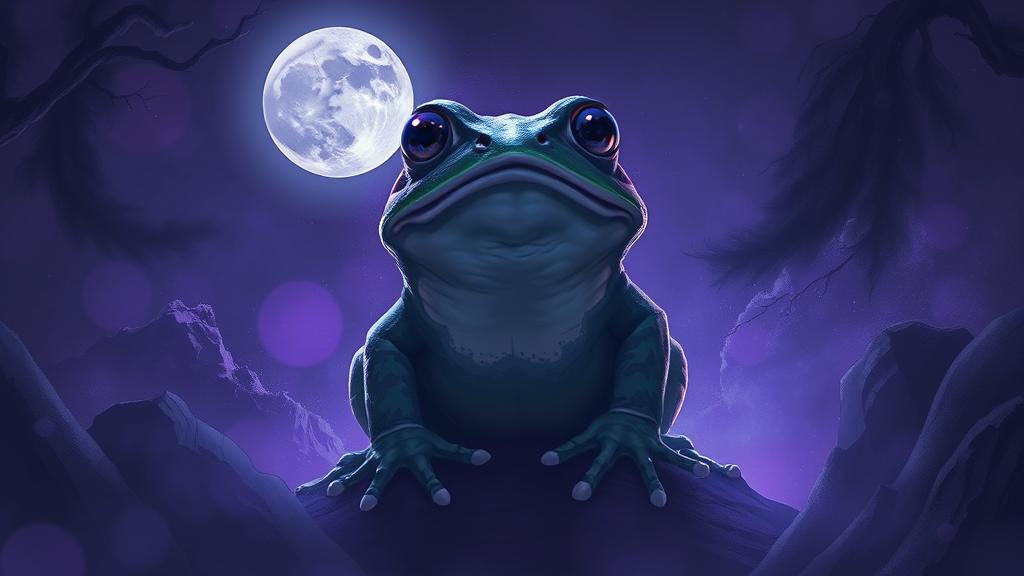
I’ll be honest: I find toads slightly revolting. The warty skin, the slow blinking, the way they sit in rain with absolute indifference to being looked at. I’ve spent years reading dream symbolism and I still don’t have an easy relationship with this particular animal. Which is probably why its appearance in dreams interests me so much. Disgust that specific tends to be pointing at something.
A toad in a dream most often represents transformation you didn’t ask for, or a situation, person, or quality in yourself that feels ugly or beneath you but carries real potential. The toad’s patience is the signal. Something is waiting for you to look at it properly.
What makes this animal so old in human dreams
Toads have been in our symbolic vocabulary longer than almost any other creature. The Chester Beatty papyrus, dating to around 1200 BC, records Egyptian dream interpretations that include amphibians as omens of generative force, connected to the flooding of the Nile and what comes up from the mud. That’s a very old association: toads as what survives damp, dark, difficult conditions.
Artemidorus, writing in the second century, placed toads closer to earth and slow processes: they were the dreams of farmers, healers, and people undergoing change by increments. He’d find our modern psychological readings compatible, I think. We’ve just given different names to the same quality.
- Ancient Egypt (~1200 BC)
Toad-headed goddess Heqet connected to fertility and rebirth. Chester Beatty papyrus records amphibians as symbols of what the waters bring up. Dreams of them: generative, earthy, uncanny.
- Second century (Artemidorus)
Oneirocritica reads toads as slow-world animals: good omens for laborers, healers, those who work with their hands or bodies. Patience over brilliance.
- Medieval Europe
The toad became sinister, associated with poison and witchcraft, which says more about the era’s anxieties than the animal. Still: the power was acknowledged, just feared.
- 19th and 20th century folklore
The prince/toad transformation story in European fairy tales, which Jung would have recognized immediately: the ugly outer form that conceals inner worth, waiting on the right conditions.
- Contemporary dream analysis
Jung’s framework of shadow integration maps naturally onto toad dreams. What looks like repulsion is often the psyche preparing to own something it’s been keeping at arm’s length.
The prince story is the actual psychology
I’m usually wary of using fairy tales as dream keys because it flattens things. But the toad-to-prince transformation maps so closely onto what Jung meant by shadow integration that I can’t entirely leave it out. The shadow, in Jung’s framework, is the part of the psyche that holds what you’ve rejected: qualities that felt dangerous or unacceptable and got pushed down. Those qualities don’t disappear. They sit at the edge of your inner landscape, squat and patient, waiting to be looked at.
A toad in a dream rarely scares people in the way a snake or spider might. It unsettles. It provokes something closer to reluctance. And that reluctance is often the information: there’s something in this dream’s territory you’ve been very politely avoiding.
One quality you keep not owning
This is the shortest I’ll say it: if a toad appears in your dream and you want to look away from it, the dream is almost certainly about a quality in yourself, or a situation in your life, that you’ve labeled too ugly to sit with. It’s not asking you to love it. It’s asking you to hold still long enough to actually see it.
Revonsuo’s threat-simulation reading would place the toad among the non-mortal threats: things that register as requiring some response but not flight. That category, things that are repellent but not dangerous, tends to generate the most interesting dream material, because the brain is rehearsing something other than escape. It’s rehearsing tolerance. Possibly integration.
If you’re working through animal dreams more broadly, the piece on dreaming of spiders covers another creature that triggers visceral reactions and carries complex symbolism, and dreaming of an otter explores the warmer end of the animal-dream spectrum, if the toad left you wanting something lighter.
The thing about the patience
What I keep coming back to is the stillness. A toad in your dream probably wasn’t rushing. It was just there, occupying its patch of wet ground, unperturbed by your reaction to it. That quality is part of the symbol and I think it’s the most instructive part.
The thing the toad represents has been waiting. It isn’t urgent in the way anxiety is urgent, or anger is urgent. It’s patient in the way that buried things are patient: which is to say, indefinitely. You can look at it now or you can dream about it again. It’s entirely up to you.
For what it’s worth, I’ve started to find toads less revolting when I actually look at them rather than flinching. There’s something in the eye, that steady, horizontal pupil. It looks at you the same way it looks at everything else. Which I can’t decide is rude or enviable.
- What was my reaction to the toad: repulsion, curiosity, fear, something else? That reaction is the data.
- Is there something in my waking life I keep labeling as too ugly, too difficult, or too embarrassing to look at directly?
- Did the toad seem threatening or just present? If just present, what part of me is that patient about something?
- What would it mean to stop turning away from whatever the toad represents?
Quick answers
What does it mean to dream of a toad?
Usually transformation that hasn’t announced itself yet, or a quality in yourself (or a situation) that you’ve been keeping at a distance because it feels ugly or beneath you. The toad’s defining quality in dreams is patience: something has been waiting for your attention.
Is a toad in a dream a bad sign?
Historically, toads have been read as both ominous and lucky depending on the culture. In psychological terms, neither reading is right on its own. The toad is almost always about something that needs to be faced rather than something happening to you.
What does it mean to be afraid of the toad in a dream?
The fear is worth attending to specifically. Something in the toad’s territory, a quality, a situation, a decision, is generating real resistance. Jung would say that the intensity of the reaction points to the size of the shadow material involved. Bigger repulsion, more significant the thing being avoided.
Why does the toad appear in so many cultures’ dream traditions?
Because it’s genuinely ancient in human symbolic life. The Egyptian connection to fertility and the Nile’s mud, the medieval European fear-respect, the fairy tale transformation: they’re all pointing at the same quality. The toad lives where things are wet and marginal and becomes something more than its surface suggests. That’s not a metaphor anyone invented. It’s what toads actually do.