- Tradition
- Psychological readingAnimal dreams
- Also read in
- The BibleSame symbol, other tradition
- Draws on
- Revonsuo
- Reviewed
- 5 min read
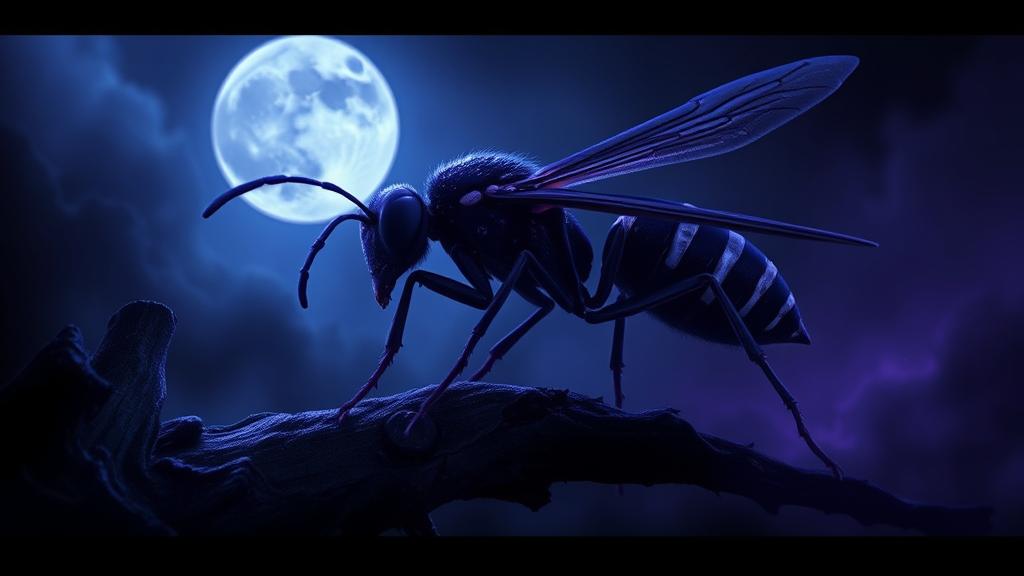
Wasps in dreams are loud out of all proportion to how rarely they sting. That is because the dream is tracking attention, not injury. A wasp working the gap between two panes of glass, methodical, furious, loud enough to hear from across the room, can’t reach you, and you still can’t concentrate on anything else. That specific kind of attention, a single buzzing threat at the edge of awareness commandeering your whole afternoon, is exactly what wasp dreams do.
A wasp in a dream is almost never about the sting itself. It’s about a source of potential threat in your waking life that’s occupying more of your attention than it probably warrants. Sometimes the wasp is anger, yours or someone else’s, flying loose in a room where you’re trying to stay calm.
What the dream is actually tracking
Wasp dreams carry a specific quality of dread: not the clean terror of a predator dream, but the exhausting low-grade vigilance of something that might sting if you move wrong. That distinction matters. Revonsuo’s threat simulation framework treats animal dreams as rehearsal for real dangers, but the wasp rarely represents a catastrophic threat. It rehearses the kind of watchfulness you maintain around difficult people, unstable situations, or your own anger when you’re trying to hold it still in a room where it doesn’t belong.
- Notice where the wasp isA wasp inside a building means the irritant or threat has already entered your space. A wasp outside, near a window or door, is something you’re keeping out but aware of. The location tells you whether the boundary has been crossed.
- Count how manyA single wasp is a single focused irritation. A nest, or a swarm, is something that’s been building without your full attention, probably for longer than you realized.
- Notice what you doDo you freeze, flee, try to catch it, ignore it, or get stung? Your action in the dream tends to mirror your current approach to the real-world equivalent. Freezing suggests you’re paralyzed around a conflict. Getting stung despite trying to stay still suggests the thing you’re avoiding has already hurt you.
- Ask whose anger it isJungian readings of insects in dreams often touch on aspects of the psyche that have been split off and given their own agency. A wasp flying freely in a room sometimes represents anger that doesn’t feel owned. It’s loose and hostile and you’re not sure whether it’s yours.
The sting that does or doesn’t land
A wasp that stings you in a dream is far less common than people expect. Most wasp dreams are about the threat, not the contact. If you do get stung, the question is where. A sting on the hand tends to be about work or what you’re handling. On the neck or face, it’s about communication, reputation, how you’re being seen. Older dream-book logic reads the body part affected as the area of life being addressed, and that intuition holds up surprisingly well.
The sting that never quite lands, the wasp that circles and threatens but doesn’t make contact, is the more common dream and the more interesting one. You wake not from pain but from hypervigilance. That’s not a soft version of the sting dream; it’s a different thing entirely. The threat that might materialize is harder to act against than the one that already did. And in dreaming of a snake biting your hand, the contact carries the same body-as-domain logic: the bite tells you which area of life took the hit.
The nest you find
Discovering a wasp nest in a dream, especially inside a house, in the attic, behind a wall, under the stairs, is one of those images that has a particular quality of dread precisely because the threat has been building in secret. The nest is already large. It has structure and history. You just found it. This version of the dream is fairly common after long-standing conflicts or resentments that finally surface. You didn’t know how much had accumulated. Now you do.
The architectural context in those dreams is worth noting. Jungian readings treat the house as an image of the self, and a nest found in the walls means the problem is structural rather than passing through. It’s been living there. The hidden location matters: attics are associated with memory and past; basements with what’s been suppressed; walls with the structures you maintain that other people can’t see. A nest in the wall of the room where you work is asking a specific question about what you’ve built around something you haven’t faced.
If you dream of killing it
Short answer: the usual feeling is relief in the dream and a mild emptiness on waking. The threat is resolved and something feels taken rather than transformed. That’s a real distinction from dreams where you and the creature reach some kind of equilibrium. Dreaming of a roaring lion sets the confrontation against a much bigger animal, and there the resolution carries a different emotional charge from simply ending the threat.
The social version
Wasps are social insects, more so than people usually remember. A single wasp in a dream often represents an individual, specific, and identifiable. A colony is a group dynamic: a workplace, a family, a social circle where the collective mood has turned hostile or where there’s an unspoken threat beneath the surface politeness. If the wasp in your dream felt less like a wild creature and more like a person, that identification is worth sitting with. Sometimes the dream isn’t being metaphorical at all. Sometimes it’s just showing you a person as what they feel like to be around.
Go back to the wasp working the glass. The sound is completely automatic, that specific frequency, and it leaves you unable to concentrate, waiting for a threat that can’t reach you. The wasp dream doesn’t need to be complicated. It’s that sound. It’s the cost of knowing something hostile is nearby and that you can’t do much about it until it decides to stop.
- Was the wasp inside or outside? That tells you whether the boundary has already been crossed.
- Did it sting you, or did it only threaten to? The difference in feeling describes your relationship to the conflict.
- Was there a nest, or just the one creature? Scale tells you how long this has been building.
- Is there someone in your life who feels like a wasp right now, and have you admitted that to yourself?
One symbol, two traditions
Where the psychological read treats wasp as a mirror of your inner state, the biblical tradition treats it as something to weigh, prayerfully, against what Scripture actually says.
A wasp in a dream is almost never about the sting itself. It’s about a source of potential threat in your waking life that’s occupying more of your attention than it probably warrants. Sometimes the wasp is anger, yours or…
You are reading this oneIn Exodus 23:28, Deuteronomy 7:20, and Joshua 24:12, the hornet is a divine agent sent ahead of Israel to drive out what resists the promised path. It’s an instrument of purposeful displacement, not random threat.
Read the biblical meaning →Quick answers
What does dreaming of a wasp mean?
Usually a source of irritation, threat, or anger in your waking life that you’re holding your attention around. The wasp rarely represents catastrophe; it represents the ongoing cost of vigilance around something or someone that might cause harm if you move wrong.
What does it mean if a wasp stings you in a dream?
Contact and location both matter. A sting that happens despite your precautions suggests something you’ve been trying to avoid has already reached you.
What does a wasp nest in a dream mean?
A nest found inside your home or walls is one of those clear images for something that’s been building without your full awareness. Usually it surfaces after long-standing conflicts or resentments reach a point where they can’t stay hidden. The location of the nest within the house points to which area of your life this concerns.
Is dreaming of a wasp a bad sign?
Not inherently. It’s an alert dream, not a doom dream. The wasp flags something in your waking situation that needs attention, but the dreaming mind uses wasps precisely because they’re warnings you can act on. The creature is only dangerous if you ignore it.
Sources for this reading
- Revonsuo, A. (2000). The reinterpretation of dreams: An evolutionary hypothesis of the function of dreaming. Behavioral and Brain Sciences, 23(6), 877-901.DOI
Full bibliography on Sources and method. Found a mistake? Tell us and see the corrections log.