- Tradition
- Psychological readingAnimal dreams
- Draws on
- Revonsuo, Jung, Artemidorus
- Reviewed
- 5 min read
In the dream it is five-thirty in the morning, the room still dark, and a blackbird is singing outside the window with everything it has. Not alarming. Not peaceful either. Something in between, like news arriving before you were ready for it. You lie there not moving. The song is technically beautiful, and it feels like an interruption all the same.
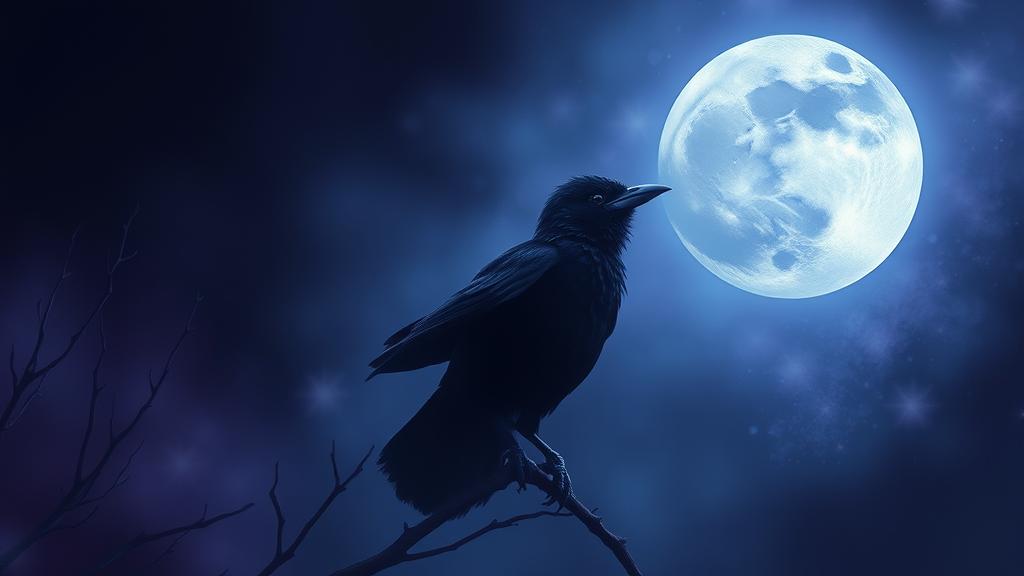
That quality is hard to name, and it is what sets blackbird dreams apart. The bird isn’t frightening. It doesn’t threaten anything. It’s simply present in a way that feels weighted, like it knows something the dreamer doesn’t. And what the blackbird is doing almost always comes down to one of two things: watching or singing. Both matter for different reasons.
A blackbird in a dream tends to carry intuition, transition, and a particular kind of alert attention. It’s a messenger image not in the supernatural sense but in the sense that something in you is trying to communicate. The song, the silence, and whether the bird is near or far each point to different things.
The difference between singing and watching
A blackbird singing in a dream is a different experience from a blackbird that simply stands and looks at you. The song version tends to feel like something being offered: a message your waking self keeps deflecting, surfacing in the one place you can’t argue with. It’s not that the song has literal content. It’s that the act of sustained, deliberate sound in a dream is your mind’s way of making something audible that you’ve been treating as background noise.
The watching version is quieter and often more unsettling. A blackbird that simply holds its position and looks at you is an image of the part of yourself that knows. Not prophecy. Not threat. Just knowledge you haven’t yet moved toward. Carl Jung would have recognized this as a shadow carrier, a figure that holds what the conscious self hasn’t integrated. I usually stop short of full Jungian machinery, but on this particular image the shadow reading is hard to argue with. The bird knows where you’ve been putting your attention and where you haven’t.
Old readings that still have teeth
The blackbird has been an omen bird for a long time and across cultures with almost no consensus on whether the omen is good or bad. Celtic traditions gave it a foot in both worlds, a messenger between the living and the dead. In Norse association the raven gets that role, but the smaller black birds carried some of the same weight. In English folk traditions the blackbird was one of the birds you didn’t want singing near the window when someone was ill, while in others it meant precisely the opposite.
Artemidorus, writing in the second century CE, held that the same dream means different things for different dreamers, depending on age, status and occupation. The question that follows is still the right one: what does the blackbird mean for your particular life? What in your world is dark and musical at the same time?
What the colour carries
Worth saying quickly: the blackness isn’t sinister. In the dreamwork context, darkness is almost never where the actual weight lives. What the darkness does is contrast. A blackbird against a pale sky, against snow, against a lit window, that contrast is your mind insisting that this thing can’t be missed. It’s making the bird visible to the part of you that would otherwise look past it.
The instinct problem
Antti Revonsuo’s work on threat simulation suggests dreams run a kind of rehearsal for things that matter to our navigation of real life. The blackbird dream isn’t really a threat simulation in the classical sense, but it does seem to track something similar: the activation of instinct that isn’t currently being acted on. Most people who have this dream aren’t in obvious crisis. They’re in a period of drift, or quiet suppression of something they know but aren’t doing anything with.
I don’t think the dream is supernatural. But I do think it’s precise. The blackbird as an image is oddly honest about what’s going on. It doesn’t dress the message up. It just sits there in its absolute black and lets you decide what to do with it. If you’ve also been dreaming of a dead animal, the combination suggests an intuition or instinct that’s been suppressed rather than just unheard. And dreaming of a talking bird is related territory if your blackbird seemed on the verge of speech.
Back to that pre-dawn song. The reflex is not to lie there working out what it means; it is to hear it and then not sleep anymore. Usually something is going on that week, some decision rolled around without being made. The bird doesn’t tell you anything you didn’t know. It just refuses to let the room stay quiet. That’s probably what your dream was doing too.
- Was the bird singing or watching? That distinction almost always points toward what the dream is doing.
- Did I move toward it or away? My reaction in the dream tends to mirror how I’ve been responding to whatever the bird represents.
- What in my waking life is dark and precise and slightly apart from everything else?
- Is there something I already know that I’ve been treating as background noise?
Quick answers
What does dreaming of a blackbird mean?
A blackbird in a dream usually points to intuition, instinct, or something you already know but haven’t fully turned toward. It’s a messenger image not in any supernatural sense, but in the sense that part of your mind is trying to make something audible that you’ve been treating as background. The singing or watching version each carry slightly different emphasis.
Is a blackbird dream a bad omen?
Traditional cultures disagreed entirely on this, which is itself informative. In some traditions the blackbird near a window was ill-boding; in others it was a good sign. Psychologically, the dream isn’t good or bad in that sense. It’s precise. It tends to arrive when instinct is active but not being acted on, and that’s more valuable than an omen reading.
What does it mean if the blackbird was watching me without moving?
That’s the quiet, steady version. Something in you is observing a situation you’re in the middle of, holding ground and not retreating. This version often arrives before a decision: your own perceptive faculties have already made the call; you just haven’t consciously caught up yet.
Why does the blackbird in my dream feel ominous even though nothing happens?
Because the bird’s presence is doing the whole work. It doesn’t need to act. Its weight comes from being known and alert in a way that you aren’t quite, yet. That slight imbalance of knowledge between you and the bird is what generates the feeling. It’s less about danger and more about something you haven’t fully faced.
Sources for this reading
- Revonsuo, A. (2000). The reinterpretation of dreams: An evolutionary hypothesis of the function of dreaming. Behavioral and Brain Sciences, 23(6), 877-901.DOI
- Jung, C. G. (Ed.). (1964). Man and His Symbols. Doubleday.
- Artemidorus of Daldis (2nd century CE). Oneirocritica. English edition: Harris-McCoy, D. E. (2012). Artemidorus’ Oneirocritica: Text, Translation, and Commentary. Oxford University Press.
Full bibliography on Sources and method. Found a mistake? Tell us and see the corrections log.