Place Dreams
Dreaming of a Cellar: Descending Into What You Know Is There
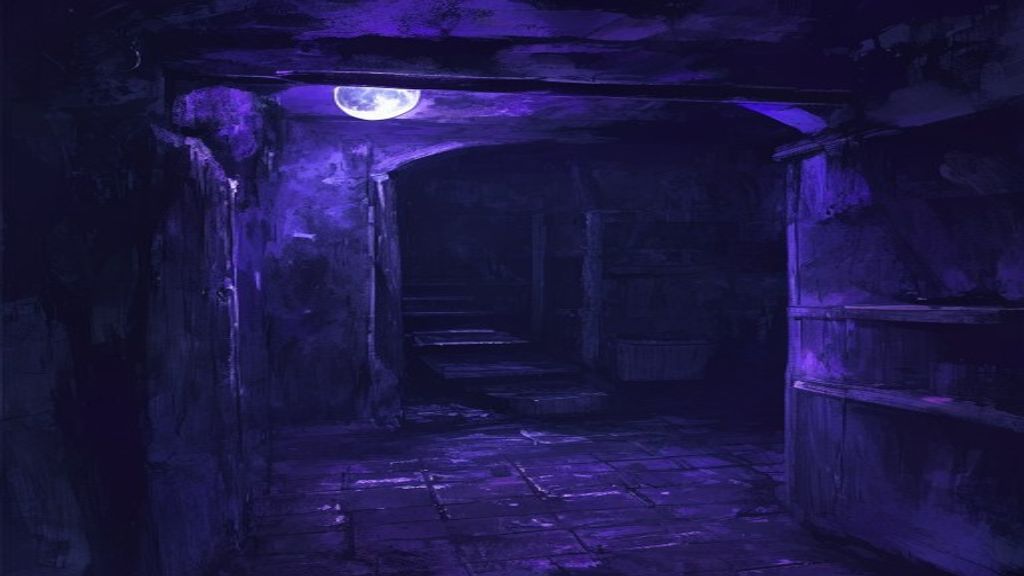
I’ve never once wanted to write about cellar dreams. I’ve put it off for years, actually. The dreams people send me from this category are too consistent: the stairs going down, the cold rising to meet you before you reach the bottom, and underneath it all, the absolute certainty that something is down there that you’d prefer not to find. I keep reading these accounts and I keep having the same response: yes. I know that staircase.
The cellar is the most primal of the house-dreams. Not because it’s ancient, though the symbol is, but because it runs on a body logic that’s hard to argue with. Cold comes from below. Dark comes from below. The things we hide go below. The dream doesn’t need to explain any of this. You already know it before the first step down.
A cellar in a dream represents the deepest layer of the psyche: the things that have been stored in the dark, deliberately or not. This includes memories, instincts, suppressed emotions, and inherited patterns you didn’t choose. The descent itself, whether you choose it or are forced into it, is usually the dream’s real subject.
The history of going down
- 2nd century
Artemidorus catalogued underground spaces in the Oneirocritica as signs of hidden things, secret knowledge, and the parts of life conducted away from daylight. Going down in a dream was associated with difficulty and with uncovering. He wasn’t wrong.
- Early 20th century
Freud read cellars and underground spaces as clear unconscious symbols, the repressed content that gets stored below the visible life. Historical interest, even if the framework has dated.
- Mid 20th century
Jung developed the house-as-self in full, with the cellar as the personal unconscious and sometimes the collective unconscious: the basement of what’s human, not just what’s individual. His account in Man and His Symbols is still worth reading, with patience.
- Contemporary research
Domhoff’s continuity work shows that descending-space dreams cluster around periods of psychological excavation, grief, difficult introspection, or situations where something long-avoided is surfacing. The structure of the symbol holds across cultures. The content is always personal.
What the cold is telling you
The cold is the detail almost nobody mentions, and I think it’s important. It’s not just atmosphere. It’s the dream being accurate. The things we put in the cellar are the things we haven’t processed, which means they’re also the things that haven’t had warmth run through them yet. Emotions that were felt briefly and sealed. Memories that got stored before they were digested. Old patterns that came from somewhere else and got inherited rather than chosen.
These things aren’t dangerous because they’re evil. They’re cold because they haven’t been touched. The dream takes that literally.
Jung would call the cellar the place of the shadow, the aspects of the self that have been denied access to the upper floors. He’d also say, and this is the part that usually surprises people, that the shadow isn’t only the bad material. It includes the parts of yourself that felt unsafe to keep visible. Tenderness you learned to hide. Ambition you were taught to distrust. Intelligence that made you a target at the wrong age.
The something down there
Most cellar dreams include it: a certainty, before you reach the bottom, that something is waiting. The dream doesn’t always show you what it is. Sometimes you wake before you get there. And this, I think, is the dream being kind, or at least careful. It’s telling you something is down there without forcing a confrontation you haven’t prepared for.
When the dream does show you what’s at the bottom, the reveal is almost never as bad as the approach. I’ve read hundreds of these accounts and the pattern holds: the dread on the stairs is almost always heavier than what’s actually found. A door. A figure sitting quietly. An old piece of furniture. A box. The horror is architectural, not substantive. The cellar knows it doesn’t need to show you everything. The stairs are enough.
Dreams that lead you toward hidden or sealed spaces often travel together. If you’ve also dreamed of dreaming of a cave, that’s the same descent impulse but wilder, less constructed, less about your personal history and more about something older than you. And if the cellar leads you to stairs that keep going, the dreaming of stairs piece unpacks what the direction of travel means, specifically.
Choosing to go down
The most significant variable in cellar dreams is agency. Did you choose to go down, or were you sent? Pushed? Trapped? The difference matters a lot.
Voluntary descent, when you decide to go down the stairs in the dream, tends to point toward a kind of psychological readiness. Something in you has decided it’s time to look at what’s been stored. This version of the dream often arrives alongside therapy, or significant life change, or the quiet aftermath of something difficult finally resolving. You’re not afraid of the cold. You’ve brought a light.
Forced descent, being chased down, or finding yourself already at the bottom without choosing to go, lands differently. That’s an external pressure making you look at something you’d have preferred to leave in storage. Not always bad. Often necessary. The difference is that it doesn’t feel like your timing.
I promised myself I’d write this piece without the word ‘unconscious’ because it gets used as a kind of punctuation, a place to end the sentence without finishing the thought. What I’d rather say is just: the cellar is where you put things. You know what you put there. The dream is usually not revealing a mystery. It’s illuminating something you’ve already half-admitted.
The cold is still there when I think about this. That specific sensation of a space that doesn’t warm up regardless of the season. I had a cellar dream last winter, and I spent a week thinking I was analyzing it. I was avoiding it. There’s a difference. The thing at the bottom of the stairs was a version of a decision I’d been refusing to make, dressed in darkness and waiting patiently.
I still haven’t made the decision.
- Did I choose to go down, or was I driven there? Whose timing was this?
- What was the emotional texture: cold dread, reluctant curiosity, or something stranger?
- Did I find what I was afraid of, or was the staircase itself the point?
- Is there something in my current life I’ve been keeping at the bottom of the stairs?
Quick answers
What does it mean to dream about a cellar?
A cellar in a dream typically represents the deeper, less-examined parts of the self: stored emotions, suppressed memories, inherited patterns, or material you’ve put away without processing. Jung associated cellars with the unconscious layer of the house-as-self. The cold and darkness aren’t necessarily threatening; they simply haven’t had warmth run through them yet.
Is dreaming of a cellar a bad omen?
No. Cellar dreams are rarely prophetic in that sense. They’re usually psychological, pointing to material that’s been stored rather than digested. The dread in the dream is often about the approach rather than what you find. Most people who make it to the bottom discover something far less terrible than the stairs suggested.
What does it mean if something is following me in the cellar?
Being chased in a cellar dream combines two significant motifs. The pursuit usually represents something unacknowledged pressing for your attention, and the cellar setting suggests it’s been stored below your conscious life for some time. The pressure to look at it is coming from within, not from outside.
Why do I dream of a cellar repeatedly?
Recurrence usually means the material down there hasn’t been addressed. Either you’re not quite ready to look at it, or you’ve recognized it and haven’t yet done anything with it. Domhoff’s continuity research suggests recurring location dreams track persistent waking concerns. The cellar keeps appearing because whatever it stands for hasn’t changed.