Nature Dreams
Dreaming of a Desert: the silence between what you need and what you have
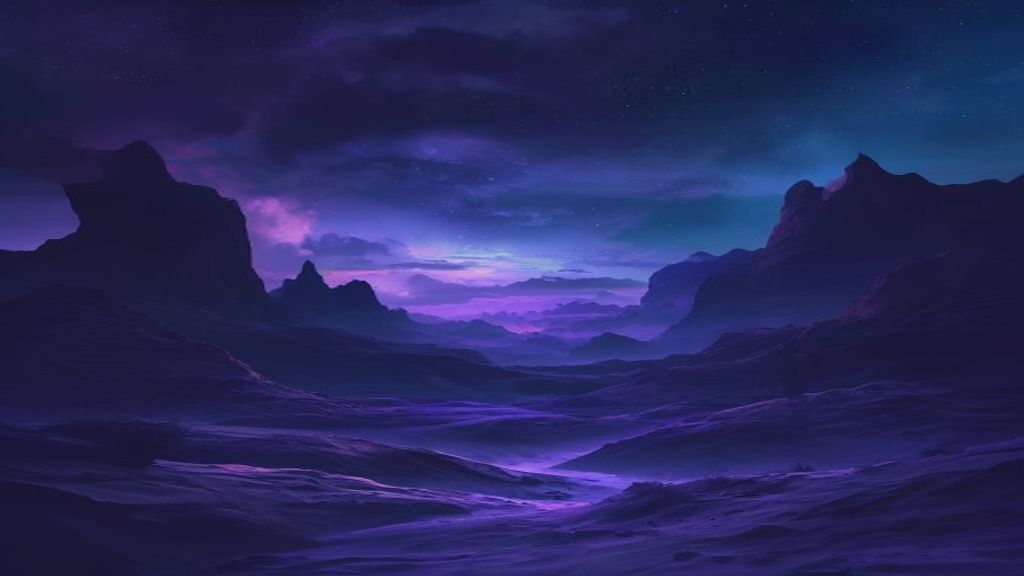
A flat horizon, no end in any direction. Probably you’ve seen it in a film before you dreamed it, and yet when the desert shows up in a dream it never feels borrowed. It feels original, like your mind invented it for you specifically. That’s the thing about this landscape: it’s the same in every version and still completely yours.
I’ve been thinking about why the desert insists on that quality of personalness. I think it’s because the dream strips context. In a city dream, in a house dream, even in a forest dream, there’s furniture, there’s architecture, there’s something to put your hand against. The desert gives you nothing but yourself against the sky. And it turns out that’s a very specific kind of confrontation.
What the absence is telling you
The desert dream isn’t a dream about drought or thirst, even if that’s literally what’s happening in it. It’s a dream about reduction. Everything extraneous has been removed. What you’re standing in is what’s left after the subtraction.
That can be brutal or clarifying, and sometimes both. The dream where you’re alone in the desert and terrified is different from the dream where you’re alone in the desert and oddly peaceful. The landscape is identical in both. The feeling is completely different. I’d argue the feeling is the entire message.
Jung would recognize the desert as a symbol of what he called the self stripped of persona, the outer roles and social furniture removed so something more essential can be seen. I’m a little skeptical of how far that reading goes in practice, but there’s something in it. The desert dream does tend to arrive when ordinary life has gotten very loud and very full, as if your sleeping mind needs to empty the stage before it can show you what’s actually standing in the center.
How different traditions have read this landscape
| Tradition | How it reads the symbol |
|---|---|
| Ancient Egypt | Deserts in Egyptian dream traditions signified transition and testing. The desert was not death but the passage before transformation, a place the soul crossed to reach what came next. |
| Islamic tradition | Following the Ibn Sirin tradition of oneiromancy, the desert often indicated a journey of spiritual significance, sometimes hardship that preceded divine favor. The direction of travel mattered as much as the landscape. |
| Greek and Roman (Artemidorus) | Artemidorus read wilderness and uncultivated land as signs of things unsettled or untamed in the dreamer’s life. A desert might indicate a period where normal resources were unavailable and the dreamer would need to rely on what they already carried. |
| Jungian psychology | The desert as the individuation landscape: a place where the accumulated social self has been worn away by wind and time, leaving only what’s structural. Terrifying or liberating depending on what survives the stripping. |
| Contemporary research | Domhoff’s continuity work suggests desert dreams cluster around periods of actual depletion, relational or professional or creative. The mind is faithful: it gives you the landscape that matches the internal weather. |
What I find striking across all of these readings is that not one of them treats the desert as simply negative. Even the hardest interpretations, Artemidorus’s unsettled-life reading, the Islamic hardship-before-favor reading, treat the desert as a crossing rather than an endpoint. It’s the space before. That’s an unusual consensus.
Whether you’re crossing it or standing still
Two very different desert dreams, and they mean different things. In the crossing dream, you’re moving, there’s a direction even if the destination isn’t visible, and your legs keep working even when the distance doesn’t seem to close. That version tends to arrive during long transitions, the kind that take years and look the same in the middle as they did at the start. You’re in it. You’re still moving. The dream’s just telling you it knows.
The standing-still version is harder. You’re in the middle of the desert and you haven’t moved and you have no reason to move. That one I’ve heard described again and again by people in the midst of creative blocks, burned-out professionals, people coming through the long flat aftermath of loss. It’s not paralysis exactly. It’s more like waiting for something to arrive that you can’t name yet.
If that still desert keeps showing up, it might be worth reading alongside what it means to dream of a cliff: that dream tends to involve the same quality of exposure, the same lack of cover, but the cliff adds the question of whether you’re about to jump or already falling.
The oasis problem
When an oasis appears in a desert dream, people almost always feel two things at once: relief and suspicion. Whether it turns out to be real or a mirage matters less than the fact that you found something to hope for in the middle of the emptiness. That double-feeling, I think I might believe this but I’m not sure, is worth holding onto when you wake. It often mirrors something in your waking life: an opportunity or a relationship that’s arrived in a depleted period and still doesn’t feel entirely trustworthy.
Dreams of a mountain sometimes appear as companions to the desert: where the desert is horizontal exposure, the mountain is vertical aspiration. If you’ve had both in the same week, your dreaming mind might be mapping the same situation from two different angles.
The horizon that doesn’t change
I said the flat horizon is the thing, and I want to return to it. In most environments, movement changes what you see. Walk through a city, a forest, even a field, and the view shifts. In the dream desert, you can walk for what feels like hours and the horizon stays exactly where it was. Same line, same distance, same quality of light at the edge of the visible world.
That static horizon is the desert’s version of a recurring dream. Your mind is telling you that effort alone won’t change this particular situation, not yet. The distance isn’t closing because the distance isn’t the problem. What’s required might be patience, or a different direction, or accepting that the horizon itself is the destination and you’ve been trying to make it a doorway.
If you’re also dreaming of lightning, that might be the disruption that finally moves the horizon. These things tend to arrive together when the wait is almost done.
- Was I moving across the desert or standing still? Both versions are meaningful but in opposite directions.
- What did the light feel like, and did it change as I moved?
- Did anything else appear in the landscape, a figure, a structure, an animal, and did I trust it?
- What in my waking life has the quality of the desert: spacious but exposed, stripped back, waiting?
One symbol, two traditions
Read side by side, the two traditions pull in different directions: desert as a signal from your own mind, or desert as an image to test against the text. Knowing which question you are asking is half the interpretation.
A desert dream is not about heat or thirst. It's about exposure, absence, and a particular kind of clarity that only arrives when everything unnecessary has been stripped away.
You are reading this oneThe desert is one of the Bible's most theologically loaded landscapes. Here's what Scripture actually says and what it means for your dream.
Read the full biblical meaning →Quick answers
What does dreaming of a desert mean?
A desert dream usually points to a period of reduction or exposure: something has been stripped away, or you’re in a situation without the usual cover and resources. The feeling underneath, peaceful, frightening, or suspended, tells you whether the stripping is something you chose or something that happened to you.
Is a desert dream a negative sign?
Not in most traditions. Artemidorus and the Islamic oneiromantic tradition both read the desert as a crossing rather than an ending, a place that tests but also prepares. The dream leans hard only when you’re standing still and have no sense of direction left.
What does it mean to find water in a desert dream?
That particular relief tends to mirror discovering something hopeful during a depleted period in waking life. The wariness that often comes with the water, is this real, should I trust it, tends to reflect your real relationship to that hope: real but not yet certain.
Why do I keep dreaming of being alone in a desert?
Recurrence usually tracks a prolonged period of depletion or exposure: something relational, professional, or creative that’s been running on empty for a while. Domhoff’s continuity research would say the dream is simply honest about your current terrain. The dreams tend to shift when the terrain does.