Nature Dreams
Dreaming of a Mountain: What the Ascent Actually Means
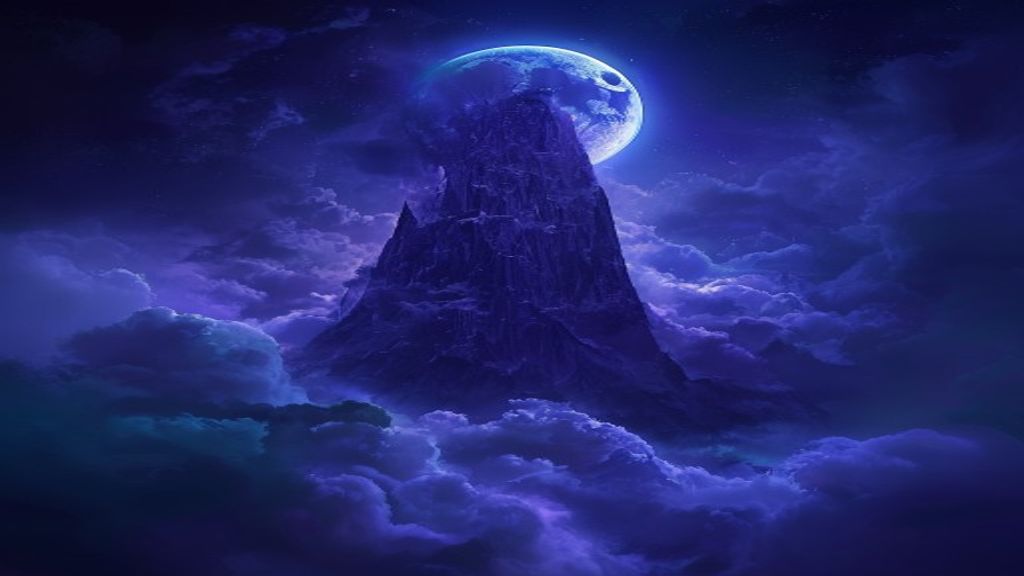
What does it mean when the mountain is just there? Not threatening, not beautiful in any greeting-card way, just solidly, immovably present at the edge of your dream. You might not even be climbing it. You might be standing at the base looking up, or sitting somewhere across a valley with it visible in the distance, the way a large decision can sit on the edge of your awareness without you looking at it directly.
I keep thinking about the sound a ski-lift chair makes when it first takes your weight. That clunk-and-sway before it settles and begins to rise. There’s a second in there, brief and vertiginous, when you’ve committed to the ascent but haven’t started it yet. That suspended moment is where most mountain dreams live.
A mountain in a dream usually stands for a major challenge, ambition, or life decision. The key isn’t the mountain’s size but what you’re doing relative to it: climbing with effort, paralyzed at the bottom, or already at the top looking down at everything you’ve passed.
What you’re doing on it matters more than what it looks like
The mountain’s appearance almost never tells you much. Dreamers give me lengthy descriptions of snowcaps, rocky faces, the colour of the light. I appreciate the detail, but I always redirect: what were you doing? Because the same mountain, same dream, reads completely differently depending on whether you’re climbing steadily, scrambling in a panic, descending carefully, frozen and unable to move, or just watching it from a distance.
Steady climbing is the unambiguous version: you’re in the middle of something difficult and you’re moving through it. The dream isn’t praise, exactly. It’s just honest reporting. You know this already, and the mountain is confirming what your body feels.
Paralysis at the base is something else. The mountain is real, the route is visible, and you can’t make yourself start. This one shows up before major decisions, often when you know exactly what needs to be done and are still finding reasons to stand there looking at it. The dream isn’t telling you the mountain is too hard. It’s showing you your own hesitation with a kind of architectural honesty.
Climbing or near the summit
The work is real and you know it. You’re in it, which means part of you has accepted the difficulty. Dreams that end before the summit often mean the outcome is genuinely unclear to you, not that you’ll fail. If you reach the top: relief, mostly. Sometimes an odd flatness. The view is always smaller than you expected from below.
Stuck, watching, or unable to begin
The mountain is a challenge you’ve acknowledged but haven’t engaged. Paralysis at the base usually tracks a real delay in waking life: a decision you’re circling, a conversation you’re postponing, a project where you’ve done all the planning and none of the starting. The mountain isn’t going anywhere. That’s the point.
The versions people mention less
Descending a mountain in a dream is genuinely underrated. It doesn’t signal failure. It’s a different kind of work entirely: careful, leg-burning, requiring a different attention than the climb. If you’re descending in your dream, you may have passed the hard part and you’re now managing the aftermath. Which is its own labour, and often lonelier.
The mountain that collapses or crumbles is rarer and worth pausing on. Something you thought was solid and permanent is revealed as less fixed than you believed. That can be frightening. It can also, depending on what the mountain represented, be a relief.
What the old traditions made of it
Mountains have been a serious dream symbol for a long time. Artemidorus, writing his Oneirocritica in the second century, treated high places as images of power and authority: to climb was to rise, to fall from the peak was to fall from favour. I don’t find that reading useless. It’s just less personal than I’d like. It maps the external stakes without touching the internal ones.
Carl Jung’s framework does something different. For Jung the mountain is one of those symbols that holds its meaning across centuries precisely because it’s tied to the body’s own sense of effort and elevation. Going up requires more than coming down. The summit is earned, not given. I’m not usually someone who applies Jungian frameworks wholesale, but the mountain is one of the symbols where his reading of ascent-as-self-development has proved genuinely persistent. People who’ve never read a word of psychology still frame their mountain dreams in exactly those terms: it felt like I was trying to get somewhere. It felt like I was stuck. They’re already thinking like analysts without knowing it.
When it keeps coming back
A recurring mountain, especially the paralysis-at-the-base version, almost always corresponds to something in waking life that you haven’t actually started. Domhoff’s continuity research would say the same thing a less poetic way: dreams reflect your current preoccupations. If a challenge is occupying your mind and you haven’t moved on it, the mountain will wait for you at the edge of the dream, patient and enormous and completely unhurried.
What usually ends the dream isn’t reaching the summit. It’s making a move, any move, in waking life. Writing the email. Booking the appointment. Saying the thing. The mountain doesn’t require completion. It just needs you to commit to the first clunk-and-sway. If you’ve been dreaming of a storm alongside the mountain, or if the landscape feels threatening rather than just difficult, the dreaming of thunder piece gets at that particular register of dread. And if the dream involves climbing upward only to find yourself suspended over nothing, you might find the dreaming of a swamp article useful for what it says about being unable to move.
I’ve had my own mountain dreams, though mine tend to put me on the descent, unsure of the path, choosing each step carefully. I’ve come to think they arrive when I’ve done something hard and haven’t let myself acknowledge that the hardest part is behind me. The mountain as reminder: you did climb. You’re not at the bottom. That’s a different kind of comfort than the summit view, but it’s the one I seem to need.
- Was I climbing, stuck, descending, or just watching from a distance?
- What challenge in my life has the same immovable quality as the mountain had?
- Did reaching the top feel like an ending, or was there something beyond it I couldn’t see?
- Is there a decision I’ve been circling without actually beginning?
One symbol, two traditions
Where the psychological read treats mountain as a mirror of your inner state, the biblical tradition treats it as something to weigh, prayerfully, against what Scripture actually says.
A mountain in your dream isn't just scenery. Whether you're climbing, stuck at the base, or already at the top, the dream is saying something specific about where you stand.
You are reading this oneWhat the Bible actually says about mountains, from Sinai to the transfiguration, and what those passages offer for understanding mountain dreams. KJV references, honest discernment.
Read the full biblical meaning →Quick answers
What does it mean to dream of climbing a mountain?
Climbing usually reflects a real effort in your waking life: a project, a challenge, a decision you’re working through. The dream isn’t a verdict on whether you’ll succeed. It’s more like an honest mirror. How the climb feels matters more than whether you reach the top.
What does it mean to be stuck at the base of a mountain in a dream?
Paralysis at the base almost always points to a real delay: something you know you need to start but haven’t. The mountain isn’t telling you it’s too hard. It’s just showing you, with great patience, that you haven’t moved yet.
Is dreaming of a mountain a good or bad sign?
Neither, really. Mountains in dreams are about difficulty and aspiration, not luck or warning. The feeling in the dream is what carries the meaning: effort and forward motion read very differently than dread and paralysis.
What does it mean to reach the summit in a dream?
Reaching the top often brings a surprising flatness rather than triumph. The view is real but smaller than you imagined from below. That’s a genuinely useful message: completion is rarely what you expected, and the mountain you climbed may already feel smaller once you’re standing on it.