Food Dreams
Dreaming of a Pomegranate: Seeds, Choices, and the Cost of Staying
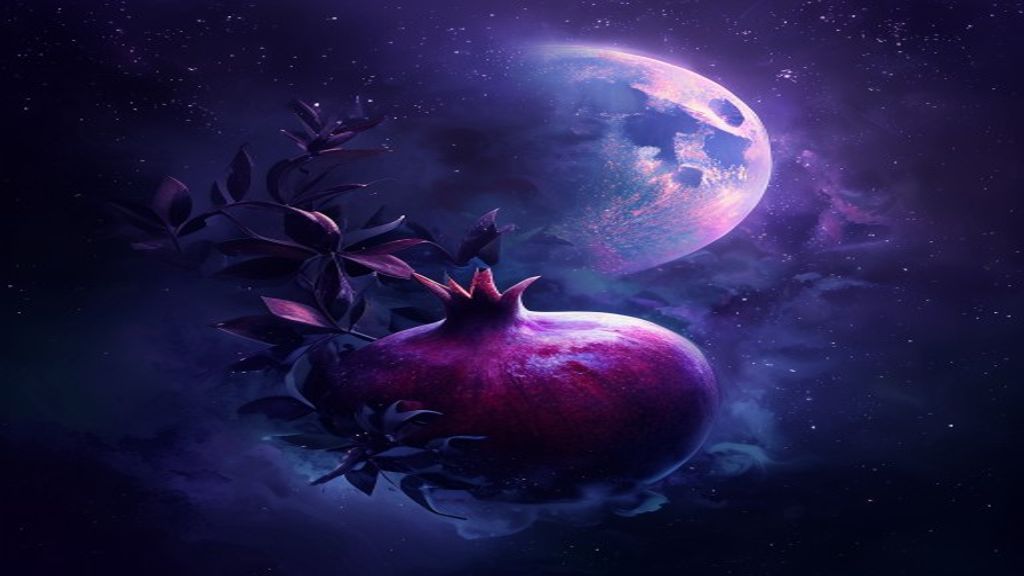
A pomegranate split open on a white surface. That’s the image I keep coming back to when people describe this dream. Not eating it, usually. Not even reaching for it. Just that specific visual: the leathery outside broken, the red interior revealed, all those seeds pressed together like a decision that can’t be undone.
Of all the fruits that show up in dreams, the pomegranate is the one that carries its mythology with it like luggage. People who don’t know Persephone still describe something about the pomegranate dream that sounds like her story: a threshold crossed, a choice made, a season changed. The fruit has been doing this symbolic work for a very long time, long enough that you might not need to have read anything to feel it.
A pomegranate in a dream typically signals a commitment, a threshold, or a choice that has already been made or can’t be lightly undone. The seeds and the deep red color amplify that: this is not casual abundance. This is abundance with terms.
What all that mythology is actually doing
I’m wary of symbol dictionaries that simply copy mythological meanings into dream interpretation as if nothing has changed in two thousand years. But the pomegranate earns some special treatment. Artemidorus, in the Oneirocritica, already associated it with multiplicity and consequence. The ancient Egyptians used it in ritual. It appears in the Song of Solomon, in Persian wedding ceremonies, in Greek fertility rites, in the mythology of death and return. That kind of cultural density doesn’t happen by accident. Something about this fruit, its interior, its structure, the fact that you have to break it to get at what’s inside, keeps mapping onto the same human concerns across wildly different contexts.
The recurring concern is: commitment and its cost. The seeds inside a pomegranate are not extracted lightly. You stain your hands. You eat one thing at a time from a fruit made of hundreds of small things. That’s a structural image for a certain kind of choice, the kind where yes means giving up other options, where something beautiful requires getting your hands in it.
| Tradition | How it reads the symbol |
|---|---|
| Ancient Greek | Persephone’s six seeds meant six months in the underworld: eating binds you. Commitment changes your season. |
| Persian | Pomegranates at weddings symbolize abundance and the wish for many children. Here the seeds are potential, not consequence. |
| Ancient Egyptian | Found in tombs and ritual; the fruit of the afterlife, associated with resurrection and what persists beyond death. |
| Hebrew / Middle Eastern | Said to contain 613 seeds corresponding to the 613 commandments. Every part of the interior is obligation and gift together. |
| Ibn Sirin (Islamic tradition) | Dreaming of a whole pomegranate was read as prosperity. Broken open, it could indicate dispersal, family separating, or a secret revealed. |
The specific image you had
Whole or broken makes a large difference. A whole pomegranate, uncut, tends to appear when a decision is still in front of you. The potential is sealed. You haven’t committed. A pomegranate already split open is different: whatever the commitment is, the fruit suggests it’s in motion or already made. The juice runs, the seeds are out, the choice is real now.
Eating from it is its own version. Persephone knew better and ate anyway. If in your dream you were eating pomegranate seeds, I’d ask: what are you choosing to bind yourself to right now? Not with alarm, just with honesty. Choosing to bind yourself to something good, a person, a city, a vocation, is how life fills up with meaning. The dream isn’t warning you off. It’s showing you the texture of what you’re accepting.
If you were counting seeds, that’s the detail I’d want to know about most. Counting them, in my experience, tends to map onto a mind that’s trying to assess something, tallying costs or possibilities before deciding. The dreaming of a fig article touches on this same threshold quality, though the fig’s symbolism is warmer and less freighted with consequence. And if the pomegranate in your dream had gone soft, the skin dried out, look at the piece on dreaming of rotten fruit, because the specific fruit matters to that reading.
The abundance you had to earn
Here’s what I actually think is interesting about this symbol, and where Domhoff’s continuity hypothesis is most useful. The people who dream most vividly of pomegranates tend to be in the middle of something: a move, a marriage, a new city, a career shift they haven’t announced yet. The dream isn’t predicting. It’s processing. The mind reaches for the most structurally honest image it can find for what you’re actually doing, and it finds a fruit that only gives you what’s inside after you break it.
Hobson might say the pomegranate is just whatever your brain latched onto from waking life and dressed up in emotional significance, and I can’t fully argue with that. But I notice that even if he’s right about the mechanism, the question “what am I in the middle of that requires me to break something to get at the good inside” is still a useful one to sit with.
What the red means
Intense color in food dreams tends to amplify whatever the food is already saying. The deep red of pomegranate seeds, vivid against white, is the kind of image that tends to stay. Red in dreams is often emotion made visual: desire, love, anger, the life force being put somewhere specific. A pomegranate in that deep red is not a neutral abundance dream. It’s an emotionally invested one. The dreamer cares about what they’re choosing.
Back to the image on the white surface. I keep thinking about what’s been broken to produce that scene. The outside of a pomegranate is honestly ugly: tough, dusty, brown-red, unimpressive. You wouldn’t know what was inside from the outside. A lot of things in life are like that, and a lot of choices look like work from the outside and look entirely different once you’ve actually made them. The dream split the fruit open. Whatever you’re deciding, maybe you already know what’s in there.
- Was the pomegranate whole or already open? That tells you where you are in the decision.
- Were you counting or eating the seeds, or just looking? Each is a different relationship to the choice.
- What have I committed to recently, or what am I being asked to commit to that I haven’t admitted is a real decision?
- Is there something beautiful in my life right now that I’ve been reluctant to open because I know I can’t go back?
One symbol, two traditions
Read side by side, the two traditions pull in different directions: pomegranate as a signal from your own mind, or pomegranate as an image to test against the text. Knowing which question you are asking is half the interpretation.
A pomegranate in a dream is one of the oldest symbols we know. Nora Vance traces what this fruit of decisions and consequence still means in your sleep.
You are reading this onePomegranates appear on priestly robes and temple pillars in Scripture. Discover what the Bible actually says and what dreaming of one genuinely invites.
Read the full biblical meaning →Quick answers
What does it mean to dream of a pomegranate?
It usually signals a commitment, a threshold, or a choice with consequences. The pomegranate’s structure, all those seeds requiring effort to access, maps onto the kind of decision that can’t be undone lightly. Whether the fruit was whole or broken is the first thing to notice.
Is a pomegranate in a dream a good omen?
Historically it’s been associated with abundance, fertility, and prosperity, so broadly yes. But the pomegranate is also the fruit of commitment and consequence. It’s a good omen for people ready to go in; it’s an ambivalent one for people hoping to stay on the threshold forever.
What does it mean to eat pomegranate seeds in a dream?
Eating the seeds is the binding act in the oldest readings of this symbol. The practical meaning is that you’re choosing to commit to something. It’s worth asking what you’re accepting in your waking life that can’t be un-eaten.
Why does the pomegranate appear in so many cultures’ dream traditions?
Probably because of its structure: hard to open, beautiful inside, made of many small parts, deeply colored, and staining. That physical reality maps naturally onto commitment, fertility, and consequence. When something has those qualities, it tends to gather myths.