- Tradition
- Psychological readingFood dreams
- Also read in
- The BibleSame symbol, other tradition
- Draws on
- Domhoff, Hobson, Artemidorus
- Reviewed
- 5 min read
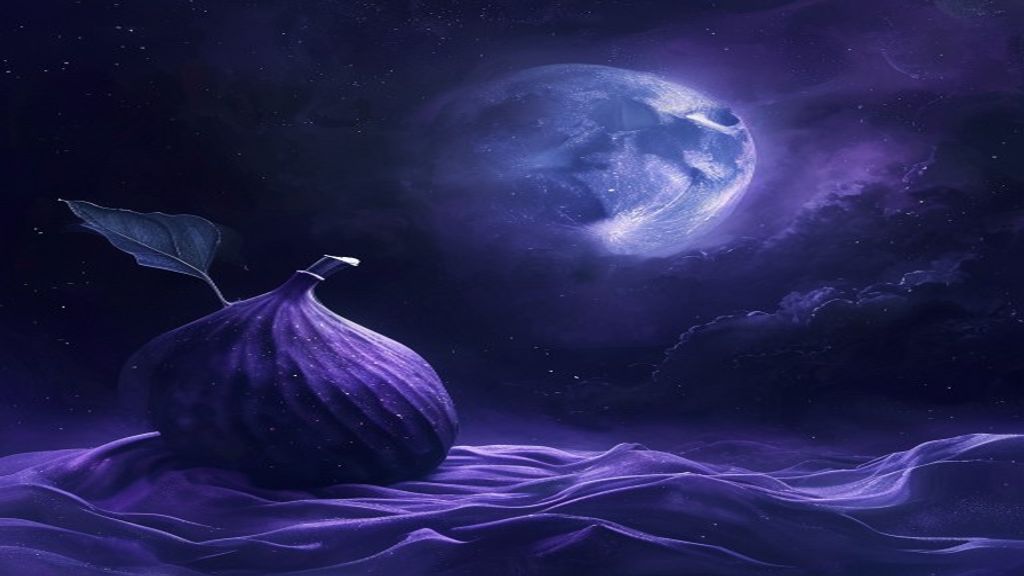
In a dream, a fig seems to promise abundance: a sweet fruit, a good sign, something delicious on its way. That is half right and half beside the point. Figs ripen fast and spoil faster, and a dream built from that fruit carries the quality that makes figs unusual, the knowledge that you have roughly one afternoon before it’s past the moment.
A fig in a dream is almost never about food. It’s about timing. It’s about a window that’s open and won’t stay that way.
A fig in a dream tends to represent something in your life that is, or soon will be, at its moment of readiness. If you ate it, you acted on something. If you watched it and didn’t, the dream may be asking why. The overripe or split fig introduces urgency: something that waited too long.
How to read your specific fig dream
The long history of this particular fruit
Artemidorus, writing in the second century CE, insisted that the same dream means different things for different dreamers, which is a useful warning here: a ripe fig reads one way for someone waiting on a decision and another for someone who has already made it. Taken simply, a ripe fig can stand for a project or situation at its peak, ready to be acted upon, and an unripe one for moving too quickly. That framework, honest about its simplicity, is still one of the better lenses for this symbol.
Long before Artemidorus, dream reading was already about timing. The Chester Beatty papyrus, from about 1200 BC, sorts dreams into good and bad omens, and a good omen is, at bottom, a good moment arriving. The fig was one of the most commonly cultivated fruits in the ancient Mediterranean. It wasn’t exotic. It was local, known, and urgently time-sensitive. That last quality is what gives it staying power as a dream symbol.
Across the traditions that read fruit as a sign of blessing, the fig adds a condition. You don’t just stumble into what the fig offers. You have to be present at the right moment, which is exactly why dreams about figs that you failed to pick tend to leave an unsettled feeling.
Desire and its complications
Figs also have a persistent symbolic association with sexuality and sensuality, one that goes back to antiquity. The activation-synthesis view (Hobson and McCarley, 1977) would call this the sleeping brain making a story out of whatever cultural material is closest to hand, and maybe. But the association isn’t arbitrary. A ripe fig is lush, intimate, sticky, and brief. If your fig dream had any quality of longing, that’s worth sitting with honestly rather than immediately redirecting to ‘career opportunities.’
Domhoff’s continuity research would suggest that if a fig appears in your dream, something in your current life has that quality of ripeness or desire or urgency. The image borrows from the feeling, not the other way around. Which means the fig is asking you to look at what in your waking days has that same warm, brief, this-won’t-last quality.
A fig shares its fragility with a raspberry: fruit that is gorgeous precisely because it doesn’t hold. The fig is the heavier of the two, more insistent, with a sweetness that is already tipping toward fermentation.
When the tree mattered more than the fruit
A fig tree in a dream is different from a fig. The tree is permanence, root, patience. Its fruit is still fleeting but the source isn’t. This version tends to belong to something long and slow, a recovery, a grief, a creative project with no visible end. The tree says: this is still producing. You just have to wait for the right season. Quite different from the single fig sitting there demanding a decision.
Dreams about corn, the other harvest symbol, tend to have a communal quality. The corn is for everyone. The fig is personal. It’s yours to pick or not. That distinction matters.
A fig tree that has been cut back or has fallen is its own kind of dream: the sweetness that stopped coming, and the odd fact that you notice its absence for a full season before you stop looking for it.
- Was the fig ripe, unripe, or past it, and what moment in your life does that map onto?
- Did you reach for it or watch it from a distance?
- Is there something in your waking life that has the quality of ‘briefly available’?
- Did the fig come from a tree or appear in isolation? That changes the reading significantly.
One symbol, two traditions
Psychology keeps fig inside your own story, a symbol your mind built from your days. The biblical tradition looks outward instead, and asks whether Scripture gives the image any voice at all.
A fig in a dream tends to represent something in your life that is, or soon will be, at its moment of readiness. If you ate it, you acted on something. If you watched it and didn’t, the dream may be asking why. The overripe or…
You are reading this oneJeremiah 24 uses a vision of two baskets of figs:one very good, one very bad:as a picture of two different fates. Good figs are associated with those God will restore; rotten figs with those he won’t. That’s a waking-world…
Read the biblical meaning →Quick answers
What does dreaming of a fig mean?
Figs in dreams almost always point to timing and desire. Something in your life is at or approaching its ripe moment, and the dream is registering your awareness of that window. Whether you ate the fig, ignored it, or watched it overripen shapes the rest of the reading.
Is dreaming of a fig a good omen?
A ripe fig you ate tends to read positively: you’re in a good season, or you’re allowing yourself something you’ve been withholding. An overripe or missed fig introduces urgency or regret. Neither is a verdict, both are information.
What does it mean to dream of picking figs?
Harvest energy. You’re gathering rather than waiting. This version usually accompanies a period in waking life where earlier effort is starting to pay off, and the dream is reflecting that back to you.
Why do figs appear in ancient dream interpretation?
The fig was one of the oldest cultivated fruits in the Mediterranean world and carried symbolic weight in Egyptian, Greek, Roman, and Semitic traditions. That connection has persisted because the fruit’s essential quality, briefly at its peak, maps neatly to how humans experience opportunity and desire.
Sources for this reading
- Domhoff, G. W. (2003). The Scientific Study of Dreams: Neural Networks, Cognitive Development, and Content Analysis. American Psychological Association.
- Domhoff, G. W. (1996). Finding Meaning in Dreams: A Quantitative Approach. Plenum Press.
- Hobson, J. A., & McCarley, R. W. (1977). The brain as a dream state generator: An activation-synthesis hypothesis of the dream process. American Journal of Psychiatry, 134(12), 1335-1348.DOI
- Artemidorus of Daldis (2nd century CE). Oneirocritica. English edition: Harris-McCoy, D. E. (2012). Artemidorus’ Oneirocritica: Text, Translation, and Commentary. Oxford University Press.
Full bibliography on Sources and method. Found a mistake? Tell us and see the corrections log.