Food Dreams
Dreaming of Corn: What Your Mind Is Actually Growing
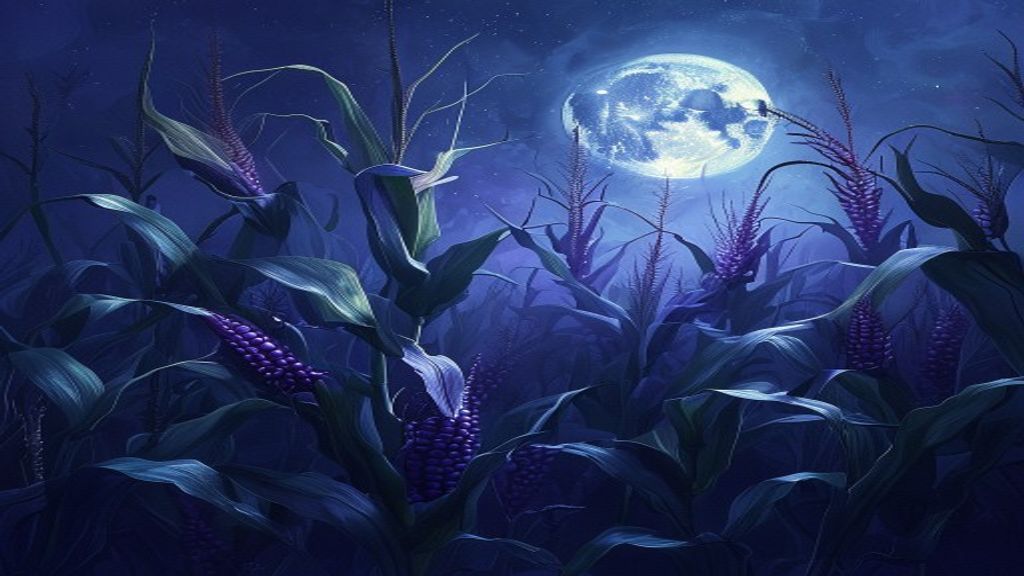
Confession: I used to skip corn dreams. People would mention them almost sheepishly, apologizing for the ordinariness of the image, and I’d nod along, thinking the same thing. Then one reader sent me a short note describing a dream in which she stood in a cornfield at night, the stalks taller than she remembered corn being allowed to get, and she couldn’t find the end of it. She’d been waiting on a job decision for four months. That note sat on my desk for a week. I haven’t skipped corn since.
Corn in a dream usually points to something you’ve worked toward that hasn’t paid off yet, or just did. The size, color, and condition of the corn matter more than the corn itself. Raw and green suggests you’re mid-process. Ripe and full suggests arrival. Rotting or missing suggests something didn’t grow the way you planned.
The thing about waiting
Corn is the slowest food most of us have any relationship with. You don’t see it happening. You plant something in dirt, and then you wait through weeks of weather you can’t control, and then one day it’s either there or it isn’t. That rhythm, planting, absence, outcome, is exactly the structure of the dreams people describe to me most often. Not corn-at-a-barbecue dreams. Not corn-on-a-table dreams. Corn-growing dreams. Cornfield dreams. The standing-among-the-stalks kind.
That’s the anchor I want you to hold: the image of standing inside a cornfield, where you can’t see over the stalks and you can’t see out. You know where you planted yourself. You don’t yet know what grew. A lot of people know that feeling without having a cornfield anywhere near their lives. It’s the feeling of effort extended into a future you can’t quite see yet.
Two readings that look the same at first
The corn is ripe
Full ears, vivid color, the satisfying weight of something ready. This version appears after achievement lands, or just before it, when part of you knows something good is about to come in. It rarely feels triumphant in the dream. More often it feels quiet. You’re just standing there in all that plenty, a little dazed. The emotional register underneath is usually relief, which is how you know it’s real.
The corn is missing, small, or wrong
You’re in a field and the stalks are bare, or the ears are stunted, or the corn you expected isn’t there. This is the harder version, and the more common one. It tracks something you worked toward and didn’t get, or something that grew less than you hoped. The dream doesn’t rub it in. It just shows you the field.
What I find strange is how often people can’t immediately tell which version they had. They remember the field more than the corn. That makes sense to me now: what mattered wasn’t the harvest, it was the being-in-the-middle-of-it. If you’re dreaming of a cornfield and you don’t know if it’s abundant or bare, ask about the light. Morning light means one thing. Dusk means another. The moment your mind chose to put you there probably matters more than the corn.
What older traditions did with this
Artemidorus, writing in the second century, would have had little patience with my cornfield psychology. He was interested in whether grain dreamed favorably or not depending on the dreamer’s social station, the season, whether they planned to farm. His system was transactional in a way that feels almost refreshing now: the dream was information about the material world, not a map of your interior. I don’t fully believe that, but I don’t fully disbelieve it either. Dreams about actual harvests probably were about actual harvests for most of human history. The symbolic layer came later, or it was always there too.
Corn specifically carries weight across cultures that other vegetables don’t quite have. It’s a ceremonial crop. A survival crop. Entire civilizations built their calendars around when it grew. That history doesn’t evaporate when you dream about it, even if you’ve never thought about it consciously. The image arrives with freight attached.
The short version
Hobson would tell you the corn is incidental, that your brain grabbed a culturally available image and threaded it into a narrative that doesn’t mean much beyond its own activation pattern. He might be right. But even if the machinery is random, the corn your mind picked up and placed in your dream has to come from somewhere: your specific life, your specific waiting.
Dreaming about bread tends to be more domestic, more immediate. Corn dreams are usually longer-horizon than that. They’re about projects more than meals. And they tend to arrive at the same moments: when you’ve put something in motion and the outcome is still genuinely unknown. The reader who wrote to me was waiting on a job. She didn’t get it, as it turned out. But she said the dream helped somehow, just to see the field plainly, to acknowledge the scale of what she’d planted. I believe her.
I think of dreaming of a pear as a close cousin of this, another fruit that’s about timing, about not-yet-ripe. But pear dreams feel more personal, more intimate. Corn dreams feel almost civic. They’re about shared labor, output, things that take longer than one season.
That cornfield at night, the one from the reader’s dream, the one with the stalks too tall to see over: that image stayed with me because it was honest. You plant something, you stand in the middle of it, you can’t see the end. That’s not a bad summary of a lot of effort. The stalks were still growing. She just couldn’t tell yet.
- Was the corn ripe and full, or bare, or somewhere in between?
- Was I in the field, or watching it from outside?
- What in my waking life did I plant a while back and still haven’t seen come in?
- What was the light doing? Morning, noon, or something darker?
One symbol, two traditions
A psychologist asks what corn felt like and what it echoes in your week. The biblical reader asks a different question entirely: what does Scripture say when this image appears, and what does it stay silent about?
Corn in a dream isn't just a vegetable. It carries older weight: abundance, slow labor, the gap between what you planted and what arrived. Here's how to read it.
You are reading this oneCorn is at the center of the most famous dream interpretation in the Bible. Explore what Scripture actually says about corn and grain, and what a corn dream might invite.
Read the full biblical meaning →Quick answers
What does dreaming of corn mean?
Corn in dreams almost always connects to something you’ve worked toward: an effort extended into a future that isn’t decided yet, or an outcome that just arrived. The state of the corn, ripe, bare, stunted, gives you the clearest reading.
Is dreaming of a cornfield a good sign?
It depends on what you find there. A lush, full field usually reflects abundance arriving or already present. A bare or dark field is more likely to track something that didn’t grow the way you expected. The field itself is neutral. What’s in it isn’t.
What does rotten or spoiled corn mean in a dream?
A harvest that went wrong before it got to you. This version tends to surface when something you worked toward came in late, incomplete, or not quite what you’d hoped for. Worth asking whether that disappointment has actually been processed yet.
Why do I dream about cornfields at night?
Night sets the scene as uncertain, unresolved. You’ve put something in motion and you’re in the dark part of the wait. The scale of the field, the tallness of the stalks, maps onto the scale of whatever you’re hoping will come through.