Food Dreams
Dreaming of a Pear: Off-Balance in the Best Way
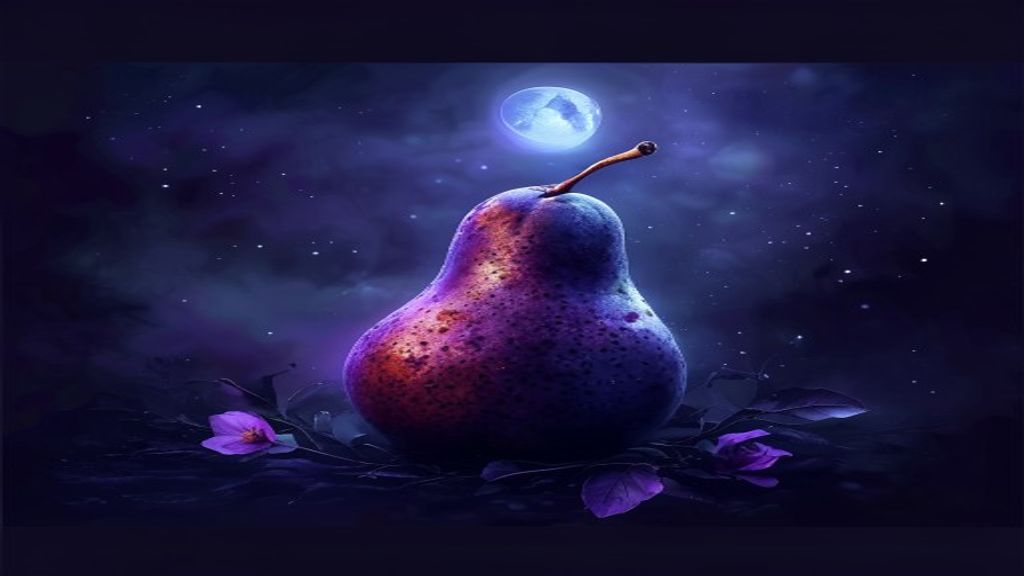
A pear is not balanced. Pick one up and you can feel immediately that the weight lives at the bottom, that it’s a shape designed to fall a particular way. I remember noticing this as a child, turning one in my hand, waiting for it to do something. It doesn’t, obviously. But there’s something in that lopsidedness that stays with you, a fruit that looks like it’s always leaning.
Dreams about pears seem to carry that quality forward. They’re not dramatic. They’re patient, slightly off-center, and they tend to arrive when something in your life is quietly growing in a direction you haven’t fully named yet.
The pear doesn’t announce itself
Unlike some fruit dreams, a pear dream rarely has urgency. The fruit sits. It waits. You either notice it or you don’t. That’s a very different emotional register than an apple, which tends to announce itself in dreams with a kind of symbolic fanfare, or a citrus fruit, which reads as sharp and decisive. The pear is quieter about its intentions.
What the pear does have is patience and a kind of sturdy nurturing quality. The shape itself, that rounded base, the broader bottom tapering to a narrow top, has historically been read as maternal, as something that holds and supports. I’m not saying that reading is mandatory, because individual dreams rarely cooperate with universal symbols. But it’s worth knowing that the image has come loaded for a long time.
- Start with the feelingBefore you interpret the fruit itself, notice what feeling the dream left. Was the pear comforting? Indifferent? Overwhelming? That emotional residue is more useful than the symbol on its own.
- Notice what you did with itDid you eat it, carry it, offer it to someone, find it unexpectedly? Each action points a different direction. Carrying a pear often connects to something you’re nurturing or managing. Finding one can signal an unexpected resource.
- Look at the conditionA perfect, ripe pear is different from one that’s bruised, unripe, or forgotten at the bottom of a bag. Condition in fruit dreams usually mirrors the condition of whatever the fruit represents in your waking life.
- Ask about the slow thingsPears take longer than you expect to ripen. If a pear showed up in your dream, ask yourself what in your life is on a slow timeline right now, a project, a relationship, a change that hasn’t arrived yet but is building.
Carrying it vs. eating it vs. leaving it behind
The action is often where the specific meaning lives. A dream where you ate a pear and it tasted right carries a different message than a dream where you were holding one carefully, afraid to put it down. And both of those are different from the version where a pear appears in a room and you walk past it without touching it, which tends to be the version that lingers longest in the morning.
The carrying version interests me most. When you’re carrying a pear in a dream, you’re usually carrying it with both hands, or cradling it, because it tips. That posture, that small adjustment you make to keep a bottom-heavy thing upright, is exactly what a lot of nurturing work feels like. You’re not doing anything dramatic. You’re just compensating constantly for something that leans.
For other fruit dreams that tend to be about what you’re carrying rather than what you’re consuming, dreaming of a melon often carries a similar weight-in-the-arms quality, though the melon tends to run larger and heavier in what it represents. And dreaming of a potato, not a fruit but often in the same category of humble dream produce, deals with something basic and sustaining that doesn’t get acknowledged.
A word from the old sources
Artemidorus treated sweet pears as favorable, connecting them to pleasure and proper timing, while he was warier of wild or astringent varieties, which he associated with difficulty and harsh circumstances. I find this division more useful than it sounds. It’s not really about the pear; it’s about whether the fruit in your dream felt good or felt like a problem. Your gut knew.
Domhoff wouldn’t spend much time on the symbol. He’d ask what was happening in your life around the time the pear appeared, and he’d probably find something slow-moving and unresolved that the dream was tracking. That’s usually the right thread to pull.
I still remember the weight of that childhood pear, turning it over, setting it down wrong, watching it roll. There’s something in that image I keep coming back to, the thing designed to be slightly off-balance, that’s not broken but won’t stand up straight without adjustment. Most of the things I’ve been most careful with in my life have been like that. The pear dreams I hear about most often are from people in the middle of exactly that kind of careful work.
If your dream had more than one piece of fruit, or a table of food, dreaming of hot chocolate is an interesting companion in the family of comfort-and-nurturing dream images, one that handles warmth more literally while the pear tends to handle it in the hand.
- Was I eating the pear, carrying it, or just noticing it? The action shifts the meaning.
- What in my life right now is on a slow, unannounced timeline?
- Is there something I’m quietly nurturing that I haven’t admitted needs attention?
- Did the pear feel like a burden, a gift, or just something ordinary? That distinction matters.
Quick answers
What does it mean to dream of a pear?
A pear in a dream usually points to something patient and slow-growing in your waking life. The fruit’s characteristic lopsidedness makes it a natural image for things that need adjustment and care, relationships, projects, or personal changes that are building quietly without dramatic announcement.
Is dreaming of a pear a good sign?
Usually yes. Ripe pears in dreams tend to appear around things that are finally arriving after a long wait, or around periods of nurturing and care. The reading turns heavier if the pear was bruised, unripe, or ignored.
What does it mean to carry a pear in a dream?
Carrying a pear, especially carefully, often connects to something or someone in your waking life that requires constant small adjustments. The pear doesn’t balance itself, and if you’re carrying it in the dream, you’re probably managing something similarly effortful in daily life.
Why did a pear appear in my dream instead of another fruit?
Dreams tend to choose the image that fits the emotional texture of what they’re processing. The pear, patient, lopsided, quiet, shows up when the waking-life material is similarly unglamorous and slow-moving. It’s not a dramatic fruit, which is probably why the dream chose it.