Place Dreams
Dreaming of a Corridor: Between Where You Are and Where You're Going
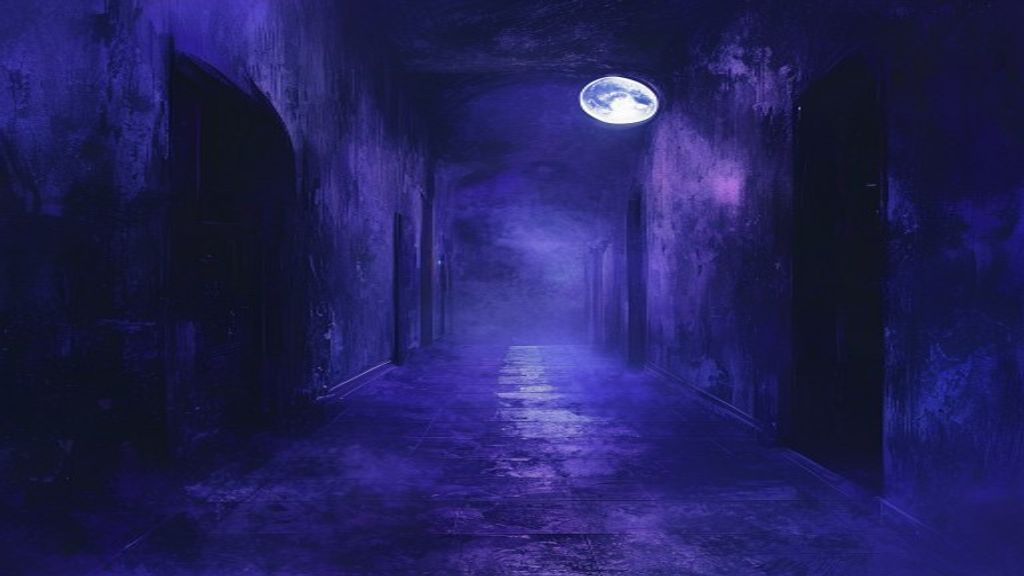
What does it mean when you can’t see the end? Not lost, exactly. Just , the hallway keeps going, door after door, all of them shut, and something ahead that you can never quite reach. Almost everyone who describes this dream to me uses the same word without prompting: unfinished. As if the corridor itself is a problem waiting to be solved.
A corridor in a dream almost always signals transition. You’re between two states of your life, and the dream is holding you in the passage. The length of the hall, whether the doors open, and whether you ever arrive all have something to say about how that transition feels to you right now.
The click of your own shoes
I once worked in a building with a very long corridor on the fourth floor. You could hear yourself coming from thirty feet away. It wasn’t unpleasant, that sound, your shoes on hard floors, announcing you to an empty hallway. But there was something about it that made you feel observed even when no one was watching. Corridors do that. They put you on display to yourself. When that corridor shows up in a dream, years later, I notice I’m always listening for the echo. Whether I can hear myself is part of the information.
In waking life a corridor is just architecture, a means to an end, the space you cross to get somewhere. In a dream it refuses to be background. It becomes the whole subject. Your sleeping mind doesn’t linger in transition unless something about that transition deserves attention.
Two ways to read the same hallway
Corridor as pressure
Doors that won’t open. A hall that stretches when you walk it. The sense of being watched from behind. This reading points to a transition you’re not in control of, a process you’ve been placed inside rather than chosen. Job restructures, waiting for results, the weeks between a decision and its consequences. The corridor isn’t punishing you. It’s honest about the powerlessness you’re already feeling.
Corridor as possibility
Doors on both sides, some ajar. Light from somewhere ahead. The feeling that you could stop and knock but you’re choosing not to. This reading belongs to the person who has options and hasn’t committed to one yet. The hallway isn’t trapping you. It’s preserving all the routes. There’s something comfortable in refusing to pick a door, and something the dream eventually wants you to notice about that comfort.
The harder question isn’t which type you’re having. It’s whether the corridor feels familiar. Because a corridor you recognize, a school hallway, the upstairs of a childhood home, a hospital wing you sat in for difficult hours, brings with it everything that happened in that building. Your mind chose that specific architecture for a reason, and the reason rarely has much to do with the building itself.
What the doors are doing
Jung read the house as the self, each room a different layer of inner life. A corridor, then, is the connective tissue, the part that doesn’t belong to any single room but makes all of them reachable. That reading has always struck me as useful even when it feels a little tidy. What’s less tidy, and more interesting, is what the doors are actually doing in the dream.
Closed doors you pass without curiosity: commitments made, chapters that don’t ask to be reopened. Doors you try and find locked: something you want access to that isn’t ready yet, or isn’t yours. A door left ajar at the far end: the specific thing the dream wants you to walk toward. People often wake before they reach it. That interruption is its own message.
Artemidorus, writing in the second century on dream interpretation, was fascinated by threshold images, the moments in dreams where you’re neither fully inside nor outside. He’d have recognized the corridor immediately. The ancient Greek word for the relevant kind of dream, the kind that pointed toward something real, was oneiros. The corridor, as liminal space, was exactly his territory.
The version where it never ends
This is the one worth sitting with. The corridor that stretches indefinitely, or that folds back on itself, so you’re walking the same section again without knowing it. Domhoff’s continuity hypothesis is blunt about this kind of image: it shows up when something in your waking life has the same quality of going-on-without-resolution. You probably already know what that is.
The never-ending corridor is a patience dream wearing institutional lighting. Some of the people who describe it to me are in genuinely long transitions: chronic illness, a dissertation, a relationship they’re not quite in and not quite out of. Some are just waiting for something they know is coming and can’t hurry. Both versions dream the same hallway. What differs is whether the dream feels like endurance or like being stuck.
If you find yourself dreaming of a tunnel, the feeling is often closer: tunnels press in from all sides, while corridors give you walls and distance. The tunnel says narrowing; the corridor says: this will go on for a while. Separately, if the rooms off your hallway feel significant, the piece on dreaming of a secret room is worth reading alongside this one, because the two symbols sometimes appear in the same night.
Back to the echo
That fourth-floor corridor I mentioned. When I dream it now, which I do occasionally, I’m not going anywhere in particular. I’m just walking, and I can hear myself clearly, and the doors on both sides are shut, and I don’t mind. I wake up from it feeling something I can only describe as unfinished-but-okay. Like I put a letter in an envelope and haven’t decided who it’s for yet.
Maybe that’s not universal. But in between all the dreams of beautiful confinement and the wide open spaces, the corridor is the most honest thing the dreaming mind builds. It doesn’t promise you a room at the end. It just keeps the floor clean and the lights on and leaves the walking to you.
- Could I see where the corridor was leading, or did I keep not quite arriving?
- Were the doors something I noticed, ignored, or tried to open?
- Did the hallway feel like mine, or like a building that belongs to another part of my life?
- What transition in my waking life has the same feeling as that passage?
Quick answers
What does it mean to dream of a long corridor?
A long corridor usually reflects a transition that feels extended or uncertain. You’re in passage between two states, and the length of the hall often mirrors how far away the end of that transition feels. The key is whether the dream feels like purposeful walking or like the corridor keeps moving the goalposts.
What do closed doors in a corridor dream mean?
Closed doors you pass without curiosity usually stand for paths not taken, chapters that are settled. Doors you try and find locked point to something wanted but not yet accessible. A door left open at the far end tends to be what the whole dream is really about, even if you wake before reaching it.
Why do I keep dreaming of the same corridor?
Recurring corridor dreams tend to follow the contour of a recurring real situation: something open-ended, something waiting for a resolution that hasn’t come. The dream usually quiets when the transition it mirrors either ends or gets acknowledged honestly.
Is a corridor dream a bad sign?
Not inherently. It depends almost entirely on the feeling underneath. A corridor that feels like pressure or entrapment points to a transition you don’t feel in control of. A corridor that feels like walking at your own pace, with options, is often a sign of genuine openness. The architecture is neutral. The feeling decides what it means.