- Tradition
- Psychological readingPlace dreams
- Also read in
- The BibleSame symbol, other tradition
- Draws on
- Domhoff
- Reviewed
- 5 min read
A cave mouth looks like a held breath. G. William Domhoff’s continuity hypothesis holds that dreams extend the concerns of waking life, and a cave dream is a tidy test of it. The image is an entrance you haven’t gone through, and the waking concerns it tracks tend to be the ones you haven’t gone into either: the conversation not yet had, the decision circled for months.
Cave dreams are among the more quietly insistent ones. They don’t chase you. They don’t collapse around you, usually. They just stand there in the dark and wait to see whether you’ll come in.
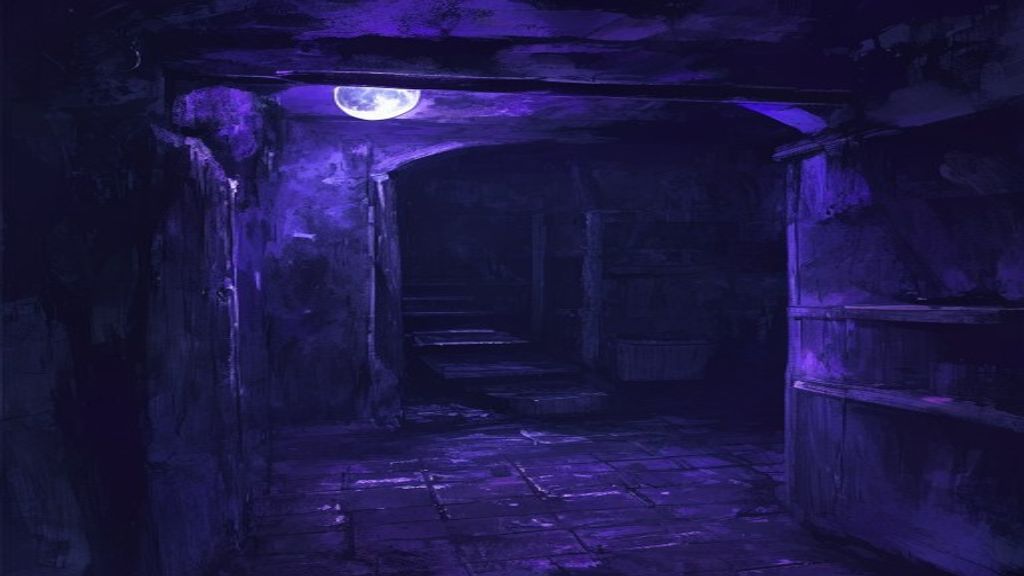
A cave in a dream usually represents something interior: an unexplored part of yourself, a truth you’ve been circling without entering, or a retreat your mind is building because you need one. Whether the cave feels safe or ominous shifts the reading completely.
What the drip of water tells you
Caves have a specific sensory signature. Cool air. A smell that’s mineral and old. And in many cave dreams: water. A distant drip, or a black pool at the back, or the sound of an underground stream you can hear but not see. The water matters because it’s moving through the cave, carving it slowly, which is exactly what happens to the parts of ourselves we ignore. They don’t go static. They work on us anyway.
I think that’s why cave dreams tend to arrive during periods of avoidance. Not dramatic crisis, usually, but quieter deferral: the conversation not yet had, the decision circled for six months, the grief set aside because there wasn’t a good time. The cave is the not-yet-entered space, and the drip is the clock running.
The different caves, and what each one’s doing
This is the most common version. You’re aware of something interior that needs attention and you haven’t gone there yet. The inability to enter isn’t failure; it’s honesty. You know it’s there.
Retreat, not hiding. Your mind has built a shelter. This version tends to arrive during burnout or overstimulation. The cave is protective, not threatening.
Going deeper than you planned. Usually signals that you’re in the middle of a process: therapy, grief, creative work, something that’s carrying you further inward than you intended.
The unconscious flooding the space you thought was dry ground. Water in caves is an old image for emotion that’s been underground long enough to find its own level.
Paintings on the walls, bones, old fire rings. This one’s about inheritance: what was here before you, inside you, that you didn’t put there yourself.
Pressure on whatever retreat or interior space you’ve been using. Something in your waking life is crowding the quiet. The dream’s not predicting disaster; it’s measuring the pressure.
The inhabited cave is the one I find most interesting to sit with. If you dreamed of markings, relics, or evidence of someone else’s life inside what felt like your own interior space, that’s worth some time. A Jungian reading would say you’ve bumped into something older than your personal history, patterns or fears or inherited ways of moving through the world that you didn’t consciously choose. It would call that the collective layer, and I’m not committed to the whole architecture, but the experience of finding something ancient inside yourself is real enough that the image earns its place.
Going in versus going deeper
These are different dreams. Standing at the entrance and standing in the middle of a cave you didn’t choose to enter share the same symbol and almost nothing else. One is about the threshold, the deciding moment. The other is about being already inside a process, and the cave telling you how deep you’ve gotten. If your dream cave got darker as you moved through it, that’s not a bad sign. It usually means you’re actually doing the work.
Dreaming of a tunnel is the near neighbor, since both involve moving through enclosed dark, but a tunnel implies an exit you know exists. A cave doesn’t promise that. The cave is honest about not knowing where it goes.
Why people have dreamed this for a very long time
People have long treated enclosed, dark places as ambivalent: somewhere to hide, but also somewhere to be found. Dream incubation at the temples of Asclepius, where the sick slept inside a sacred precinct hoping for a healing dream, is one version of that second idea. That dual reading, the cave as both retreat and revelation, has persisted because it keeps fitting the experience.
The continuity view is skeptical of the mystical framing, and right to apply pressure there. It holds that dreams tend to track what’s actually going on in your life rather than symbolize anything transpersonal. And that’s compatible with what I’m saying: if you’re avoiding something interior, the cave is a fairly direct representation of the avoiding. No oracle required.
Dreams of a dark street at night share the feel of moving through the unknown, but the street has direction built in. The cave refuses that comfort. It’s not taking you anywhere you can point to on a map.
The entrance you keep standing at
Back to the cave mouth, with the certainty that you are supposed to enter and the inability to move. Picture a dreamer who has that dream on and off for two years, and whose dream stops the month after they finally start dealing with something they had run out of reasons to put off. The dream was never about the cave. The cave had been waiting for them to enter something, and it didn’t much care what.
I don’t know if the cave in your dream is waiting for the same thing. But if it keeps coming back, and you keep standing at the entrance, it’s probably worth asking what you’ve been standing outside of. Not the cave. The other thing.
If the cave in your dream feels more like a stage than wilderness, with strange lighting and an audience somehow implied, dreaming of a theater is the better place to look. The psyche has more than one stage.
- Was I at the entrance, inside, or deeper than I intended to go?
- Did the cave feel like shelter or like something I was supposed to face?
- What in my waking life have I been circling without entering?
- If the cave was inhabited, what did the evidence of previous life look like?
One symbol, two traditions
The disagreement is honest: one school sees cave as self-communication, the other as an image to be discerned against Scripture. They can inform each other, but they do not merge.
A cave in a dream usually represents something interior: an unexplored part of yourself, a truth you’ve been circling without entering, or a retreat your mind is building because you need one. Whether the cave feels safe or…
You are reading this oneIn Scripture, caves are where people flee to, where prophets exhaust themselves, and where God asks the question that cuts through everything: ‘What doest thou here?’ A cave dream in a biblical frame isn’t automatically dark.…
Read the biblical meaning →Quick answers
What does it mean to dream of a cave?
A cave in a dream usually represents an interior space: something unexplored inside you, a truth you’ve been avoiding, or a retreat your mind is building out of necessity. The feel of the cave does most of the interpretive work. Warm and sheltering points to rest; dark and deepening points to an ongoing inward process; a blocked entrance points to something you’re not ready to face yet.
Is dreaming of a cave a bad sign?
Not usually. Caves are ambivalent symbols. They can be threatening, but they’re just as often protective. The version where you’re comfortable inside leans positive; the version where you can’t enter despite needing to is more about avoidance than danger. Collapse dreams are worth taking seriously as a sign of pressure, but even those aren’t omens.
What does it mean if I dream of a cave with water in it?
Water inside a cave tends to represent emotion that’s been underground long enough to find its own level. It’s the quiet version of flooding: not dramatic, but persistent. If the water was clear and still, the feeling may be more settled than you think. If it was rising or dark, you might be avoiding something that’s been building for a while.
Why do I keep dreaming about the same cave?
Recurring cave dreams usually mean the interior thing the cave represents hasn’t been acknowledged or entered yet. The dream tends to stop once you actually engage with whatever you’ve been circling: a decision, a feeling, a conversation, a process you’ve been putting off. The cave isn’t punishing you for avoiding it. It’s just keeping the door visible.
Sources for this reading
- Domhoff, G. W. (2003). The Scientific Study of Dreams: Neural Networks, Cognitive Development, and Content Analysis. American Psychological Association.
- Domhoff, G. W. (1996). Finding Meaning in Dreams: A Quantitative Approach. Plenum Press.
Full bibliography on Sources and method. Found a mistake? Tell us and see the corrections log.