- Tradition
- Psychological readingPlace dreams
- Draws on
- Domhoff, Jung, Artemidorus
- Reviewed
- 5 min read
You can cross a pitch-dark parking lot alone at two in the morning and feel nothing, and still dream about an ordinary, well-known street on a clear night and wake with your pulse in your throat. That gap is worth noticing. The body knows a real threat. Something else decides what frightens you in sleep.
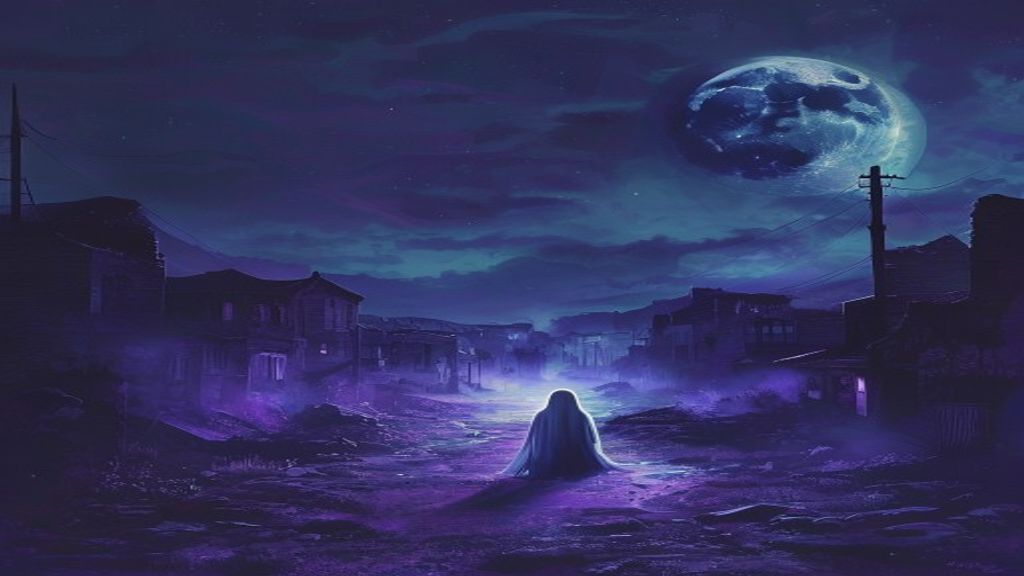
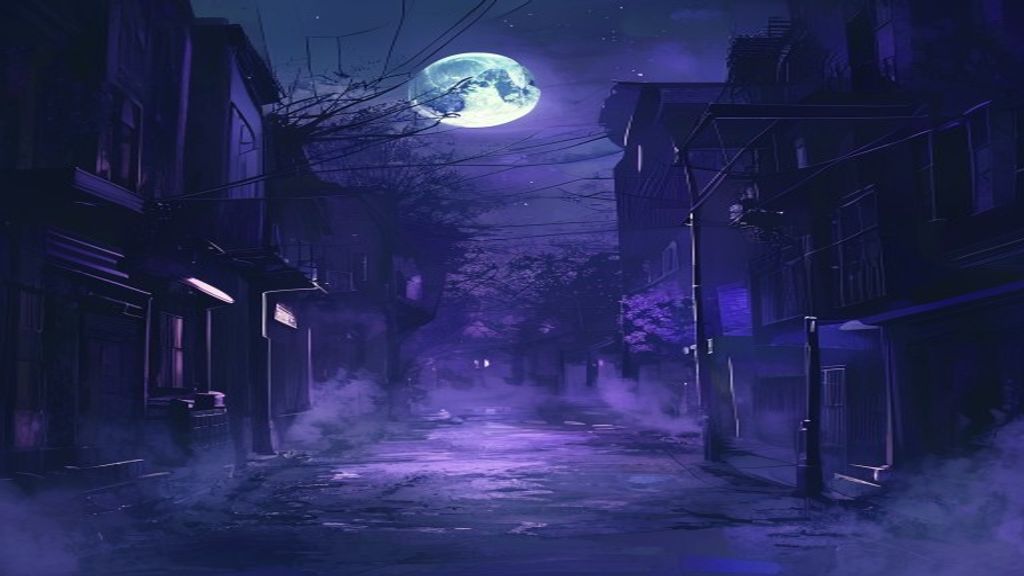
A dark street in a dream usually signals something you’re moving toward but haven’t seen clearly yet. The darkness is the point, not the destination. If you felt watched, the question is whose gaze you’re carrying. If you felt pulled forward, something in your waking life is asking you to keep walking anyway.
The sound your footsteps make
Here’s the anchor for these dreams: the echo. Because on a truly dark street, what you hear first is yourself. Your footsteps against the pavement, louder than they should be, bouncing back from walls you can’t quite see. That’s not a horror-movie detail. It’s the experience exactly. And the dream replicates it: you moving through a space that returns your own sound to you, and the question underneath is whether you recognize it. Dreamers can feel apologetic about this dream, as if darkness means they must have done something wrong, carried some secret guilt into sleep. Rarely. More often the dark street appears during transitions, a job change, a move, the slow end of something that hasn’t ended yet. The street isn’t punishment. It’s the passage itself.
What the dream tends to give you, if you look at it closely, is a particular quality of darkness. There’s the darkness that feels enclosed, like the street is a corridor your mind invented just for this walk. And there’s the darkness that’s open, where you can feel the width of the sky above you even if you can’t see it. Those two feel completely different in the body, and that difference is worth holding onto when you wake. The enclosed dark is usually about pressure. The open dark, even when it’s lonely, is usually about possibility.
Walking toward something
The street stretches ahead. You’re moving, even in darkness. This version often accompanies a waking life where a decision has been made but its outcome is invisible. Uncomfortable, yes. But movement is the signal. You’re not frozen at the door.
Standing still or lost
You’re on the street but not going anywhere, or you’ve lost the route. This version tends to cluster around moments of genuine indecision or the specific feeling of not knowing which version of yourself to be next. The darkness here is less about external threat than internal fog.
What follows you
Sometimes there’s a presence behind you. Not always a figure, sometimes just the certainty of being followed. Jung would say that presence is your own shadow, the parts of yourself you’ve left unexamined. I find that reading less dramatic than it sounds. It just means: you’ve been running ahead of something you haven’t looked at. The dark street is simply the first place you slowed down enough for it to catch up. Artemidorus, the second-century dream chronicler whose Oneirocritica is still surprisingly readable, held that the same dream means different things for different dreamers. That instinct is correct: the details shift the meaning entirely. A deserted street in rain reads differently from a deserted street under stars. Your dreaming mind chose every element. None of it is neutral. G. William Domhoff’s continuity research would note, less poetically but just as usefully, that the streets your mind generates tend to borrow from real geography. Fragments of a childhood neighborhood. The block near an old workplace. That recognition matters. The darkness may be new, but the terrain is familiar, and your mind selected familiar terrain for a reason.
The solitude problem
Empty streets carry a particular loneliness that isn’t quite the same as being alone in a room. It’s the loneliness of a place built for people, temporarily vacated. That’s a precise emotional instrument. If you felt it during the dream and it lingered into your morning, it’s worth asking what in your waking life feels populated in structure but empty in warmth. Not a dramatic revelation. Sometimes it’s just: you haven’t talked to anyone real in a few days, and your sleeping mind noticed before you did.
If the street felt genuinely dangerous, with a figure, a sound, a real threat, that’s a different dream, closer to dreaming of being chased: the body registering a pursuer rather than a passage. But most dark-street dreams aren’t nightmares. They’re not dangerous. They’re solitary. And there’s a version of that solitude that’s almost peaceful, the way a walk at two in the morning can be, when you’ve got nowhere to be and the whole block is yours.
The dreams that stay with people are the ones where the street ends somewhere unexpected. A known building from the wrong city. A door in a wall. Sometimes the dark passage resolves into architecture from another era, as if the night walk was the price of admission. And occasionally the street doesn’t end. It continues past where the map should stop, and you walk on anyway; dreaming of an endless road reads that version on its own. That version, I think, is the one worth sitting with longest.
Dark-street dreams rarely feature monsters. They feature the texture of old asphalt under uncertain light, and the sense of having been on this exact stretch before, just not at this hour. That familiarity in unfamiliar conditions, I think that’s what the dream is actually about. You know the territory. It’s only the visibility that’s changed. The route is still there, and dreaming of a corridor is the indoor version of the same passage, between where you are and where you’re going. I’m not entirely sure what it means that dreamers so rarely turn back. But it’s worth noticing that they don’t.
- Was the darkness enclosed or open? That’s the first fork in the reading.
- Were you moving, lost, or standing still?
- Did you recognize the street’s geography even through the dark?
- Was there a presence? And did you feel it as threat, or just as company?
Quick answers
What does dreaming of a dark street at night mean?
It usually signals a transition you’re moving through without full visibility. The darkness isn’t a warning so much as a condition: you’re in the middle of something whose outcome you can’t yet see. The feeling during the dream, fear, calm, curiosity, or loneliness, tells you more than the imagery does.
Is dreaming of a dark street a bad omen?
Not inherently. The dream appears often during change, not crisis. If you felt pulled forward rather than threatened, it leans toward anticipation. If you felt a real threat, that’s worth examining, but the empty street at night is more often about solitude and transition than about danger.
Why do I feel watched on the dark street in my dream?
Jung would call that presence your shadow: aspects of yourself that are following you because you haven’t yet turned to face them. Less frightening than it sounds. It tends to appear when you’ve been running ahead of a decision or feeling you’ve postponed.
Does the dark street dream mean I have anxiety?
It can accompany anxious periods, but it’s not a diagnosis. Domhoff’s research shows dreams track waking life closely, so a string of these dreams during a stressful stretch is the mind processing, not predicting. If the dream is disturbing and recurrent, talking to someone is a better next step than any dream dictionary.
Sources for this reading
- Domhoff, G. W. (2003). The Scientific Study of Dreams: Neural Networks, Cognitive Development, and Content Analysis. American Psychological Association.
- Domhoff, G. W. (1996). Finding Meaning in Dreams: A Quantitative Approach. Plenum Press.
- Jung, C. G. (Ed.). (1964). Man and His Symbols. Doubleday.
- Artemidorus of Daldis (2nd century CE). Oneirocritica. English edition: Harris-McCoy, D. E. (2012). Artemidorus’ Oneirocritica: Text, Translation, and Commentary. Oxford University Press.
Full bibliography on Sources and method. Found a mistake? Tell us and see the corrections log.