- Tradition
- Psychological readingPlace dreams
- Draws on
- Domhoff
- Reviewed
- 5 min read
“You’ll know when you’re ready,” the coach says, and doesn’t look up from his clipboard. You are standing at the edge of the field, and he is watching the field, not you. You find yourself watching yourself watching him. That dynamic, who sees whom, who performs and who judges, is the entire grammar of a stadium dream.
Stadium dreams are rarely about playing. They’re about being there, in tiers of seats, surrounded by a crowd whose attention is trained somewhere else, or suddenly trained on them. The space is designed for witnessing. That’s its whole function. And the dream borrows that function precisely.
A stadium in a dream is usually about performance and audience: who’s watching you, whether you want them to, and what you feel obligated to prove. The field and the stands are rarely equivalent. Which side you’re on matters more than the sport.
The clipboard and what it points at
The coach matters because stadiums in dreams almost always have a judgment axis. Not cruelty, necessarily. Just the structural fact that someone is being evaluated. A stadium without an audience is just a field. What makes it a stadium is the watching.
So when the stadium appears in a dream, the first useful question isn’t “what sport” or “what team”: it’s “where am I standing.” In the stands, you’re a witness. You may feel trapped there, or relieved, or strangely invisible in all that crowd. On the field, the attention lands on you. The crowd cheers or goes quiet or stares, and your body in the dream responds before your mind can catch up with an interpretation.
A Jungian reading takes large public buildings as images of the collective psyche, the part of us that isn’t private. A house is the self. A stadium is the self in public view. If Jungian readings feel a bit schematic on other symbols, on this one I think they’re onto something, because dreaming of a stadium almost never feels like a quiet interior experience. It has the pressure of an audience in it even when you’re alone on the field.
When the seats are empty
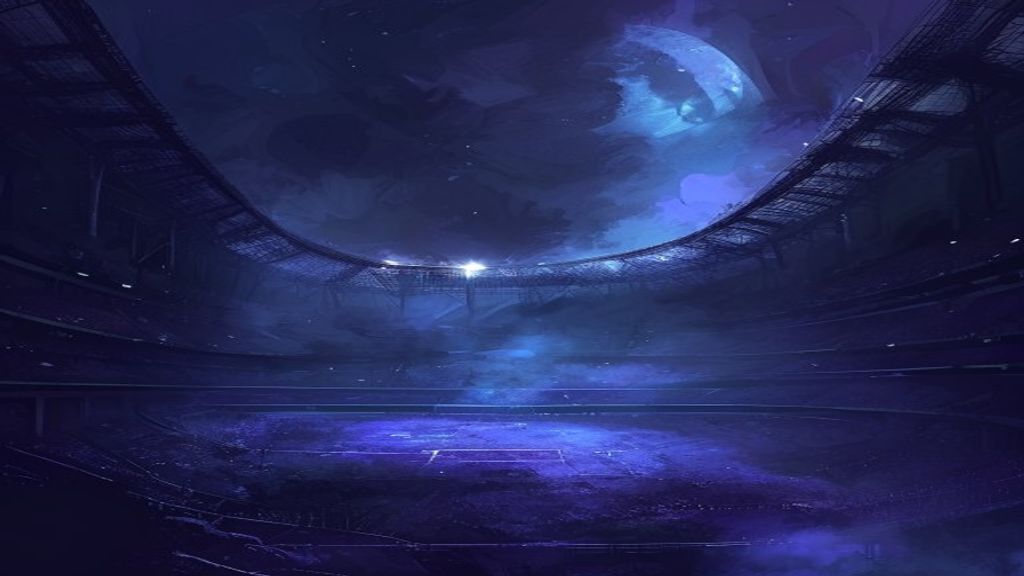
An empty stadium is its own distinct dream. Unsettling in a way that’s hard to name. All that capacity for witness, and nobody there. There’s a strange loneliness in it, more exposed than a crowded stadium, not less. Which makes a certain sense: if the stands are full, the crowd can carry your anxiety. If they’re empty, there’s no one to share it with. You’re performing for an audience that isn’t coming.
Field, stands, tunnel: three positions the dream can put you in
You’re being watched, evaluated, or tested. The dream may carry anxiety or exhilaration depending on whether you feel ready. The crowd’s mood is a direct reading of your confidence about something in waking life you’re putting yourself forward for.
You’re the audience. This can feel safe or irrelevant depending on how the dream frames it. Sometimes it’s relief: not everything is about you. Sometimes it’s the fear of being left out, watching something important happen without you.
Hidden from the main space, neither performing nor witnessing. This is often the most interesting position. Between states. The dream caught you on your way to something, or on your way back from it, and hasn’t decided which.
The crowd as a single thing your mind invented
Here’s what’s strange about crowd dreams. The crowd in your dream isn’t thousands of individuals. It’s one thing you assembled, one ambient pressure with a face or two sometimes floating to the front. Domhoff’s work on continuity between waking life and dreams would predict exactly this: the crowd reflects the social pressure you actually carry. The people in your life who watch you, judge you, or whose approval you’ve been tracking without admitting it.
Domhoff would probably call the mystical reading of crowd dreams unromantic, and he’d be right to. You don’t need to go far. The crowd is built from people you know, feelings you’re already carrying, and the ordinary terror of being seen while not being sure you’re enough.
Older dream traditions would likely have read a stadium dream as a simple oracle: what you’re about to perform, you’ll perform in public, and the crowd’s response tells you whether your waking enterprise will flourish. I don’t read it that literally. But the instinct to connect the crowd’s mood to your own waking confidence strikes me as basically right. Your dream crowd is a mood barometer wearing strangers’ faces.
The stadium that keeps coming back
Recurring stadium dreams tend to cluster around periods of sustained evaluation: a long job search, a creative project that needs an audience, a relationship where you feel perpetually auditioned. The stadium doesn’t retire until the audition ends, one way or another.
If you were in the tunnel, between states, dreaming of a train station is the same in-between position with departure rather than performance at stake. And if the enclosed, pressing quality of the stands was what stayed with you, dreaming of a theater keeps the seated audience but turns the question into which role you are really playing.
That coach, by the way, never does look up from his clipboard. You may never know whether you were actually ready. But you go back onto the field anyway, which is maybe the only answer there is to that kind of inattention. The dream of the stadium, I think, is the mind practicing that moment. Not the performance. The decision to walk out there knowing you might not be ready.
If the sport itself was what held you, dreaming of a sports competition reads the race inside you, which is a different question from who is watching it.
- Was I on the field or in the stands, and did I want to be where I was?
- What was the crowd’s mood, and whose approval does it remind me of in waking life?
- Is there something I’ve been auditioning for, performing for, or waiting to be seen in?
Quick answers
What does dreaming of a stadium mean?
A stadium dream is about performance and audience: who’s watching, who’s evaluating, and where you’re standing in relation to both. The field means you’re being seen. The stands mean you’re watching. Either position carries a question about your waking life that’s worth sitting with.
Why do I dream of an empty stadium?
Empty stadiums often feel lonelier than full ones, which surprises people. All that capacity for witness with no one there can point to work you’re doing that hasn’t found its audience yet, or effort you’re putting in without feeling seen. The emptiness is pointed, not neutral.
What does it mean to dream of performing in a stadium?
It usually reflects real-life situations where you feel evaluated, whether that’s a job, a creative project, a relationship, or something you’re about to put forward. The crowd’s response in the dream is often a direct mirror of your own private assessment of your readiness.
Is a stadium dream anxiety or ambition?
Usually both at once, which is why it’s worth unpacking. Anxiety lives in the crowd’s judgment; ambition lives in the fact that you walked onto the field at all. The dream tends to show you which one is louder right now.
Sources for this reading
- Domhoff, G. W. (2003). The Scientific Study of Dreams: Neural Networks, Cognitive Development, and Content Analysis. American Psychological Association.
- Domhoff, G. W. (1996). Finding Meaning in Dreams: A Quantitative Approach. Plenum Press.
Full bibliography on Sources and method. Found a mistake? Tell us and see the corrections log.