- Tradition
- Psychological readingPlace dreams
- Also read in
- The BibleSame symbol, other tradition
- Draws on
- Domhoff, Jung, Freud
- Reviewed
- 6 min read
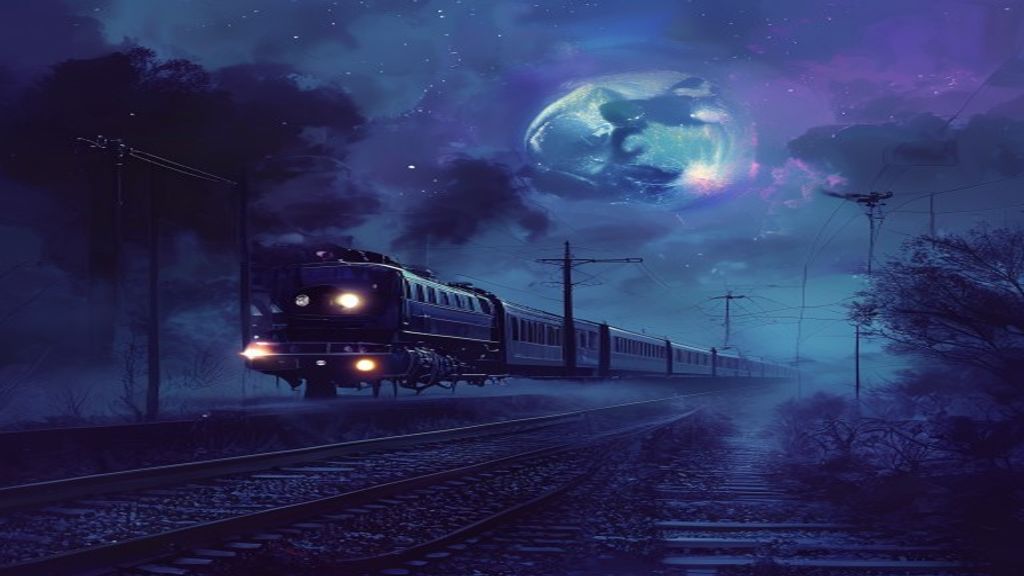
Why does the dream stop at the station, with no journey and no arrival? Because the station is what the dream is about. A train station makes a sound even when it’s quiet: a low mechanical hum, the tick of a departures board, the echo that says this space was built for people who don’t stay. The atmosphere lands before the plot does.
That particular hum is the whole point of the dream, I think. Not the train. Not the destination. The station itself, that charged middle space between where you were and where you haven’t arrived yet.
A train station in a dream is almost always about a life transition in progress. The question it’s really asking: are you boarding, waiting, watching others leave, or still looking for your platform?
The departures board you can’t quite read
What tends to snag people in these dreams isn’t missing the train. It’s the moment before: standing under a departures board, knowing your platform is listed somewhere, and not being able to make out the letters. They swim, they change, they resolve into the wrong city. That visual specifically, the board that won’t cooperate, is a staple of this dream and one of its most recognizable images.
G. William Domhoff’s work on how dreams mirror our waking concerns maps onto this cleanly. If your life has a decision in it, some question about which direction to commit to, the station dream turns up with its unhelpful departures board right on schedule. It isn’t prophetic. It’s almost boringly faithful to what you’re already carrying.
The version with a clear board, destination visible, train on time, tends to arrive during periods of momentum. Everything’s moving and you know it. The version with the unreadable board arrives in the fog: a career crossroads, a relationship that’s changed shape but hasn’t been named yet, a move you’re half-committed to. Your unconscious put you in the transit space because that’s where you actually are.
You missed the train
This isn’t about failure as often as people assume. More often it’s about timing: something moved before you were quite ready. The dream’s asking whether you’re still standing on the platform or whether you’ve walked back out to the street.
You caught the train
Forward momentum, obvious enough. But pay attention to whether you feel relief or dread once you’re seated. Some people board in the dream and immediately want off. That tension between choosing and regretting the choice is doing real work.
Who else is on the platform
A crowded station where you’re alone in the crowd is its own distinct dream. The noise of other people’s arrivals and departures makes your own stillness louder. I think of that version as the bystander’s station: watching lives move while yours sits on hold. If you dreamed this during a friend’s wedding month, a colleague’s big promotion, a sibling’s new baby, you already know what it was about.
Sometimes it’s a specific person you spot across the platform, too far to reach before the train closes its doors. Grief works this way in particular: it keeps inventing new transit metaphors because departure is what it’s made of. The house-as-self idea common in Jungian readings, the psyche as a building with many rooms, extends naturally to places like this; the station is one of those rooms where the self goes when it’s between versions of itself. I’m not normally inclined to borrow that kind of architecture wholesale, but there’s something genuinely useful in thinking of the dream’s station as a room you built for transitions you haven’t finished.
A dream of a flooded bathroom can follow a station dream for a concrete reason: it is about something private building up until it exceeds its container, which is how a delayed decision can feel after a while. The station dream is the decision; the flooded bathroom is what happens when it keeps getting put off.
The historical weight of the threshold
Artemidorus, writing in the second century, didn’t know what a train was, but his method still applies. His Oneirocritica insists that the same dream means different things for different dreamers, depending on age, status and occupation. A station is not the same place for someone who travels for a living and someone who has not left town in years.
The threshold as a dream motif goes back further than Artemidorus. Dream incubation at the temples of Asclepius, where pilgrims slept in the hope of a healing dream, followed the same shape: you arrived sick, you slept in the sanctuary, you woke changed or didn’t. Waiting for a change has always had a ritual side.
- 2nd century
Artemidorus’s Oneirocritica insists the same dream means different things for different dreamers. A transit space, read his way, depends on who is waiting in it.
- 1900
Freud’s The Interpretation of Dreams separates manifest from latent content: the station you see may stand for something you don’t. His specific readings feel dated now.
- 1964
Jung’s Man and His Symbols presents archetypes and compensation to a general readership. In that vocabulary a station is a threshold, where the self pauses between versions of itself.
- Contemporary
Domhoff’s continuity hypothesis explains why station dreams cluster around real-life transitions. The dream isn’t predicting your departure; it’s reflecting the one already underway.
That hum, again
I said the atmosphere lands before the plot does. Here’s what I mean by that returning: the station itself, not the missed train, not the unreadable board, is the thing you’re meant to notice. If you dreamed a place that felt like a held breath, a between-place with its own particular silence, that quality tells you more than the destination ever would. The dream put you there because you are, right now, in the middle of something that hasn’t resolved.
The question isn’t which train you should take. The question is whether you’ve actually let yourself feel the in-between, or whether you’ve been standing under that departures board waiting for it to resolve on its own. Dreams of a deserted island sometimes carry a similar quality of suspended time, though that dream tends to isolate where the station dream crowds. Both are about being somewhere that isn’t yet the destination.
A small habit worth trying after a station dream: write down the destination you were trying to reach, even if you didn’t make it. Not because the city name means anything literal. Because naming the direction you were headed in the dream can name the direction you’ve been avoiding all week. It doesn’t always work. But it’s cheaper than therapy, and sometimes it’s the same thing.
If a collapsing house shows up near the same period, it may mean the structure you were leaving from was already unstable. The station dream is looking forward; the collapsing house is looking back at what you’ve outgrown.
- Did you know your destination, or were you still looking for the platform?
- Who else was on the platform, and were they ahead of you or behind?
- Were you watching trains leave, or were you on one?
- Is there a decision in my waking life that still doesn’t have a departure time?
One symbol, two traditions
Where the psychological read treats train station as a mirror of your inner state, the biblical tradition treats it as something to weigh, prayerfully, against what Scripture actually says.
A train station in a dream is almost always about a life transition in progress. The question it’s really asking: are you boarding, waiting, watching others leave, or still looking for your platform?
You are reading this oneScripture is silent about train stations specifically. But the Bible is deeply preoccupied with transitions, crossroads, and the hard discipline of waiting on direction. Those themes are everywhere in the text, and they’re the…
Read the biblical meaning →Quick answers
What does dreaming of a train station mean?
It almost always points to a life transition in progress: a career change, a relationship shift, something you’re between. The station is the in-between space, and the dream is placing you there because that’s where you actually are.
What does it mean to miss a train in a dream?
Less about failure than about timing. Something moved before you felt ready. The more useful question is whether you’re still on the platform waiting for the next one, or whether you’ve stopped believing another train will come.
Is dreaming of a train station a bad sign?
Not usually. It’s a neutral location, and its meaning shifts with the feeling. A station dream where you’re calm and purposeful tends to reflect clear momentum. The unsettling versions, the missed train, the unreadable board, reflect uncertainty you’re already carrying.
Why do I keep dreaming about being lost in a train station?
Recurrence usually tracks a decision that hasn’t been made yet. The dream keeps you in the transit space because you haven’t left it in your waking life. Naming what you’re between, even roughly, often helps the dream stop needing to make the point again.
Sources for this reading
- Domhoff, G. W. (2003). The Scientific Study of Dreams: Neural Networks, Cognitive Development, and Content Analysis. American Psychological Association.
- Domhoff, G. W. (1996). Finding Meaning in Dreams: A Quantitative Approach. Plenum Press.
- Jung, C. G. (Ed.). (1964). Man and His Symbols. Doubleday.
- Freud, S. (1900). The Interpretation of Dreams (Die Traumdeutung; first published November 1899). English translation by James Strachey, Basic Books.
- Artemidorus of Daldis (2nd century CE). Oneirocritica. English edition: Harris-McCoy, D. E. (2012). Artemidorus’ Oneirocritica: Text, Translation, and Commentary. Oxford University Press.
Full bibliography on Sources and method. Found a mistake? Tell us and see the corrections log.