- Tradition
- Psychological readingVehicle dreams
- Also read in
- The BibleSame symbol, other tradition
- Draws on
- Domhoff, Artemidorus
- Reviewed
- 5 min read
You step onto the platform and the train has already started to move. Nobody is shouting and you aren’t running, there is only the precise gap between your foot and the step, a moment that has already closed. That gap comes from one fact about trains: they run on fixed tracks. The route was decided before you arrived, the stops were chosen by someone who is not you, and the speed is more or less what it is. Whether that sounds like a comfort or a trap tells you almost everything you need to know before you start on the details.
Trains run whether you’re ready or not
The train dream that lingers is rarely a dramatic one. Just a platform, a train already in motion, and the physical sensation of being one second too late. Not running after it, not watching it leave from a safe emotional distance. Just that specific gap between your feet and the step. It’s such a mundane image that it is easy to wave away, and waving it away is usually the mistake.
Missing the train is probably the most common variant of this dream, and it tends to cluster around moments when life is moving on some predetermined schedule and you’re not quite keeping up. A deadline, a developmental stage, a relationship that hit a milestone without you. The train wasn’t waiting. It doesn’t.
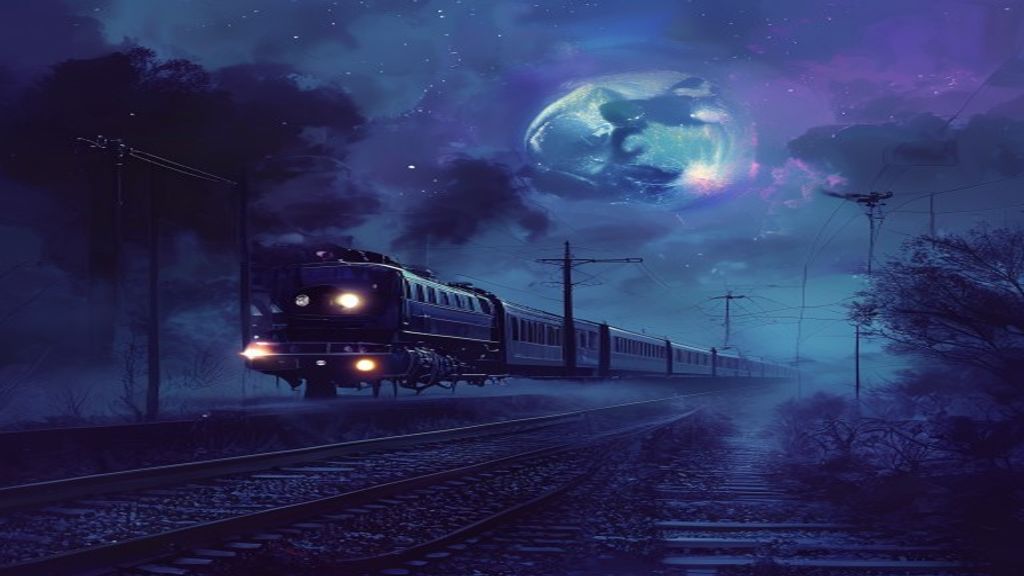
A train dream is usually about fixed paths, collective momentum, and the tension between following a set course and wanting to deviate from it. Missing the train suggests you feel behind; riding it asks whether the destination is actually yours.
What the tracks already decided
The train’s defining feature is that it can’t choose its direction. This makes it a different symbol from a car or a boat. Cars turn; boats tack; trains go where rails go. The house-as-self idea common in Jungian readings extends naturally into transit: if the house holds your interior life, the vehicle carries you through your circumstances. A train, specifically, tends to represent the paths that were chosen for you, institutional, familial, professional, the ones with a clear route and scheduled stops.
Being on a train and unable to get off is one of the more claustrophobic versions. You’re moving, things are progressing, and you can’t exit. That maps onto situations where leaving feels impossible, not because you’re locked in, but because the cost of stopping seems too high. A career trajectory. A long relationship hitting a destination you’re not sure you chose. A family obligation with momentum.
| Tradition | How it reads the symbol |
|---|---|
| Western European tradition | Trains often carry associations of industry, collective destiny, and the modern compression of time. Missing one can read as social anxiety about falling behind. |
| Jungian analysis | The train as collective conveyance: the path everyone around you is on, moving at the speed the culture sets, stops determined by others. |
| Artemidorus (2nd century) | Transport by vessel suggests the dreamer’s circumstances are governed by forces outside individual will. A train, had he imagined it, would fit neatly. |
| Contemporary research | Domhoff’s continuity hypothesis treats the train straightforwardly: it mirrors real concerns about scheduled progress and the pace of life commitments. |
Riding comfortably vs. standing in the aisle
Not all train dreams are anxious. Some people dream of long, smooth train journeys with a good window seat and the landscape going by, and wake feeling oddly rested. That version tends to arrive when you’ve genuinely accepted a path: surrendered to the schedule, stopped fighting the direction, and found something to look at through the glass. It’s a dream about the productive side of constraint. Knowing the track is laid can be a relief.
The uncomfortable version is being crammed in the aisle, standing, no seat, moving but without any sense of belonging to the journey. That’s worth distinguishing from the comfortable ride because it captures a specific feeling: you’re on this train, you’re going where it goes, but you don’t quite fit the experience everyone else seems to be having. It’s the transport dream that connects most directly to dreaming of a boat or an airplane, all modes of collective movement where belonging, or not belonging, to the vehicle’s world is part of what the dream is examining.
When it derails
A train derailment dream is its own category, and a vivid one. The tracks were supposed to hold. They didn’t. Or the train went somewhere the tracks clearly weren’t designed to go. This tends to be about disruption to a path you’d accepted: not a path you chose, but one you’d made peace with. When that one breaks down, the dream has a particular quality of wrongness, because the rules were supposed to prevent exactly this.
I’m a little wary of reading derailment dreams too symbolically. Sometimes they’re just vivid. But when the feeling follows you into the day, when the wreckage image stays, Domhoff would say that’s continuity: your mind running the real disruption in your life through the most available imagery. He’d call it unromantic, and he’d be right that the explanation doesn’t need mystery to be accurate.
The platform image tends to loosen once you can name what you are one second behind on. Perhaps not the career timeline someone else drew for you, but something smaller and more personal. Said out loud, the train can move on without you and you can watch it go. A vehicle with no rails at all is the natural opposite: a helicopter goes wherever the pilot points it, so a dream of one raises the question of who is flying.
- Were you on the train or watching it leave without you?
- Did the route feel like yours, or like someone else’s plan you’d agreed to?
- Was the train comfortable, crowded, or wrong in some way you couldn’t place?
- Is there a fixed path in your life right now that you’re running toward, or away from?
One symbol, two traditions
The two schools are not reading the same book: psychology asks what train is doing in your waking life, while the biblical tradition tests the image against Scripture and leaves the meaning with God.
A train dream is usually about fixed paths, collective momentum, and the tension between following a set course and wanting to deviate from it. Missing the train suggests you feel behind; riding it asks whether the destination is…
You are reading this oneMissing a departure in a biblical frame connects to the theme of timing and readiness. The parable of the ten virgins in Matthew 25 isn’t primarily a condemnation of the five who ran out of oil; it’s a call to preparedness.…
Read the biblical meaning →Quick answers
What does dreaming of a train mean?
Trains in dreams tend to represent fixed paths, collective progress, and schedules that exist independent of your preferences. The dream is usually asking whether the route feels chosen or inherited, and whether the speed is yours or something imposed on you.
What does it mean to miss a train in a dream?
Missing the train is one of the most common versions, and it almost always connects to a feeling of being behind some kind of schedule, developmental, professional, or social. The train wasn’t waiting. The dream tends to arrive when you feel that acutely.
What does it mean to be on a train with no way off?
That’s a dream about being committed to a path that’s in motion and doesn’t offer easy exits. It tends to appear when leaving something feels genuinely costly rather than just difficult: a career track, a relationship that’s hit certain milestones, a family dynamic.
Why do I keep dreaming about trains?
Recurring train dreams usually mean there’s an ongoing tension between the direction life is going and the direction you’d prefer. The train keeps coming back because the track question hasn’t been answered. It tends to quiet down once you’ve made a real decision about the route.
Sources for this reading
- Domhoff, G. W. (2003). The Scientific Study of Dreams: Neural Networks, Cognitive Development, and Content Analysis. American Psychological Association.
- Domhoff, G. W. (1996). Finding Meaning in Dreams: A Quantitative Approach. Plenum Press.
- Artemidorus of Daldis (2nd century CE). Oneirocritica. English edition: Harris-McCoy, D. E. (2012). Artemidorus’ Oneirocritica: Text, Translation, and Commentary. Oxford University Press.
Full bibliography on Sources and method. Found a mistake? Tell us and see the corrections log.