- Tradition
- Psychological readingPlace dreams
- Also read in
- The BibleSame symbol, other tradition
- Draws on
- Jung, Artemidorus
- Reviewed
- 5 min read
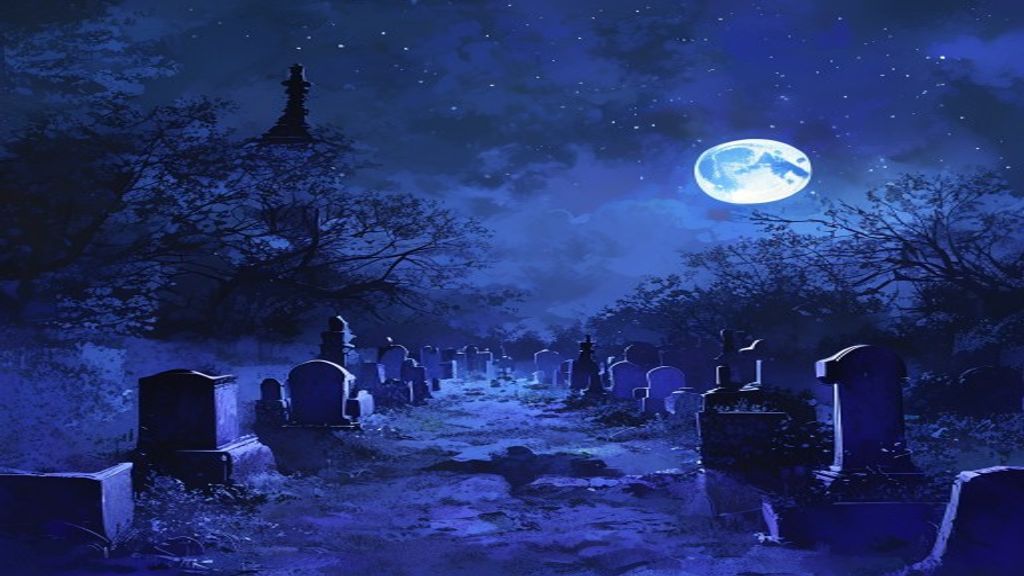
This dream is usually quieter than its setting suggests. The path is familiar in the way dream paths always are, with a confidence that has no source. Headstones on both sides. The light is that particular not-dark: no moon visible, and yet you see everything. Your footsteps don’t quite sound right. And you are not afraid. That calm tends to feel slightly shameful afterward, and it raises the question of whether it’s normal. It is. It’s actually the most important thing in the dream.
What you brought to the cemetery
A cemetery at night sounds, from the outside, like a nightmare. From the inside it’s almost always quieter than that. The darkness isn’t threatening. The stones are just stones. And the dreamer is moving through the space with a kind of deliberateness that suggests they came here on purpose, even if they couldn’t say why.
That purposefulness is the first thing worth sitting with. You didn’t stumble in. You’re walking. Which means some part of you had a reason to be among the markers of what has ended. Grief does that, not dramatic grief but the kind that arrives slowly and quietly, like a letter you keep putting back in the drawer. The cemetery dream is often what happens when that letter finally opens itself.
Sacred and liminal spaces carry a hush that functions as permission, and dreaming of a mosque is a good example of it. You can be still here. You can let something matter. The cemetery at night works in a similar way, minus the architecture, plus the honest acknowledgment that something is over.
Should I be worried?
No. Probably not. The cemetery dream rarely predicts anything and almost never reflects a literal wish. What it tends to reflect is your mind doing the slow administrative work of processing endings, losses, and transitions that you haven’t fully finished with yet.
Which version did you dream
A Jungian reading would treat the cemetery as holding shadow material: the parts of yourself that have been put away, not always consciously, not always willingly. I’m cautious with Jung when he gets too systematic, but on this the reading seems to describe something real. The dream cemetery isn’t usually populated with strangers. It’s populated with things you’ve buried and things you’re not sure are dead yet.
A version of this dream overlaps with dreaming of a house on fire: the setting is dramatic, and the dreamer’s reaction is surprisingly controlled. That gap between the intensity of the image and the calm of the dreamer is usually where the real content lives. Your composure in the dream is telling you something about your composure in waking life.
The light that has no source
The most persistent detail in cemetery-at-night dreams isn’t the graves. It’s that light. No moon, no streetlights, and yet everything visible. It’s best described as the light of the dream itself, and that phrase isn’t far off. It’s the quality of interior space: lit from no direction because the mind doesn’t need to explain light. It only needs you to see what it’s showing you.
And what is it showing you? Usually: markers. Things that have names. Endings that have dates on them. The cemetery dream is a kind of inventory, taken in private, at a pace you control, in a light only you can see. The continuity hypothesis frames this simply: the dream tracks whatever is most alive in your concerns, and if you’re living in the aftermath of a loss or a major ending, the mind will find its imagery accordingly. No mysticism required. The cemetery is just the place the mind reached for when it needed to do the accounting.
Artemidorus held that the same dream means different things for different dreamers. Second-century advice, and it still holds for the dead in a cemetery. Whatever or whoever populated yours, ask what they stood for in your life, not only who they were.
If the dream felt more like visiting than mourning, and especially if you woke feeling something like relief, consider dreaming of an empty room: sometimes the most honest thing the psyche can do is show you a space for what’s finished, and let you stand in it without trying to refill it immediately.
Picture a dreamer who has this dream twice, both times after something ended that they had half been expecting. Both times they walk through the space, recognize nothing and are fine about it. Both times they wake with an unusual, almost embarrassing calm. It is easy to puzzle over that for years. I think the calm is the point: the dream did something that hadn’t been managed while awake.
- Was I calm, distressed, or searching? The emotional register is the real content.
- Was there a specific grave I was looking for, or moving toward? What might it represent?
- Did I recognize anyone or anything in the space, living or as a presence?
- Is there something in my waking life that needs a proper ending, and hasn’t had one?
One symbol, two traditions
Read side by side, the two traditions pull in different directions: cemetery at night as a signal from your own mind, or cemetery at night as an image to test against the text. Knowing which question you are asking is half the interpretation.
It usually reflects a process of grieving, ending, or reckoning with something finished. The night setting adds interiority, privacy. It’s your mind making space for whatever hasn’t been fully processed yet. It’s rarely a bad…
You are reading this oneScripture speaks about death, graves, and the night with unusual directness. It doesn’t sanitize. It does, eventually, refuse despair. A dream of a cemetery at night can touch both registers, and the biblical reading doesn’t…
Read the biblical meaning →Quick answers
What does dreaming of a cemetery at night mean?
It usually reflects a process of grieving, ending, or reckoning with something finished. The night setting adds interiority, privacy. It’s your mind making space for whatever hasn’t been fully processed yet. It’s rarely a bad sign and almost never a literal one.
Is dreaming of a cemetery at night a bad omen?
Historically many traditions treated cemetery dreams as significant, but not necessarily dangerous. In most contemporary dream research, they track waking concerns, specifically loss and transition, rather than predict anything. The emotional tone of the dream matters far more than the setting.
Why am I calm in my cemetery dream?
Because the mind already knows it’s doing necessary work. The calm tends to mean you’re actually ready for whatever the dream is processing, even if you don’t feel ready during waking hours. It’s not numbness. It’s readiness.
What does it mean if someone I know appears in my cemetery dream?
Almost certainly it’s about your relationship with that person, not their mortality. The cemetery is neutral ground for difficult feelings. If they appeared alive, your mind is likely working through something unresolved between you. If they appeared as a grave, ask what aspect of that relationship or that person’s role in your life feels finished.
Sources for this reading
- Jung, C. G. (Ed.). (1964). Man and His Symbols. Doubleday.
- Artemidorus of Daldis (2nd century CE). Oneirocritica. English edition: Harris-McCoy, D. E. (2012). Artemidorus’ Oneirocritica: Text, Translation, and Commentary. Oxford University Press.
Full bibliography on Sources and method. Found a mistake? Tell us and see the corrections log.