- Tradition
- Psychological readingPlace dreams
- Draws on
- Domhoff, Artemidorus
- Reviewed
- 6 min read
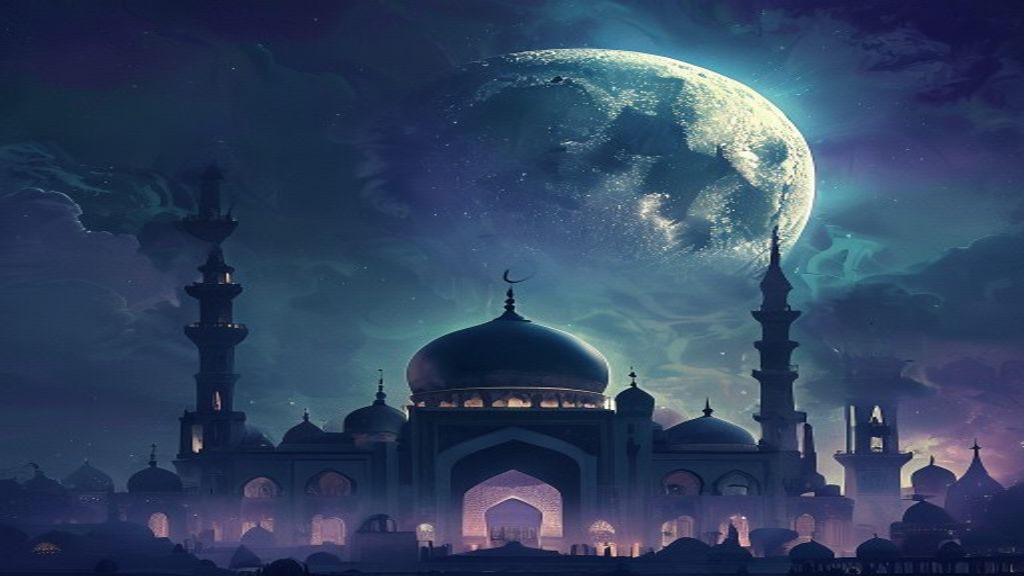
The first thing a mosque dream gives you is a hall, large and tiled. Arches overhead. No one else is there. The dream has the quality of a held breath: nothing asked of you, nothing threatening, just the particular silence of a place built for listening. It reads, at first, like a religious dream. Usually it isn’t. It is a dream about a room where performance stops, and a quiet that feels closer to longing than to respect.
A mosque in a dream usually signals a need for stillness, surrender, or honest self-accounting. It’s less about faith and more about the part of you that wants to kneel, in the metaphorical sense, and tell the truth about something.
What makes a sacred space different from any other building
Dreams aren’t subtle about architecture. When your mind drops you into a library, you’re in a place of quiet knowing. A hospital brings in urgency and vulnerability. A mosque, a temple, a cathedral, a shrine: these are all buildings where the ordinary rules are temporarily suspended. Shoes come off at the door. Voices lower. The body does things the everyday body doesn’t do.
That suspension is the dream’s actual subject. If you’re dreaming of a mosque and you’re not Muslim, your unconscious isn’t commenting on your theology. It’s reached for the most vivid image it could find of a place where performance stops. Where the pretense you carry around all week isn’t welcome. You can’t be clever inside that dream. You can only be quiet.
A Jungian reading holds that rooms in dreams correspond to parts of the psyche, the house of the self. Sacred spaces push that further: they’re the parts of the house you don’t enter casually. The part that asks something of you before you come in. The feeling this dream leaves is often solemn and somehow personal, even when the space is vast.
The feeling under the architecture
There are a few distinct textures this dream can arrive in, and they matter more than the building itself.
You’re inside and it feels right, even if you weren’t expecting to be there. This version tends to arrive when your waking life has been loud for too long. The dream is offering you a kind of respite. Your mind found the quietest building it knows.
The door is locked, the prayer is already underway, or you’re simply standing in the courtyard unable to go in. This is usually about something you want access to but feel unqualified for: a community, a peace, a version of yourself you’re not sure you’re allowed to claim.
Shoes still on. Moving against the flow. Talking when everyone else is silent. This anxiety version is less about religion than about the fear of being the wrong kind of person in a place that requires you to be a certain way. Worth asking where that fear lives in your waking week.
This is the stillest version. The building before the congregation arrives, or after it’s left. An enormous readiness with no one to receive it. Usually about a capacity in yourself, a seriousness or depth, that hasn’t been used yet.
A note on whether this dream is about religion
Rarely, I think. If you are a practicing Muslim and dream regularly of a mosque, the setting may simply be your mind rendering a place that’s genuinely central to your daily life. Domhoff would call that the continuity hypothesis and he’d call it boringly obvious, which is fair. Dreams mostly follow the texture of our actual days.
But for people with no particular connection to the tradition, the mosque functions as a symbol with a specific profile: submission in the best sense, the kind of surrender that isn’t defeat. A place where the ceiling is higher than you are. Older dream traditions treated temples and sacred buildings in dreams as a sign of the state of the dreamer’s conscience, and honestly, across two thousand years of dream interpretation, that reading has not aged badly.
Two details carry much of the dream: the floor and the light. Cool tiles. And the specific quality of light that comes through high, narrow windows in a place like that. Everything very clean. Very uncluttered.
I think the mosque dream is often a dream about decluttering, not the domestic kind, but the interior kind. The noise you carry. The performance. The elaborate scaffolding of self that most of us build and maintain and wheel around with us everywhere. The dream drops you into the one kind of room where that scaffolding doesn’t fit through the door.
If you’re at a point in your life where something needs honest reckoning, where you’ve been avoiding a truth about yourself or a situation, this dream has a way of arriving. Not to punish. More like a building that holds open the door and says: when you’re ready. If you’ve been exploring other threshold dreams, dreaming of an endless corridor is also about being suspended between one state and another.
Cross-cultural notes on sacred-place dreams
| Tradition | How it reads the symbol |
|---|---|
| Islamic tradition | In Ibn Sirin’s classical dream tradition, entering a mosque in good order signifies righteous conduct and the easing of burdens. A ruined mosque suggests neglect of conscience. |
| Jungian reading | The sacred space is the part of the self-house reserved for the numinous: the parts of your psyche that can’t be reasoned with or managed, only met. |
| Ancient Mediterranean | Artemidorus placed temples as mirrors of the dreamer’s inner state and their relationship to what they considered binding: vows, debts, honesty. |
| Cross-cultural pattern | The Chester Beatty Papyrus and other early Egyptian dream texts consistently treated temples as liminal zones: you are neither the everyday self nor the dead, but something being assessed. |
The dream that wouldn’t leave
An empty-mosque dream that comes three nights running can mark a period of quiet dishonesty. Not dramatic dishonesty. The subtle kind, where you let a misunderstanding stand because correcting it would be uncomfortable. That’s all.
The dream feels like a low voice coming through a wall. Patient. Not accusatory. Just present every morning until you do the thing you’ve been avoiding. You probably know that particular voice, the one that comes through whatever wall your mind constructs, that just waits.
If this dream arrived alongside dreaming of an unknown but familiar place, the pairing makes sense: both are about a part of your life you half-recognize asking for more honest attention than you’ve given it. The mosque just makes the request in a building with better acoustics.
And if the specific image was a vineyard, a garden, a place where something slow and living grows, dreaming of a vineyard asks what you are cultivating, and whether you are actually showing up for it.
- Was I inside the mosque or kept outside it, and how did that feel?
- Is there something I’ve been carrying that I haven’t been willing to set down?
- Where in my waking life do I feel like I’m performing when I’d rather just be honest?
- What would it mean to actually kneel, metaphorically, in front of something right now?
Quick answers
What does it mean to dream of a mosque?
Usually it’s a symbol of the part of you that wants to stop performing and be quiet with something true. The mosque shows up when your life has been noisy in the interior sense: too much self-management, too much pretense. It’s rarely about religion unless the faith is genuinely central to your daily life.
What if I dream I can’t enter the mosque?
Being locked out, or standing in the courtyard while prayer continues inside, is usually about access to a peace or community or version of yourself that you want but don’t feel entitled to. It’s worth asking what the ‘door’ represents in your current life.
Is a mosque dream a spiritual dream?
It can be, but the word ‘spiritual’ is doing a lot of work there. More precisely it’s a dream about the part of life that doesn’t respond to cleverness or control. Call that spiritual if you like. The dream is pointing at a need for honesty and stillness, whatever tradition you frame it in.
Why do I keep dreaming of the same mosque?
Recurrence usually means the thing the dream is pointing at hasn’t been acknowledged yet. The location stays the same because the need stays the same. Most people find the recurring version stops once they’ve done the actual interior work the dream was circling around.
Sources for this reading
- Domhoff, G. W. (2003). The Scientific Study of Dreams: Neural Networks, Cognitive Development, and Content Analysis. American Psychological Association.
- Domhoff, G. W. (1996). Finding Meaning in Dreams: A Quantitative Approach. Plenum Press.
- Artemidorus of Daldis (2nd century CE). Oneirocritica. English edition: Harris-McCoy, D. E. (2012). Artemidorus’ Oneirocritica: Text, Translation, and Commentary. Oxford University Press.
Full bibliography on Sources and method. Found a mistake? Tell us and see the corrections log.