- Tradition
- Psychological readingPlace dreams
- Also read in
- The BibleSame symbol, other tradition
- Draws on
- Domhoff, Artemidorus
- Reviewed
- 5 min read
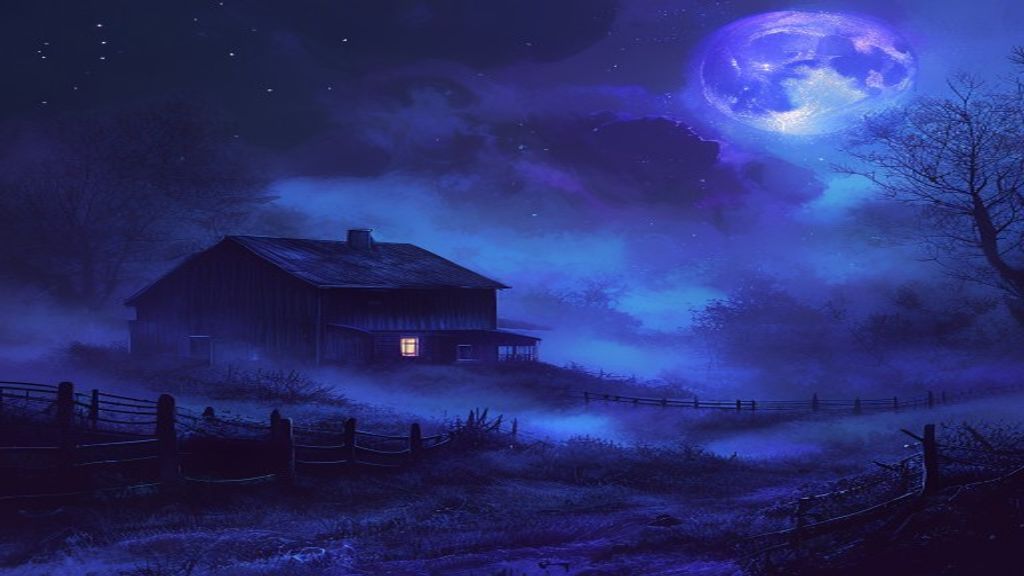
Farm dreams are usually read as pastoral: calm, simplicity, a gentle return to something wholesome. It fails because a farm is not scenery. Nobody on a farm is relaxing, nothing in that setting waits for you to feel ready, and the picture of golden-hour fields leaves out the obligation that makes a farm a farm.
Farm dreams carry a specific weight that garden dreams or nature dreams don’t. A garden can be purely aesthetic. A farm is about productivity, obligation, things that’ll die if you stop showing up. Your unconscious knows the difference. When it gives you a farm, it’s not offering you scenery.
A farm in a dream usually represents something in your life that requires regular tending to stay alive. The condition of the farm, thriving, neglected, unfamiliar, tells you roughly how you feel about that responsibility right now.
The condition of the land
This is where I’d start. Not what animals were there, not who else appeared. The first thing: how did the land itself look? Because the farm in your dream is almost certainly standing in for something you’re responsible for maintaining in waking life. Could be a relationship, a business, a health routine you’ve been inconsistent with, or honestly any sustained commitment that requires you to keep showing up.
A fertile, well-ordered farm is the mind telling you things are actually in decent shape, even if they feel like work. A neglected farm, overgrown, fences broken, structures leaning, is more uncomfortable to sit with but usually more honest. Domhoff’s continuity hypothesis holds that dreams tend to reflect our actual concerns rather than disguise them. A dream about a farm you’ve let go to ruin isn’t telling you something new. It’s showing you what you already know.
Whose farm was it?
If it was clearly yours, the dream is about your own responsibilities. If it belonged to someone else, if you were working someone else’s land or arriving as a stranger, the reading shifts. Borrowed labor in a dream often connects to obligations you’ve taken on that don’t feel quite like your own, work you do for other people’s projects, obligations you inherited rather than chose.
A Jungian reading treats cultivated land as the territory of the conscious ego, what we’ve tamed and organized and brought under deliberate control. An unfamiliar farm, one you’re somehow responsible for but don’t recognize, might be asking whether the role you’re playing in waking life genuinely fits you. That’s a harder question than it sounds.
How different traditions have read this
| Tradition | How it reads the farm |
|---|---|
| Ancient Greece/Rome | Artemidorus held that the same dream means different things for different dreamers, depending on age, status and occupation, so a farm would read one way for a farmer and another for a merchant. Ancient readings of land were largely material, tied to livelihood, but the emotional undertone, security versus precarity, still holds. |
| Jungian psychology | The farm as cultivated self. What you’ve brought under conscious order. The state of the land mirrors the state of whatever you’ve claimed responsibility for in your inner and outer life. |
| Folk traditions (many cultures) | Farm dreams as literal prediction of harvest, weather, and season, read by people whose livelihood depended on both. The boundary between omen and metaphor was deliberately blurry. |
| Contemporary dreamwork | The farm as relationship or project that needs regular input. The emphasis falls on what you’re raising, whether it’s growing, and whether the effort feels sustainable or depleting. |
Animals, buildings, weather
These are secondary details, but they’re worth a quick pass. Animals on a farm usually represent specific energies or drives: horses are often about power and direction, cattle about wealth and slowness and groundedness, chickens about small anxieties or pecking concerns. I’m not being literal here. The question is what feeling the animal carried in your dream.
Farm buildings matter in a similar way. A barn is storage, things set aside, the part of a project not currently in use. A farmhouse is where you live inside all this labor. If the house was in bad shape and the barn was fine, or vice versa, that asymmetry is probably the most interesting detail in the dream.
And weather in farm dreams is almost never background. Rain that won’t stop, a drought, an early frost. Farms are uniquely vulnerable to weather in a way that indoor spaces aren’t, which may be why the mind chooses them when it wants to explore feeling at the mercy of something outside your control. Failing structures on a farm, the sagging barn or the leaning fence, carry much the same message as a ruined house: something you live inside or look after has lost its upkeep, and perhaps its warmth.
The door that won’t latch
A screen door banging in the wind, a gate that won’t close, a fence post leaning: these small details deserve a second look in a farm dream. They rarely appear in dream dictionaries, but they capture something real about farm dreams: the sense of something almost secured that isn’t quite. The latch that needs fixing. The small maintenance you keep meaning to get to.
Farm dreams often resolve themselves once you identify that one undone thing, the small structural repair in whatever the farm represents. Not the whole harvest, not the whole question of whether you belong on this land. Just the latch. Sometimes that’s enough to start. If the land itself has gone wild, dreaming of an overgrown garden asks a smaller version of the same question: what grew while you weren’t looking?
- Was the farm thriving, neglected, or somewhere in between?
- Was this land mine, or was I working it for someone else?
- What would the farm be a stand-in for in my actual life right now?
- Is there one small structural thing I’ve been meaning to fix and haven’t?
One symbol, two traditions
A psychologist asks what farm felt like and what it echoes in your week. The biblical reader asks a different question entirely: what does Scripture say when this image appears, and what does it stay silent about?
A farm in a dream usually represents something in your life that requires regular tending to stay alive. The condition of the farm, thriving, neglected, unfamiliar, tells you roughly how you feel about that responsibility right…
You are reading this oneFarms and fields are among the most consistently meaningful images in Scripture. The biblical dream of farm connects to themes of sowing and harvest (Galatians 6:7), the hidden growth of the kingdom (Matthew 13), patient faithful…
Read the biblical meaning →Quick answers
What does dreaming of a farm mean?
A farm in a dream typically represents something you’re responsible for maintaining. The state of the farm reflects how you feel about that responsibility, whether it’s thriving under your care, being neglected, or simply demanding more than you expected.
What does it mean to dream of a farm that’s falling apart?
A neglected or ruined farm is usually honest rather than alarming. It tends to reflect something in waking life that you know needs attention. The dream isn’t telling you anything new, it’s showing you what you’ve probably already sensed.
What does it mean to dream of working on someone else’s farm?
Borrowed labor in a dream often connects to obligations you’ve taken on that don’t feel quite your own. Projects you’re maintaining for other people’s benefit, inherited responsibilities, roles that don’t fully fit. Worth asking whose priorities the work is actually serving.
Why do animals appear in farm dreams?
Animals in farm settings usually carry emotional weight beyond their species. The feeling they brought in the dream matters more than any symbolic dictionary. A horse that felt like freedom is different from a horse that felt like an obligation you couldn’t put down.
Sources for this reading
- Domhoff, G. W. (2003). The Scientific Study of Dreams: Neural Networks, Cognitive Development, and Content Analysis. American Psychological Association.
- Domhoff, G. W. (1996). Finding Meaning in Dreams: A Quantitative Approach. Plenum Press.
- Artemidorus of Daldis (2nd century CE). Oneirocritica. English edition: Harris-McCoy, D. E. (2012). Artemidorus’ Oneirocritica: Text, Translation, and Commentary. Oxford University Press.
Full bibliography on Sources and method. Found a mistake? Tell us and see the corrections log.