- Tradition
- Psychological readingPlace dreams
- Also read in
- The BibleSame symbol, other tradition
- Draws on
- Domhoff, Artemidorus
- Reviewed
- 6 min read
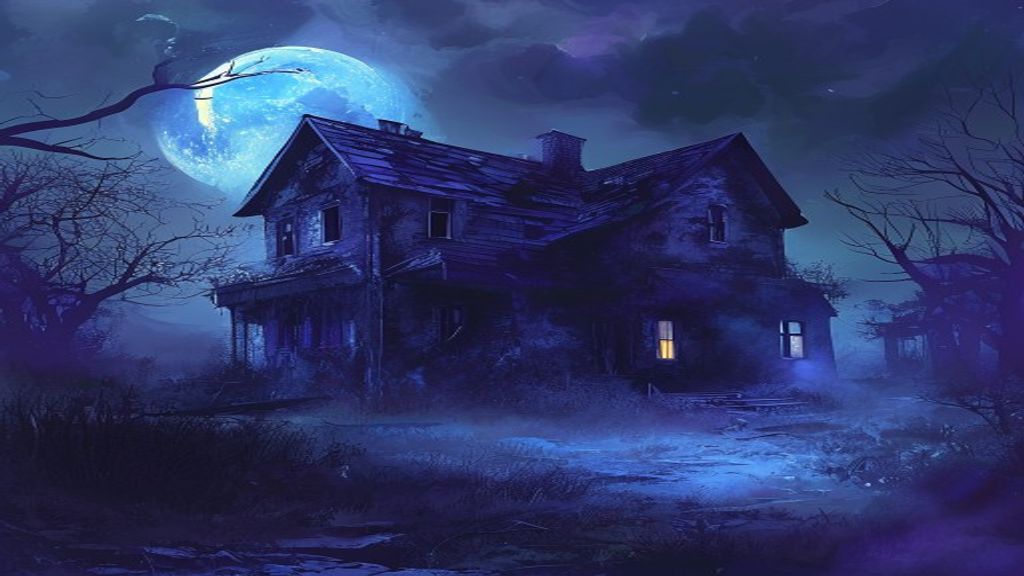
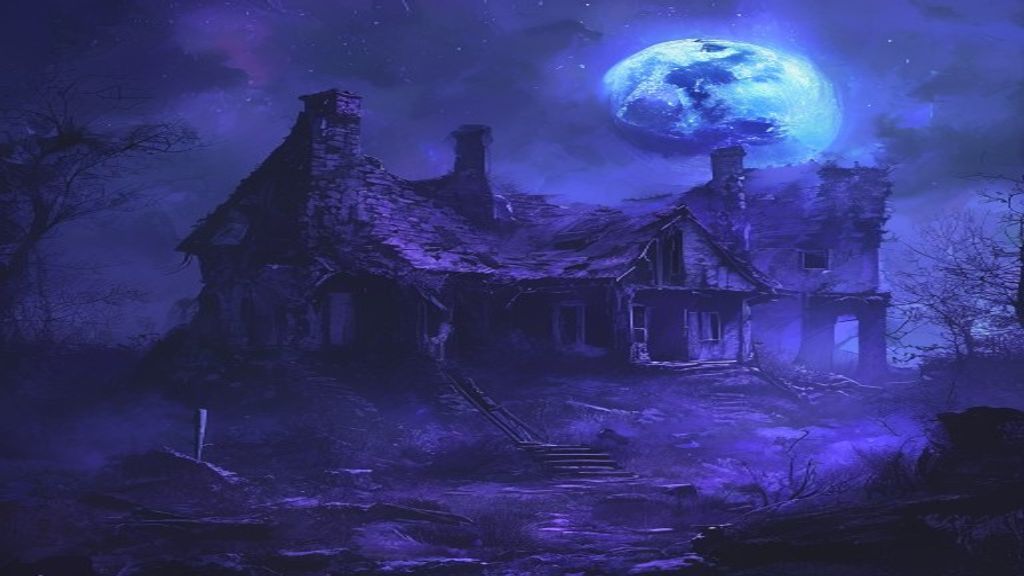
Roofless walls, open to the sky. Grass through the kitchen floor. A window frame with no glass, the curtains long gone, and still the shape of a house holding its outline in the landscape like something that refused to finish falling. There’s a particular kind of ruin that isn’t dramatic at all. It’s just what happens when something stops being maintained and keeps standing anyway.
That image is what stays with people after these dreams. Not horror, not violence. Just the specific sadness of structure that outlasted its purpose. You walk through it in the dream and it’s familiar, or you’re certain it was yours once, and neither of those details is accidental.
A ruined house in a dream represents something you inhabited that’s no longer fully intact. It’s the dream’s shorthand for an ending that wasn’t clean: a relationship, a life chapter, an identity that still has its walls but lost its warmth. Whether the ruin feels sad, peaceful, or merely abandoned tells you most of what you need to know.
The difference between collapse and ruin
A collapsing house is an event. A ruined house is an aftermath. The dreaming mind chose to put you in the ruins, not in the moment of falling, and that’s a meaningful distinction. Whoever lost this house in the dream lost it slowly, over time, through the ordinary physics of neglect. That process took longer than a night.
The Jungian tradition treats the house as one of the oldest symbols of the self, each room a different chamber of inner life. Apply that to a ruin and you get something specific: a part of the self that was once inhabited and isn’t anymore, that still exists as architecture, as structure, as outline, but from which the warmth has long since departed. There’s a difference between a room that’s cold and a room that has no roof. The cold room might warm again. The roofless one is somewhere past that.
Most people dreaming of ruined houses are not dreaming about their own decline. They’re dreaming about a chapter. Something that was a real and functional part of their life, a marriage, a career, a place they lived, a version of themselves, that has been over long enough to become a kind of ruin. The dream isn’t telling them it’s over. They already know. The dream is asking what they’re still doing standing in the ruins.
What you do in the ruin
A ruin that doesn’t perform
Think of the shell of a farmhouse at the edge of a field. It has the outlines of a place that was once completely ordinary: chimney, doorframe, a bit of what might have been a garden wall. No drama to it at all. But there is something about the way it has decided to stay put. It isn’t fighting to be a house anymore. It has just become a ruin honestly, without apology.
That farmhouse is the image for this dream. Not the romantic ruin of postcards. The modest, local ruin that sits in a field without performing its sadness. You know when you’re dreaming this which house the ruin is standing in for. You know whose it was and what it held. The honesty of the ruin is that it doesn’t pretend to be something it’s no longer capable of being.
Artemidorus, writing in the second century, held that the same dream means different things for different dreamers, which is why a ruin can read as loss for one person and as a clearing for another. The logic of a clearing is that something cleared has space for something else. That reading is more useful than it might sound: ruined houses in dreams are sometimes futures in disguise.
A cemetery at night marks things that have concluded, the quiet acknowledgment that an ending is final. A cold room is the earlier stage of the same process, when the structure is still intact but the warmth has already left.
When ruins recur
A recurring ruined house dream usually means one of two things. Either the grief for what it represents is still being processed, which is slow work and there’s no shortcut, or something in your waking life is being held together past the point where it still makes sense. You’re living in a ruin and calling it a house. That’s not a failure. Plenty of people do it. The dream just keeps sending you back to look at the walls.
G. William Domhoff’s continuity hypothesis is a useful corrective here: it resists the symbolic interpretation and asks what your life actually contains that this image is tracking. Where, in your waking circumstances, is there something still standing that lost its function a while back? That question, drier and more practical than a Jungian reading, tends to land.
There’s also the stranger case: dreaming of ruins you don’t recognize as yours, places that feel ancient, collective, belonging to no one in particular. Dreams about secret rooms often share this quality, the sense of a space that predates your specific story. Those dreams feel less personal and may be less personal. Sometimes the dreaming mind finds large old images before it finds the specific one.
I don’t think this dream is always sad. A ruin like that farmhouse isn’t sad. It has arrived at a kind of resolution. Whatever argument it had been having with time, it has stopped arguing.
- Did you recognize the ruin as something that used to be yours, or was it unfamiliar?
- What was the feeling: grief, curiosity, a strange peace, or numbness?
- Was any part of the ruin still livable, and did you want to stay?
- What chapter of your waking life has been over long enough to look like this from a distance?
One symbol, two traditions
Psychology keeps ruined house inside your own story, a symbol your mind built from your days. The biblical tradition looks outward instead, and asks whether Scripture gives the image any voice at all.
A ruined house in a dream represents something you inhabited that’s no longer fully intact. It’s the dream’s shorthand for an ending that wasn’t clean: a relationship, a life chapter, an identity that still has its walls but lost…
You are reading this oneRuin in Scripture is almost always tied to choices and neglect rather than random misfortune. Haggai uses ruined structures as the image of misplaced priorities. Proverbs 24 uses a neglected vineyard to describe what sustained…
Read the biblical meaning →Quick answers
What does it mean to dream of a ruined house?
A ruined house usually represents a chapter, relationship, or version of yourself that ended without a clean conclusion. The ruins are still standing, which is the point: this thing is over, but its outline is still there. The feeling you have in the dream, grief, curiosity, relief, or nothing, tells you where you are with the loss.
Is dreaming of a ruined house a bad sign?
Not necessarily. The psychologically useful question is whether you’re mourning something that deserves mourning, or whether you’re still living in a ruin and calling it home.
What does it mean if you try to repair a ruined house in a dream?
Pay attention to whether the repairs feel possible or impossible in the dream. If they feel possible and satisfying, there may be something real you believe can be rebuilt. If they feel futile, or if the walls keep crumbling as you repair them, the dream may be showing you that the energy spent on this particular restoration is working against something that’s already been settled.
Why do I dream of a ruined house I don’t recognize?
Unfamiliar ruins tend to feel older and less personal, and they may be. The dreaming mind sometimes uses collective or archetypal imagery rather than personal memory. But it’s worth asking whether any part of the ruin had a quality or atmosphere that mapped onto something current in your life, even if the building itself wasn’t a place you know.
Sources for this reading
- Domhoff, G. W. (2003). The Scientific Study of Dreams: Neural Networks, Cognitive Development, and Content Analysis. American Psychological Association.
- Domhoff, G. W. (1996). Finding Meaning in Dreams: A Quantitative Approach. Plenum Press.
- Artemidorus of Daldis (2nd century CE). Oneirocritica. English edition: Harris-McCoy, D. E. (2012). Artemidorus’ Oneirocritica: Text, Translation, and Commentary. Oxford University Press.
Full bibliography on Sources and method. Found a mistake? Tell us and see the corrections log.