- Tradition
- Psychological readingObject dreams
- Also read in
- The BibleSame symbol, other tradition
- Draws on
- Domhoff, Artemidorus
- Reviewed
- 5 min read
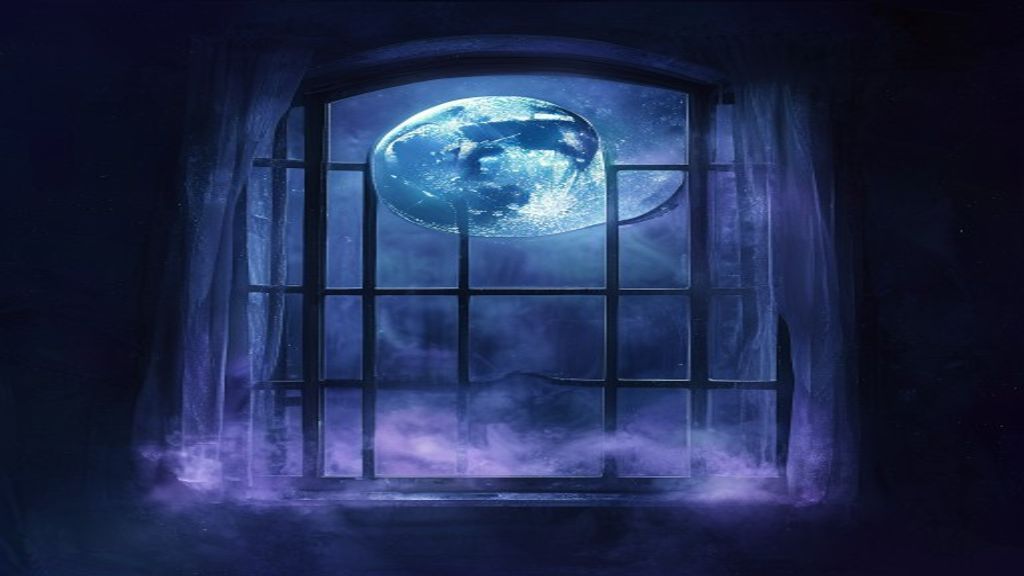
Opportunity is the standard answer for a window dream: a way out, a chance, something you should climb through. A window is not a door, which is where that answer goes wrong. You are standing in a room, seeing a garden through the glass, not opening it, just standing there looking. Windows are about perception and longing, proximity without contact, and the dream is rarely asking you to go anywhere. It is asking what you are looking at.
A window in a dream is usually about perception, not passage. You’re watching something you want, or something you’re keeping yourself from, and the glass is doing the work of explaining the distance. What matters most is whether you’re on the inside looking out, outside looking in, and what you do with the latch.
The glass between you and it
Dream windows are a different thing from dream doors. Doors are about decisions, crossings, the moment you commit. Windows are about watching, wanting, staying put while something moves on the other side. They’re the most honest image the sleeping mind has for longing, because longing is exactly that: proximity without contact. You can see it. You can’t touch it yet, or won’t, or feel you shouldn’t.
It’s easy to feel a specific guilt about window dreams, as if watching something through glass is a lesser act than going through the door. It isn’t. A lot of the most important feelings in a life are window feelings. The kid watching the other kids from a car. The person who almost applied for the job. The night you stood at the kitchen window at 2am and watched the street and didn’t know what you were doing there. These are real. The dream uses them because they’re already in your memory, fully formed.
What the window shows you
The classic window dream: you’re inside, the world is outside, and it’s bright. This usually points at something in your life that you’re adjacent to but not inside. A relationship, a career, a version of yourself. The brightness matters: inviting daylight suggests the exit is available. You just haven’t opened the window yet.
When the glass is grimy, cracked, or you can’t see clearly through it, the dream is usually about obscured judgment. You can sense something is out there but you can’t read it properly. This turns up around decisions made without enough information, or around people you want to trust but can’t quite.
Being outside looking in is the more unsettling version. It can mean you feel excluded from a life that’s happening without you, or that you’re observing your own existence from a distance. Quite common during periods of dissociation, illness, or the strange detachment that sometimes follows a big transition.
A shattered window means the boundary gave way, and whether that feels like liberation or violation depends entirely on the feeling in the dream. If you broke it, you probably needed to. If it broke on its own, something entered your space without permission and your mind is registering that.
Sealed windows, painted shut, windows with no latch: these map almost perfectly onto opportunities that feel visible but inaccessible. The frustration inside the dream is doing real work. Ask what you’re seeing through the glass and whether the seal is actually structural or just never been tried.
Height, direction, light
The thing about window dreams that gets lost in the general interpretations is that windows are architectural. They have a position in the wall, a height, a direction they face. A basement window with feet walking past it above you is doing something entirely different from a high attic window with clouds. The basement one tends to show up when you feel low in a hierarchy, when you’re aware of everyone else’s lives moving at eye level above yours. The high one is the opposite: perspective, detachment, the widened view. Both are worth paying attention to. It’s easy to remember just ‘a window’ and miss the half of the message that lives in where the window was placed.
The ancient window
I don’t reach for Artemidorus’s second-century dream manual very often. It’s nearly two thousand years old and arranged by social class in ways that date it hard. But its central rule is useful with windows: the same dream means different things for different dreamers, depending on age, status and occupation. A window onto a street, a courtyard or a wall is not the same window for everyone, and what can be seen through it depends on who is standing there. The dream tradition he was drawing on was already old when he wrote it down.
Domhoff’s continuity hypothesis, which is skeptical of most symbolic readings and would probably describe the paragraph above as wishful, would predict that window dreams belong to periods of transition and uncertainty. That isn’t mysticism. That’s the mind running the same metaphor that poets have used for a very long time, because it works.
When the window faces a wall
Take a window that faces a brick wall: not romantically close, not dramatically far, just a flat grey surface a few metres away. Someone dreaming it, with the slight ache of knowing a street exists somewhere behind that wall, may be wanting less the street than the idea that a street might exist. The dream could be right about something not yet admitted: life watched through obscured glass for years. Not suffering. Just not seeing it clearly. Sometimes the answer is as small as turning the desk to face a different wall, and it’s hard to say whether that counts as interpreting the dream or just as rearranging furniture. Maybe those are the same thing.
Dreaming of a painting is the nearest relative: both involve looking at something framed, something that doesn’t respond to being watched, the sense of appreciating something you can’t quite enter.
Dreaming of a bow and arrows is a very different dream, but it shares the space between you and something you’re trying to reach. One is action. One is watching. Both are honest.
- Was I inside looking out, or outside looking in? The direction tells you which side of the threshold you feel like you’re on.
- What was on the other side of the glass, and do I want it or fear it?
- Could I open the window? Did I try? What stopped me?
- Which room was the window in, and what does that room represent in my waking life?
One symbol, two traditions
A psychologist asks what window felt like and what it echoes in your week. The biblical reader asks a different question entirely: what does Scripture say when this image appears, and what does it stay silent about?
A window in a dream is usually about perception, not passage. You’re watching something you want, or something you’re keeping yourself from, and the glass is doing the work of explaining the distance. What matters most is whether…
You are reading this oneScripture doesn’t address this directly. But the window’s function in the Bible is consistently as a threshold object. Breaking a window in a dream might be worth examining as a question about a threshold that’s been forced…
Read the biblical meaning →Quick answers
What does dreaming of a window mean?
Windows in dreams usually represent perception and desire rather than action. You’re seeing something you want or something you’re staying away from, and the glass is measuring the distance. The specific meaning turns on whether you’re inside or outside, whether the glass is clear or dirty, and whether you open it.
Is a window dream different from a door dream?
Yes, significantly. Doors are about decisions and crossings. Windows are about watching and wanting. A door dream tends to come around choices you’re making. A window dream tends to come around things you’re observing in your life without yet acting on them.
What does it mean to dream of a broken window?
It depends on how the window broke. If you broke it, the dream often signals a boundary you’ve finally pushed through, and that usually feels at least partly like relief. If it broke from outside, the feeling is more like violation, something entered a space that was supposed to be separate.
Why do I keep dreaming of windows I can’t open?
Sealed or stuck windows tend to map onto opportunities that feel visible but inaccessible. Something is right there, you can see it, but you can’t get through to it. That’s worth asking about in your waking life: is the barrier real, or is it just a latch that’s never been tried?
Sources for this reading
- Domhoff, G. W. (2003). The Scientific Study of Dreams: Neural Networks, Cognitive Development, and Content Analysis. American Psychological Association.
- Domhoff, G. W. (1996). Finding Meaning in Dreams: A Quantitative Approach. Plenum Press.
- Artemidorus of Daldis (2nd century CE). Oneirocritica. English edition: Harris-McCoy, D. E. (2012). Artemidorus’ Oneirocritica: Text, Translation, and Commentary. Oxford University Press.
Full bibliography on Sources and method. Found a mistake? Tell us and see the corrections log.