- Tradition
- Psychological readingPlace dreams
- Also read in
- The BibleSame symbol, other tradition
- Draws on
- Domhoff, Artemidorus
- Reviewed
- 5 min read
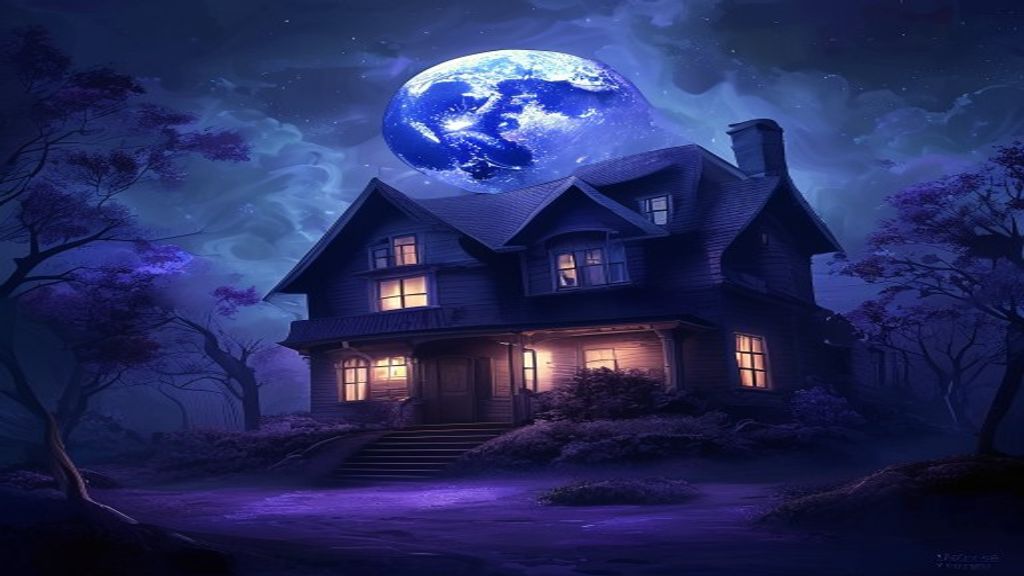
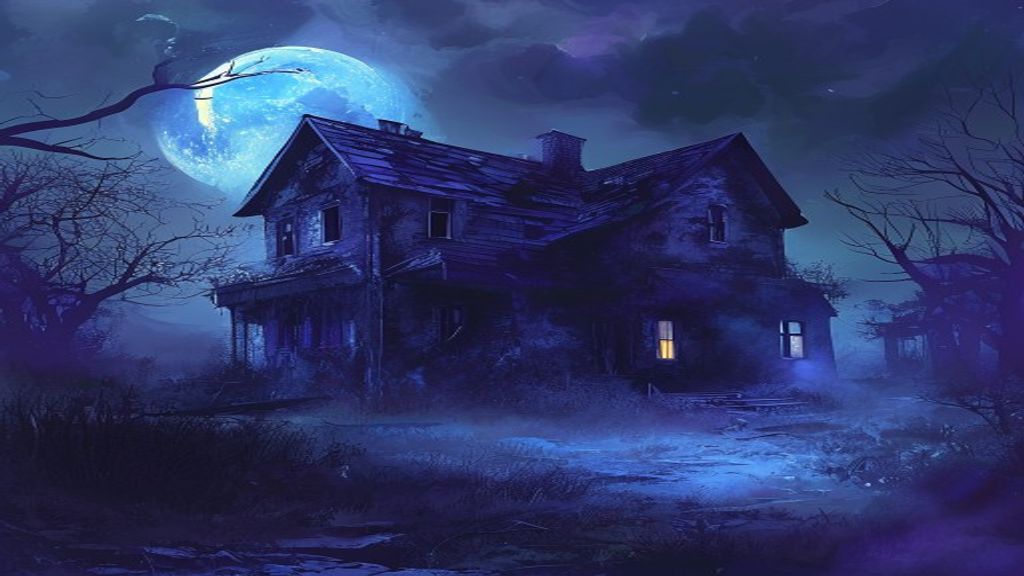
The abandoned house arrives as a location, specific and atmospheric, somewhere between a horror set and a building you feel you should recognize. Windows long gone. Graffiti layered deep enough to read like geology. It rarely announces itself as psychological, and yet you wake with a strange, slightly embarrassed certainty that the building was supposed to be you. Not a metaphor for you. A part of you. A room you hadn’t entered in years.
That’s the uncomfortable heart of the abandoned-house dream. The setting does its work before you’ve decided whether to take it seriously, and it wants you to walk inside.
An abandoned house in a dream usually stands for a part of yourself that has been neglected, avoided, or left unfinished. The more decayed the structure, the longer the neglect. Your first job is to figure out which aspect of your life your mind dressed up in falling plaster.
Why the house, specifically
Houses in dreams have one of the oldest symbolic pedigrees of any image. Depth psychology has long read the house as an image of the self, and while I’d normally be cautious about a century-old framework, this particular reading has survived because it keeps being useful. The rooms are not random. The basement is not the same as the attic. When the building is also abandoned, you’ve added a second layer: not just “a part of me” but “a part of me that got left behind.” That distinction matters more than people realize.
Artemidorus, writing in the second century, held that the same dream means different things for different dreamers, so even a house cannot be read without knowing whose house it is. Nearly two thousand years on, the structural details still matter: the cracked wall, the roof that doesn’t hold, the water damage on the second floor. That last image has its own entry: a flooded bathroom is about something private overflowing its container, which is the same damage arriving fast instead of slowly.
If you recognize the house
It tends to be a real place from your past, usually one with emotional weight: a childhood home, somewhere you once lived during a significant period, a place you associate with a person you’ve lost. Your mind is revisiting a version of yourself that lived there. The abandonment signals something about that period being sealed off.
If you don’t recognize it
An unknown abandoned house is stranger and, I think, more interesting. You’re confronting a part of yourself that never had a name. These dreams tend to arrive in periods of stagnation, when the unlived life is pressing hard enough to start appearing as architecture. The stranger the house, the more unexplored the territory.
What the decay is measuring
Peeling paint is not the same as a caved-in roof. I want to be precise here, not because the symbols demand precision, but because dreamers already know the difference when they describe these dreams. The house with broken windows and vines growing through the floor is a different confession than the house that’s simply dusty and locked. Decay in a dream tends to track something like duration. The longer you’ve avoided something, the further the structure has gone.
G. William Domhoff’s continuity hypothesis argues that dreams don’t do anything exotic: they run on the same concerns that occupy your waking life, just without the social editing. An abandoned-house dream, through that lens, is your mind showing you what you already know but have declined to say aloud. A talent you gave up. A relationship you let go cold. A version of yourself you agreed to stop being because it was inconvenient. Domhoff would find nothing mystical in an abandoned building that walks into a dream. He’d simply say: of course. You’ve been circling it for a while.
The room you avoid is the one to find
A common pull in this dream is that you know there’s a room you’re not going to. You know where it is. You go toward it or you don’t, but it sits in the dream’s periphery like a weight. In the context of the dream-as-self, that avoided room is where the real question lives.
If you dream of a palace, the scale and grandeur carry their own meaning. An abandoned palace is something else again: it carries the specific weight of something that was once magnificent and let go. Not destroyed. Just vacated. That particular shade of loss, the willful leaving of something that once mattered, is different from simple neglect, and the dream usually makes you feel the difference.
Recurrence
If the same abandoned house visits you more than once, something in your waking life hasn’t been acknowledged yet. It doesn’t have to be dramatic. It can be as quiet as a skill you stopped practicing, a friendship you let thin out to nothing. The dream doesn’t care whether the neglect was intentional. It just keeps the lights off and the door unlocked.
Some structures hold more memory than they have any right to. Dreams about a laboratory or a swimming pool tend to be about function, about what you’re supposed to be doing in a space. An abandoned house is about what happened before the function stopped.
Ask yourself, too, about the part of the building you never went up to see: the second floor, the cellar, the room at the end of the hall.
- Did I recognize the building, or was it unknown? Which part of my life has those two qualities?
- How far gone was the decay, and does that match how long I’ve been avoiding something?
- Was there a room I refused to enter? What would the honest answer be if I said aloud what’s in it?
- Did I feel dread, or something closer to recognition?
One symbol, two traditions
Read side by side, the two traditions pull in different directions: abandoned house as a signal from your own mind, or abandoned house as an image to test against the text. Knowing which question you are asking is half the interpretation.
An abandoned house in a dream usually stands for a part of yourself that has been neglected, avoided, or left unfinished. The more decayed the structure, the longer the neglect. Your first job is to figure out which aspect of…
You are reading this oneIn the Hebrew prophets, the abandoned house is almost always the result of either judgment or neglect, and often both. But Scripture doesn’t leave it there. The desolate place is also the place that gets rebuilt, reclaimed…
Read the biblical meaning →Quick answers
What does it mean to dream of an abandoned house?
It usually represents a part of yourself or your life that’s been neglected or left behind. The specific condition of the house, how decayed, which rooms are accessible, tends to mirror how long and how thoroughly you’ve left that part unattended.
Is dreaming of an abandoned house a bad omen?
Symbolically, no. It’s more of an audit. The dream is pointing at something neglected, not predicting disaster. The unsettling feeling is the point: it wants you to stop avoiding whatever the building represents.
Why do I dream of an abandoned house I recognize?
A recognizable house, especially a childhood home or a place from an important period, tends to mean you’re revisiting a version of yourself that lived there. The abandonment signals that something from that time feels sealed off or unresolved.
What does it mean if I keep dreaming of the same abandoned house?
Recurrence usually signals an unacknowledged neglect in your waking life. The dream repeats until the avoidance is named or addressed. Sometimes just admitting what the building represents is enough to let the dream retire.
Sources for this reading
- Domhoff, G. W. (2003). The Scientific Study of Dreams: Neural Networks, Cognitive Development, and Content Analysis. American Psychological Association.
- Domhoff, G. W. (1996). Finding Meaning in Dreams: A Quantitative Approach. Plenum Press.
- Artemidorus of Daldis (2nd century CE). Oneirocritica. English edition: Harris-McCoy, D. E. (2012). Artemidorus’ Oneirocritica: Text, Translation, and Commentary. Oxford University Press.
Full bibliography on Sources and method. Found a mistake? Tell us and see the corrections log.