- Tradition
- Psychological readingPlace dreams
- Also read in
- The BibleSame symbol, other tradition
- Draws on
- Domhoff, Jung, Artemidorus
- Reviewed
- 5 min read
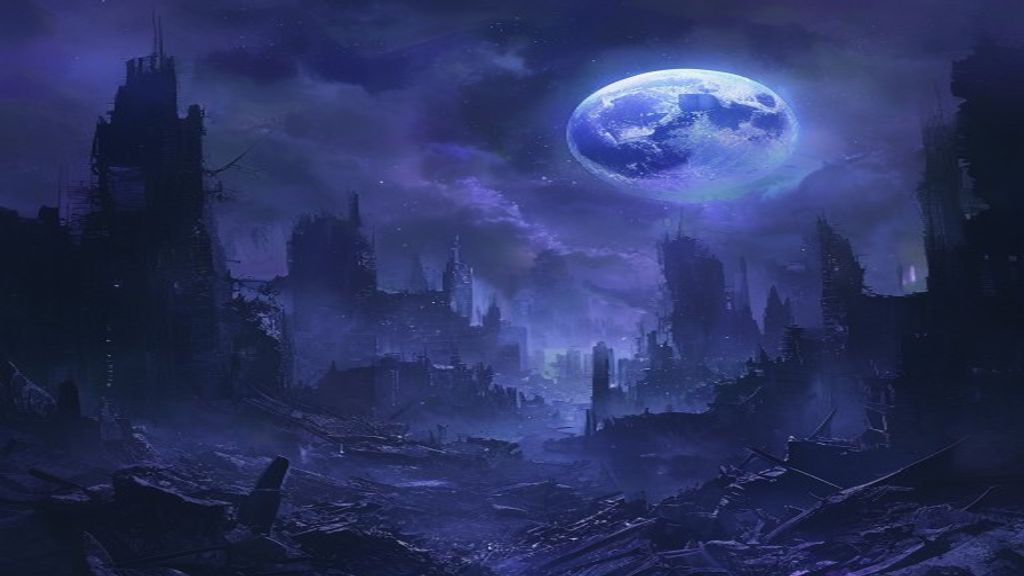
A destroyed city dream is rarely sad in the way you’d expect. Everything is gone, you are just standing there, and you aren’t sad. That is the part that is hard to explain. The emotional texture of a destroyed city dream is almost never what you’d expect from the imagery. The ruins feel more like aftermath than catastrophe. The violence is already over.
That gap between what a ruined city looks like and what it feels like when you’re standing in it is, I think, the most important thing to hold on to when you’re trying to understand this one.
A destroyed city in a dream is almost always about something that’s already ended, not something you’re afraid will end. The ruins point backward. Pay attention to whether the destruction was recent, or ancient and overgrown. That difference changes the meaning substantially.
How dreamers have read ruins across centuries
- ~1200 BC
The Chester Beatty Papyrus, an Egyptian dream book, sorts dreams into good and bad omens. That is the frame this article moves away from: the dream as an omen about what is coming, not a picture of what has already happened.
- 2nd century AD
Artemidorus, in his Oneirocritica, held that the same dream means different things for different dreamers, depending on age, status and occupation, so a city in pieces would be read against the dreamer’s own place in the world rather than as a fixed sign.
- Medieval and early modern
Islamic dream interpretation is generally said to have treated destruction dreams carefully, asking whose city it was and from whose perspective. Personal ruin was distinguished from worldly upheaval. Perspective inside the dream mattered.
- Early 20th century
Jung argued that destroyed landscapes in dreams often represent stages of psychic demolition, the necessary clearing that precedes building something new in the self. Rubble wasn’t failure; it was material. The destroyed city as what you’ve leveled to make room.
- Contemporary research
Domhoff’s continuity hypothesis predicts that destroyed-city dreams cluster around waking experiences of loss, transition, or collapse: job loss, relationship endings, the death of a shared life. The city mirrors whatever collective structure in your life is no longer standing.
The silence that follows the fall
There’s a specific quality of quiet in these dreams. Not peaceful quiet, not threatening quiet. The quiet of a place that used to have sound and doesn’t anymore. An arena the morning after everyone’s gone home, but permanent. Streets that held traffic, shops that held voices, and now nothing. It’s not the same as dreaming of an empty landscape, because you know this was full once. The fullness is the point. The fullness is what makes the quiet so exact.
That quiet is the emotional center of the dream, and it’s worth sitting with before you move to interpretation. Whose city was it. Who lived there. When you stand in the ruins, do you feel like a survivor, a witness, or the one who brought it down. Those three positions produce completely different readings, and most dream dictionaries skip the question entirely.
Jung would probably say the city is always, to some degree, the self: a system of organized meaning, a civilization of the psyche. When it’s destroyed in a dream, something in that system has collapsed. The interpretation isn’t disaster. It’s more like urban demolition. They don’t tear buildings down for fun. They tear them down because something else is going to stand there.
Recent rubble vs. ancient ruins
This distinction matters more than almost any other detail. A city destroyed last night, with fires still visible, dust in the air, the smell of something burning: that’s a dream about loss that’s still raw. Something ended recently and you haven’t had time to grow distance from it. The dream isn’t being dramatic. The destruction looks extreme because the loss felt extreme.
An ancient ruin is something else. Overgrown, quiet, the catastrophe softened by time. That version often arrives years after the actual ending, when you’ve finally processed enough to look at it clearly. It’s not that the city is less destroyed. It’s that the jungle has moved in, which means life found the ruins habitable, which means you did too.
Domhoff would track this carefully. His research shows dreams are remarkably consistent with waking emotional states, so a dream of fresh destruction during a stable period of your life is worth paying attention to as a lag: something is more unprocessed than you thought. A dream of ancient ruins during a hard period might mean the reverse, that some part of you is already placing this in history.
If you’ve also been dreaming of a factory, it’s worth asking whether the two places share something: organized systems of production, of meaning, of effort. When a factory stops running or a city falls, the question is the same. What was being made here, and what happens now that it isn’t.
When you were the one who caused it
Occasionally people dream they watched the city fall, or that they somehow contributed to it, and they wake with guilt attached to the ruins. I want to be careful here because this is the version that needs the most gentle handling.
The guilt is usually about a real ending you participated in. A relationship, a team, a family structure, a community. Something that was built and then came apart, and your hands were in it somewhere. The dream-city is a metaphor for the thing you helped end, not a verdict on your character.
Dreams of a stadium sometimes carry a similar feeling in the guilt version: the sense of a place built for collective experience that’s now empty or wrecked, and the loneliness of being the one who’s still there. Or if you’ve dreamed of a classroom that’s been abandoned, you’ll recognize the same texture: a place built for learning, for growth, for a particular kind of shared attention, now silent.
It doesn’t predict anything
Worth saying plainly, because the old omen-based reading still circulates in various forms online: a destroyed city in a dream is not a prophecy. It’s not warning you about war, economic collapse, or the end of your actual city. Dreams are the brain processing what’s already happened, not a news service for what’s about to.
- Was the destruction recent or ancient? Fresh disaster or overgrown ruin?
- Was I a survivor, a witness, or somehow involved in what happened?
- What in my waking life had the quality of a city? Something organized, built, inhabited by others too.
- Did the ruins feel like an ending, or like cleared ground?
One symbol, two traditions
Read side by side, the two traditions pull in different directions: destroyed city as a signal from your own mind, or destroyed city as an image to test against the text. Knowing which question you are asking is half the interpretation.
A destroyed city in a dream is almost always about something that’s already ended, not something you’re afraid will end. The ruins point backward. Pay attention to whether the destruction was recent, or ancient and overgrown.…
You are reading this oneOf all the dream images in this section, the destroyed city is the one where Scripture has the most to say directly. The Bible’s destroyed-city passages are some of the rawest material in the canon - and they don’t rush to…
Read the biblical meaning →Quick answers
What does dreaming of a destroyed city mean?
Almost always something about a collective structure in your life that has ended or collapsed: a relationship, a workplace, a community, a phase of life. The city represents organized shared meaning. When it’s in ruins, that structure is gone. The emotional tone of the dream usually tells you whether you’re still in the raw loss or have begun to get distance from it.
Is dreaming of a destroyed city a bad omen?
No. The destroyed city is almost always pointing backward at something already ended, not forward at something coming.
Why did I feel calm in a dream about destruction?
That’s completely normal and one of the most commonly reported features of this type of dream. Emotional aftermath is often calmer than the event itself. The destruction is over inside the dream. You’re in the ruins, not the collapse. That calm may actually reflect a healthy stage of processing rather than denial.
What does it mean to dream of ancient ruins versus a freshly destroyed city?
The age of the destruction matters. Fresh ruins, with dust and fire still present, suggest raw loss: something ended recently and hasn’t been processed. Ancient overgrown ruins often arrive later, when time has started its work. The jungle growing through the rubble is the dream’s image for resilience that moved in without asking permission.
Sources for this reading
- Domhoff, G. W. (2003). The Scientific Study of Dreams: Neural Networks, Cognitive Development, and Content Analysis. American Psychological Association.
- Domhoff, G. W. (1996). Finding Meaning in Dreams: A Quantitative Approach. Plenum Press.
- Jung, C. G. (Ed.). (1964). Man and His Symbols. Doubleday.
- Artemidorus of Daldis (2nd century CE). Oneirocritica. English edition: Harris-McCoy, D. E. (2012). Artemidorus’ Oneirocritica: Text, Translation, and Commentary. Oxford University Press.
Full bibliography on Sources and method. Found a mistake? Tell us and see the corrections log.