Nature Dreams
Dreaming of a Forest: what the trees are standing in for
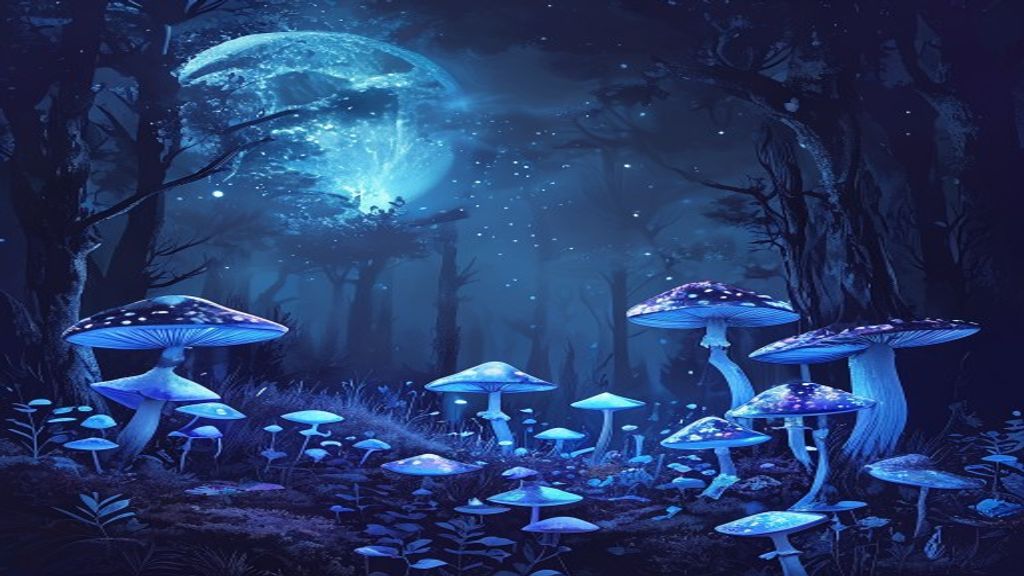
Wet bark has a smell that’s almost impossible to describe without sounding like you’re writing a candle label. But if you’ve walked into a forest after rain, you know the exact weight of it, that dark green press of air that closes behind you the moment you’re past the first row of trees. I keep coming back to that sensation when people describe forest dreams, because almost all of them use some version of it before they say anything else about the plot.
The forest closes around you. That’s the part that stays. Not the path, not the light or the lack of it, not even whether something was following you. Just that quality of being inside, surrounded, held by something larger and older and entirely indifferent to your plans.
A forest in a dream usually points to the interior life: the parts of yourself you haven’t fully mapped, or a situation that feels dense and hard to navigate. Whether it’s frightening or beautiful tells you almost everything you need to know.
What the trees are actually standing in for
Carl Jung wrote about the forest as one of the psyche’s oldest and most reliable symbols, a place where the unconscious gathers what it hasn’t been able to say in waking life. It’s not a room you built; it grew on its own, according to its own logic, and you don’t fully control what lives in it. That reading has the quality of being both ancient and entirely sensible to anyone who’s had this dream. I don’t usually lead with Jung, but on this one his instinct holds up.
The forest in your dream is almost certainly not about ecology. It’s about whatever in your life right now has depth you haven’t reached the bottom of: a relationship still in its early dense growth, a grief that hasn’t opened into the clearing yet, a project or decision that feels bewildering from inside. The trees aren’t the subject. The sense of enclosure is.
And the light matters. A forest flooded with afternoon light, birds, that particular quality of dappled warmth filtering down, tends to arrive during periods when you’re actually curious about what you don’t yet know. The dark forest, the one where the canopy shuts out the sky and the ground feels unreliable, tends to arrive when the unknown is frightening rather than interesting. Your dreaming mind doesn’t edit the lighting by accident.
Light through the canopy
You’re in the forest but not lost. The light is partly a promise: something navigable exists here, even if the path isn’t obvious yet. This version tends to appear when you’re genuinely curious about where you’re headed, even if you don’t have a map.
No light at all
The canopy has closed. This isn’t a bad sign exactly, but it’s a signal that the interior process you’re in right now doesn’t feel safe to explore. Something wants to stay dark. It’s worth asking what you haven’t been willing to look at directly.
Getting lost versus going deep
Two very different things happen in forest dreams, and people mix them up. Getting lost, truly lost, the dream-version where you turn around and every direction looks identical, tends to mirror the feeling of being in a situation without a clear exit. You’ve been in it long enough that the entry point isn’t visible anymore. G. William Domhoff’s research on continuity between dream content and waking life would call this boringly predictable, and he’d be right. If you’re genuinely stuck in something in your waking hours, the forest dream hands you a map that only shows you trees.
Going deep is different. That’s the dream where you move further in deliberately, following something, pulled by some quality of the light or a sound or a sense of direction that you trust. This version often accompanies creative work, therapeutic work, or the kind of internal excavation that happens when you’re actually ready to look at something you’ve been avoiding. The forest isn’t a trap in those dreams. It’s an invitation. If you’ve had a dream where the deeper you go the less afraid you are, you’ll know exactly the distinction I mean.
If you’re drawn to images of natural spaces in dreams more generally, you might also find something useful in what it means to dream of clean water: it often shares that same quality of a psyche that’s clearing rather than cluttering.
What Artemidorus would say
Artemidorus, writing his Oneirocritica in the second century, treated wild places as dream environments that pointed toward what he’d call unsettled or unresolved matters. He wasn’t talking about psychology; he was talking about outcomes. But his underlying logic maps onto the same territory: a wild, ungoverned space in a dream was the mind’s way of marking something that hadn’t yet been brought under order.
What I find interesting about that reading is how durably it’s held, across two thousand years and across cultures that had very different relationships to actual forests. The symbol doesn’t depend on whether you live near a forest, or whether forests were friendly or fearsome in your tradition. It’s the interior quality, the density, the canopy, the sense of being surrounded by something that grew without your permission, that carries the meaning.
When the forest is a gift
Not every forest dream is a warning or a puzzle. Some of them are genuinely restorative. The dream where you’re sitting against a tree, nothing required, no path to find, just the smell of the ground and the sound of wind moving through branches overhead: that one I’ve heard described as one of the most peaceful dreams a person can have. If you woke from that version and felt steadied, I’d take the steadiness at face value.
Dreams of an orchid can carry something of that same restoring quality, the sense that something precise and beautiful grew in your sleeping mind without your having planted it. The forest version is just larger.
That smell of wet bark again
I said I keep coming back to the smell, and here’s why it matters as an interpretive tool: most people can’t remember whether they were afraid in the dream until I ask them to recall what the air felt like. The physical memory bypasses the narrative one. If the air felt heavy and close and suffocating, the forest was hostile. If it felt cool and green and somehow clean, it wasn’t. Your body in the dream knew which forest it was in before your dreaming mind had time to build a story around it.
The version where you can’t quite find the edge of the forest, where you keep walking and it keeps going, where you’re not frightened but you’re also not finding your way out, that one tends to linger the longest after waking. It isn’t dread. It’s more like a conversation you didn’t finish. If that’s the dream you had, the question isn’t what the forest means. It’s what you’re still in the middle of exploring. The forest knows. It’ll wait.
Dreams of an earthquake sometimes follow the dense forest dream in the same week, which always strikes me: the first is being surrounded by something you can’t see the edges of, and the second is the ground giving way. Different fears, probably the same territory.
- Was I lost or going deeper deliberately? The difference changes everything.
- What was the light like? Your dreaming mind chose that lighting for a reason.
- Was the air of the forest a relief or a pressure?
- What in my waking life has grown so dense I can’t see the clearing from inside it?
One symbol, two traditions
Read side by side, the two traditions pull in different directions: forest as a signal from your own mind, or forest as an image to test against the text. Knowing which question you are asking is half the interpretation.
A forest in a dream is rarely about trees. It's about depth, the unknown interior, and the self you haven't yet explored. Here's what it might mean.
You are reading this oneWhat the Bible actually says about forests and wilderness, what it doesn't, and what a forest in your dream might be asking.
Read the full biblical meaning →Quick answers
What does dreaming of a forest mean?
A forest in a dream usually points to your interior life, the parts of yourself or your situation that feel dense, uncharted, or growing according to their own logic. The feeling you had inside the forest, curious, lost, peaceful, or afraid, tells you whether what you haven’t explored is an invitation or a problem.
Is dreaming of a dark forest a bad sign?
Not necessarily. A dark forest tends to reflect something you haven’t been willing to look at directly, not necessarily something dangerous. It’s the dream’s way of marking territory that feels unsafe to explore right now. Worth noting, but not panicking over.
What does it mean to be lost in a forest in a dream?
Getting lost without being able to find your way back tends to mirror a real situation where the entry point is no longer visible and the exits aren’t clear. Domhoff’s work on how dreams track waking life would call this a faithful mirror: if you’re genuinely stuck in something, the dream often just hands you the same experience with different furniture.
Why do I keep dreaming about forests?
Recurrence usually means whatever the forest stands in for, the interior process, the unresolved situation, the part of yourself you haven’t mapped, hasn’t moved much yet. Forests in dreams tend to clear when the waking-life density does.