Nature Dreams
Dreaming of an Orchid: Beauty That Asks Something of You
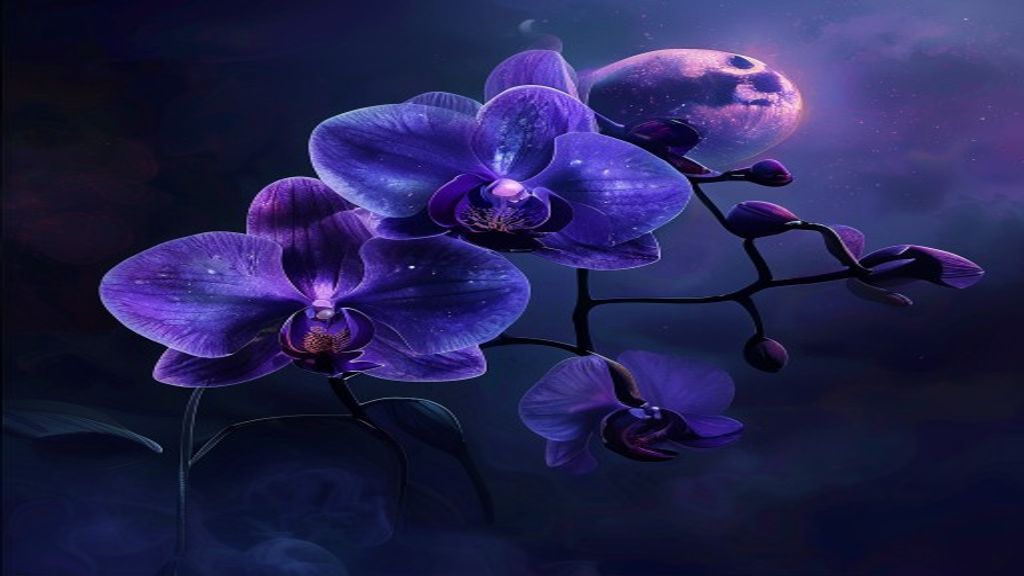
‘You have to earn an orchid,’ a colleague said once, apropos of almost nothing, while we were both staring at a windowsill plant at work. She was talking about keeping one alive. But I wrote the line down anyway because it felt true in a wider sense, and sure enough, I’ve thought of it many times since when people describe orchid dreams to me. Other flowers appear in dreams as atmosphere, as color, as backdrop. An orchid insists.
The specificity of the symbol is worth pausing on. Your dreaming mind could have given you any flower. It gave you one that most people associate with difficulty, with a particular kind of earned beauty, with the exact balance between thriving and perishing. That choice isn’t random. The mind is particular when it wants to be.
An orchid in a dream tends to represent something precise and valuable in your life that requires careful attention to sustain. Whether it’s flourishing or wilting, in your hands or out of reach, the image usually points to a relationship, capacity, or aspiration that you sense is fragile right now.
What Artemidorus noticed about flowers and why it still holds
Artemidorus, writing in the second century, was already distinguishing between flowers that are freely given and flowers that must be tended. His Oneirocritica notes that a rare or costly bloom in a dream demands interpretation according to what the dreamer does with it: receiving it signals unexpected grace; losing it signals a corresponding loss in waking life. He didn’t have orchids specifically, but the logic maps cleanly. The orchid is the costly bloom made literal.
Jung would likely situate it somewhere near the anima or animus, the inner principle of beauty and complexity that requires relationship to grow. I’m more cautious with that particular framework than with his broader observations about natural symbols, because it can veer into projection quickly. What I trust is the simpler Jungian reading: a flower in a dream tends to represent something in the psyche that has bloomed or is trying to, and the condition of the flower tells you whether that process feels secure.
What your orchid was doing matters more than the orchid itself
Color, if you remember it
Most people don’t, and that’s fine. Dreams aren’t reliable photographers. But when someone does remember the orchid’s color vividly, it tends to matter. White orchids in dreams carry a quality of purity and formality that shades toward ceremony: something being marked, honored, or concluded. Purple leans into ambition and inner authority, which sounds abstract until you match it against what was happening in someone’s professional life the week they dreamed it. Pink tends toward tenderness and early-stage affection. The dream isn’t being poetic for its own sake. It’s just using the language it has.
When the orchid is a relationship
Very often, it is. Not always a romantic one. A difficult friendship, a creative partnership, a mentorship that’s become complicated, all of these can appear as an orchid in a dream because the dreaming mind reaches for images that carry the right weight. The orchid captures something most relationships with genuine worth eventually require: attention, precision, patience with failure, the knowledge that you can’t just set it on a shelf and expect it to still be there.
G. William Domhoff’s continuity hypothesis would put it plainly: the orchid is probably a version of something already occupying your waking attention. The dream doesn’t invent the concern. It gives it a form. If you’ve been quietly aware that something important needs more care than you’ve been giving it, the orchid dream is the moment that quiet awareness speaks up.
If what you’re worried about is closer to decay than neglect, the dreaming of wilting flowers piece takes up that particular register in more depth. And if the image in your dream had a wilder, more uncontrolled quality, something less like a cultivated bloom, the dreaming of a thunderstorm piece addresses that shift from the delicate to the overwhelming.
A small admission
I’ve been given orchids twice in my life and killed both of them, which is either a confession or relevant data or both. What I remember both times is the specific disappointment of finding the plant past saving, the sense of having failed something that asked very little of me and still got less than that. That feeling, that gap between a modest demand and the failure to meet it, is what I think orchid dreams are often circling. Not grand neglect. The quieter kind.
If you’re looking at what trees mean more broadly, including the older, more rooted version of this same question about what you’re tending and what you’re not, the dreaming of a tree piece covers that ground. The orchid is the tree’s more demanding, more specific cousin.
- What was the orchid’s condition, and what in your life right now matches that state?
- Were you tending it, watching it, receiving it, or losing it? The verb is the question.
- If someone gave it to you, who was it, and what does that person or what they represent mean to you right now?
- Is there something valuable in your life that you’ve been meaning to give more attention to than you actually have?
Quick answers
What does it mean to dream of an orchid?
An orchid in a dream usually points to something valuable and somewhat fragile in your life that needs careful attention. The condition of the flower, whether it’s thriving, wilting, or out of reach, tells you whether you feel you’re meeting that demand.
Is an orchid dream a good sign?
Often, yes. A healthy orchid tends to affirm something you’ve been investing in. Even a wilting orchid is more alert than alarming: it’s asking you to notice a neglect before it becomes a loss. The dream is rarely catastrophic.
What does it mean if someone gives you an orchid in a dream?
It depends on who’s giving it. A gift from someone you trust usually encodes something of value received from that person or what they stand for in your life. A stranger’s gift tends to point toward an unrecognized resource or opportunity.
Why did I dream of an orchid dying?
Probably because something that matters to you isn’t getting the attention it needs. The orchid’s fragility is the image your mind chose because real neglect tends to feel exactly that precise and irreversible. Ask what that thing is. You most likely already have a sense of it.