Action Dreams
Dreaming of Fighting a Monster: what the battle is really about
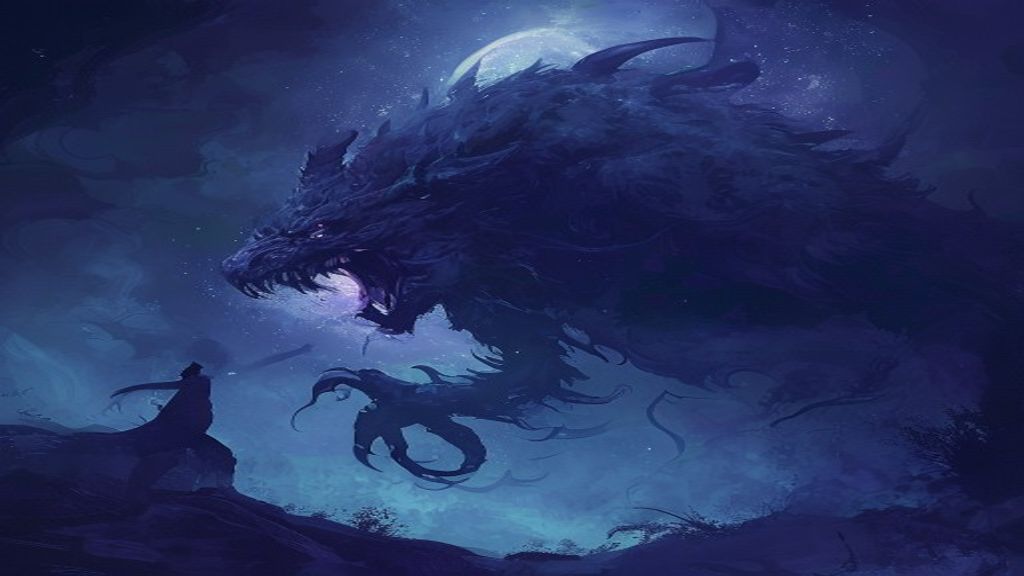
What does the monster look like when you can actually hold it? That’s the question I keep coming back to, because most people who tell me about these dreams describe something specific. Not a vague darkness. An actual shape: oversized, wrong-proportioned, often with a face that shouldn’t have a face. And what surprises them, when they dig into it, is that they were fighting back.
Fighting a monster in a dream usually means you’re finally engaging with something you’ve been sidestepping in waking life. The monster’s form tells you what kind of threat it is. Whether you win or lose matters less than the fact that you’re in there fighting.
The thing in the corner of your eye
I used to work nights in a building with a broken fluorescent tube at the end of the corridor. Every time I walked toward it, there was a flicker, a shadow that moved half a second before I did. It was nothing. I knew it was nothing. I still tensed up every single time. That particular quality of dread, the thing you can’t see clearly, the thing that might move, is exactly the texture of a threat-confrontation dream. The monster in the hall is almost never the monster. It’s whatever your mind has been not quite looking at.
What the monster actually looks like tends to be more information than people realize. A monster that’s shapeless and enveloping is usually anxiety itself. A monster with human features, a colleague’s eyes, a parent’s voice, is a relationship the dreamer can’t figure out how to be in. A monster you’ve met before, recurring and recognizable, is a problem that keeps regenerating because it hasn’t been genuinely addressed. These aren’t symbolic codes to decode by formula. They’re your sleeping mind building the most honest version it can of something you’re having trouble seeing straight.
You win the fight
Winning doesn’t always mean victory in waking life. It usually means you’ve found, or you’re finding, the resources to deal with the pressure. This version of the dream tends to feel clarifying. You wake up less afraid of the real thing than you were the night before.
You lose, or you keep losing
Losing, or the dream cycling without resolution, usually points to avoidance. Something keeps regenerating because you keep disengaging before you’ve actually dealt with it. If the same monster recurs night after night, the question isn’t how to beat it in the dream. It’s what you’re walking away from in daylight.
Why humans have always fought things in their sleep
Antti Revonsuo’s threat simulation theory suggests that dreaming evolved partly to rehearse threat responses. The brain during REM is, among other things, a practice arena. Monster-fighting dreams fit this model almost embarrassingly neatly: you’re running a threat scenario in a space where the stakes are manageable. I find this reading genuinely useful, not because it explains everything but because it reframes the fight itself as the point. The monster isn’t punishment. It’s the drill. Tore Nielsen’s work on typical dream experiences puts threat confrontation among the most common types humans report across cultures, which tells you something about how wired we are for this particular rehearsal.
G. William Domhoff, who tends to be the researcher I reach for when I want something tested and unromantic, would add that these dreams track real life with fairly boring precision. Fighting-a-monster dreams cluster around periods of genuine external pressure: new jobs, illness in the family, a relationship that’s reached some kind of limit. They don’t predict. They reflect. The monster is probably no more exotic than your Thursday.
What if the monster wins and you still feel okay
This is the version people rarely mention but should. You get beaten, badly, and you wake up weirdly calm. Not defeated. Just done. I think this is the dream telling you something has run its course, an effort you’ve been sustaining past the point where it was serving you. It’s a different kind of resolution. Not triumph. Release.
The monster you recognize
If there’s a moment in these dreams that people find most unsettling, it’s usually this one: they catch the monster’s face, and they know it. Not always a person. Sometimes a feeling. Shame looks like something when your unconscious stops trying to be polite about it. Grief has a face when it’s had long enough to grow one. If you recognized something in the dream and don’t want to write it down, that’s probably the exact thing worth writing down. The dreams that take the form you’d most like to avoid thinking about tend to be the ones asking for the most direct response. If you’ve been having recurring conflict dreams, the piece on dreaming of separation sometimes turns out to be the same conversation from a different angle.
There’s a version of this dream that appears when you’re protecting someone else in the fight. A child, a friend, a version of yourself that’s smaller or younger. That one hits differently. It tends to show up when someone you love is actually in difficulty, or when there’s a part of your own history still waiting for someone to step in front of it. The monster doesn’t change much. Your position in relation to it changes everything. You might also recognize this feeling in dreams about dreaming of a car accident, where the threat arrives fast and the body’s reflex is to brace.
Back to that flickering corridor. After a few weeks, I stopped tensing. Not because the tube got fixed, it didn’t, but because my nervous system eventually understood the delay. I knew the shape of the flicker. I’d filed it. That’s what most of these dreams are working toward: familiarity with the thing. Not defeat. Just the point where you know its outline well enough that it stops catching you off guard. Some people reach that and the dream stops. Some people reach that and the dream just becomes less interesting. Either way works. The piece on dreaming of drowning covers a close relative of this feeling, the fight that happens when you’re already past the limit of your air.
I’ll say one more thing, and I’m genuinely uncertain about it: I think some people dream of fighting monsters not because they’re under threat but because they miss having something clear to push against. Life gets complicated and soft-edged. The monster is at least honest. The fight is at least legible. I don’t have a study to point to for that. It’s just something I’ve noticed again and again in the people who tell me these dreams with something resembling fondness.
- Did the monster have recognizable features? What does that face remind you of in waking life?
- Were you fighting to protect yourself, or someone else, or both?
- How did the fight end, and how did your body feel when you woke up?
- Is there something in your day-to-day life you’ve been keeping just out of direct view?
One symbol, two traditions
Read side by side, the two traditions pull in different directions: fighting a monster as a signal from your own mind, or fighting a monster as an image to test against the text. Knowing which question you are asking is half the interpretation.
Dreaming of fighting a monster often means you're facing something you've been avoiding. Here's what the fight, and the monster, are trying to tell you.
You are reading this oneWhat does the Bible actually say about monsters, spiritual combat, and wrestling with what threatens us? Real passages and honest reflection on fighting-monster dreams.
Read the full biblical meaning →Quick answers
What does it mean to dream of fighting a monster?
It usually means you’re engaging, or ready to engage, with a source of pressure or fear in your waking life. The monster is your mind’s most honest representation of a threat you’ve been navigating. The fight itself tends to be the point, not who wins.
Is dreaming of fighting a monster a good sign?
Often yes. Actively fighting rather than fleeing suggests you’re not just enduring the pressure but beginning to work with it. Dreams where you run from a threat and dreams where you fight it have a noticeably different quality, and the fighting version is usually the more constructive one.
Why does the same monster keep coming back?
Recurrence almost always means the real-life source of the threat hasn’t been addressed. The dream regenerates because the problem regenerates. The monster doesn’t change until something in waking life does.
What does it mean if the monster has a human face?
It points to a person, relationship, or internalized version of someone whose presence or influence feels threatening or unresolved. The face being human doesn’t make it literal. It makes it relational: this is about how you’re positioned with respect to someone, not a prediction about them.