- Tradition
- Psychological readingSpiritual dreams
- Also read in
- The BibleSame symbol, other tradition
- Draws on
- Domhoff, Hartmann, Artemidorus
- Reviewed
- 4 min read
Dragon dreams are rarely about the dragon’s appearance. The color, the wings and even the fire tend to fade by breakfast. What stays is closer to the sound a kettle makes just before it boils, a low, pressured hiss that climbs: not the boiling itself, not the click of it switching off, but that warning register right before. The sense of something enormous and heat-carrying, building past the point where it could be stopped. You wake to a silent room, knowing something has shifted.
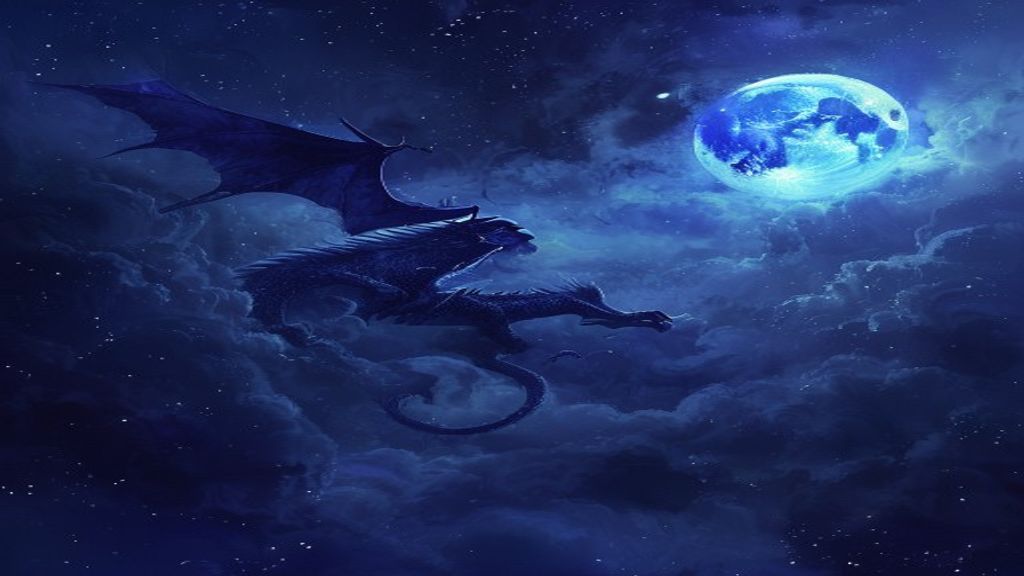
A dragon in a dream almost never means external threat. It’s usually a force you’re carrying yourself, power that hasn’t found its direction yet, or an emotion so large your mind needed to give it scales and a wingspan to make it visible.
What the fire is for
The dragon is one of the oldest dream images we have, and Artemidorus’s rule from the second century, that the same dream means different things for different dreamers, depending on age, status and occupation, suits it better than most. The image has survived so long across so many cultures because it does real work. It externalizes something internal that has no other adequate shape.
Ernest Hartmann’s work on how emotion generates dream imagery is, I think, one of the most genuinely useful frameworks here. His central claim is that whatever emotion is most alive in you will find a central image to anchor it. A dragon is not arbitrary, it’s not decoration. It is the shape your nervous system chose for something that felt both magnificent and dangerous at the same moment. That combination, the force that could protect you or level the village depending on which way it turns, is the emotional signature the image carries.
The dragon is yours
The dragon flies with you, guards you, even obeys you. You are probably carrying significant power or intensity you haven’t let out into your waking life yet. Not suppression exactly, more like a reservoir that hasn’t found its outlet. This version can arrive in periods of creative pressure, or when something you’ve wanted for a long time is finally close.
The dragon threatens
The dragon is outside, above, approaching, and you are running or frozen. Here the force isn’t yours, or it doesn’t feel like it is. More likely: something in your life has grown large enough to feel unmanageable, and your mind is depicting the overwhelm accurately. The fear in the dream is real. The dragon just gave it a body.
The cultures disagree sharply, and that’s the point
In East Asian traditions the dragon has long been an auspicious figure, a sign of good fortune or imperial favor. In Western medieval tradition it was the thing that needed slaying, the obstacle standing between the hero and whatever mattered. These readings aren’t contradictory. They’re both tracking the same quality in the image: enormous, elemental force. Whether that force is on your side or opposing you is what changes the meaning, and that’s true in the dream itself, not in the cultural gloss applied afterward.
A dragon you ride or command is a close cousin of dreaming of superpowers: both put an impossible capacity in your hands, one you may not have fully claimed. The dragon just applies more geological pressure.
What you were doing matters more than what it looked like
Running from it. Standing your ground. Riding it. Speaking to it. These are not equal. It’s easy to focus on the dragon’s appearance, its color, its size, whether it breathed fire. But Domhoff’s continuity hypothesis would point your attention somewhere more useful: whatever you were doing in the dream probably reflects how you’re relating to this force in your waking life. Running suggests avoidance. Riding suggests integration you’ve partially achieved. Fighting suggests conflict that hasn’t resolved. The dragon’s color is interesting trivia. Your posture in its presence is the actual data.
When it’s a lifted thing, not a threatened one
Some dragon dreams don’t feel dangerous at all. They feel like an encounter with something sacred, something that chose to appear and let itself be seen. These tend to belong to periods of genuine creative or personal expansion, not crisis, not conflict, but enlargement. The dream seems to be running slightly ahead of the waking life, showing what’s coming. That version is its own animal. It doesn’t need the same analysis. It mostly needs to be written down and not explained away before breakfast.
A dragon is energy given a body, and dreaming of chakras does the reverse, placing large embodied energy at specific points inside the body.
That hissing kettle is a decent metaphor for what dragon dreams are about: something that has been building, waiting to tip over into expression. Whether the actual situation gets handled well is another question. But the dream is usually accurate about the pressure. That much can be said.
- Was the dragon yours, or was it opposing you?
- What were you doing in its presence, not what did it look like?
- What in your waking life right now is carrying the same quality: enormous, heat-bearing, not yet resolved?
- If the dragon could speak, would it be asking something of you or warning you away?
One symbol, two traditions
Read side by side, the two traditions pull in different directions: dragon as a signal from your own mind, or dragon as an image to test against the text. Knowing which question you are asking is half the interpretation.
A dragon in a dream almost never means external threat. It’s usually a force you’re carrying yourself, power that hasn’t found its direction yet, or an emotion so large your mind needed to give it scales and a wingspan to make it…
You are reading this oneThe Bible identifies the dragon explicitly in Revelation as the ancient serpent, the adversary. It also uses dragon-language for sea creatures and chaos imagery in the Psalms, Job, and Isaiah. These aren’t identical. Reading a…
Read the biblical meaning →Quick answers
What does dreaming of a dragon mean?
It usually represents a force of great intensity, either something you’re carrying inside yourself or something in your life that has grown beyond comfortable scale. The feeling in the dream, awe, fear, or alignment, shapes the meaning more than the dragon’s appearance does.
Is a dragon dream a good or bad sign?
That depends entirely on the relationship. In many traditions, dragons were auspicious. In others, threatening. The dream version works the same way: riding a dragon points to power being integrated; fleeing one points to something overwhelming you’re not yet facing.
Why do I keep dreaming about the same dragon?
Recurrence usually means the force the dragon represents hasn’t been acknowledged or addressed in your waking life. The image keeps returning because the underlying situation hasn’t shifted. When it does, the dragon tends to change or disappear.
What does it mean to fight a dragon in a dream?
Combat suggests active conflict with this force, which might be a quality in yourself you’re resisting, or an external pressure you’re pushing back against. The outcome of the fight is worth noting, though a dream where you lose isn’t a verdict. It’s just an honest report on how things feel right now.
Sources for this reading
- Domhoff, G. W. (2003). The Scientific Study of Dreams: Neural Networks, Cognitive Development, and Content Analysis. American Psychological Association.
- Domhoff, G. W. (1996). Finding Meaning in Dreams: A Quantitative Approach. Plenum Press.
- Hartmann, E. (1998). Dreams and Nightmares: The New Theory on the Origin and Meaning of Dreams. Plenum Trade.
- Artemidorus of Daldis (2nd century CE). Oneirocritica. English edition: Harris-McCoy, D. E. (2012). Artemidorus’ Oneirocritica: Text, Translation, and Commentary. Oxford University Press.
Full bibliography on Sources and method. Found a mistake? Tell us and see the corrections log.