Spiritual Dreams
Dreaming of a Unicorn: Purity, Longing, and the Thing You Can't Quite Touch
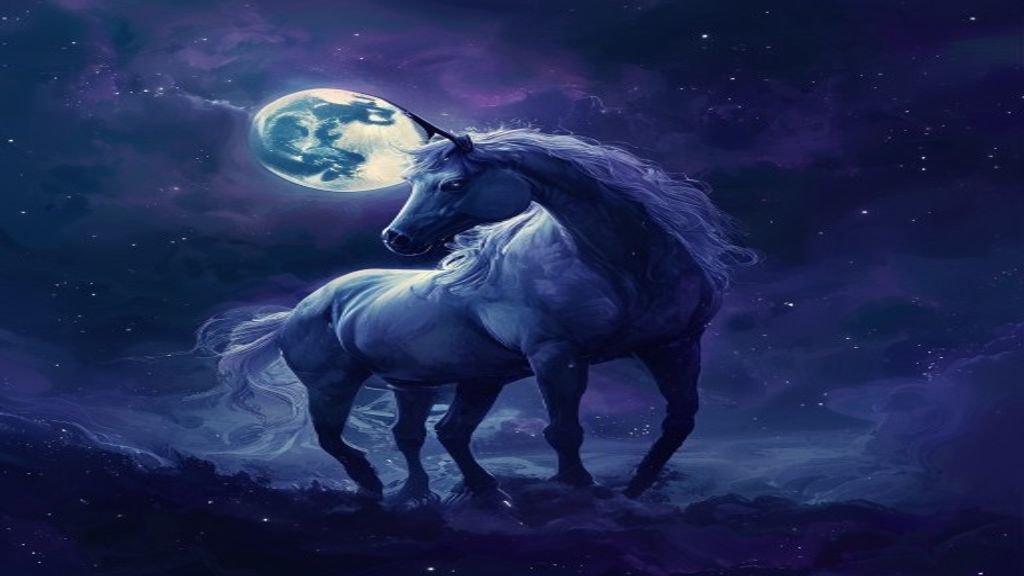
“It’s not that I want it. It’s that I know it’s possible and I can’t get to it,” she said, about her career, over lunch on a Thursday. I didn’t think about unicorns then. But I do now, every time I hear that sentence, which is more often than I expected. There’s a whole category of longing that’s specific: not generic want, but the particular ache of a thing you can see clearly and can’t quite touch. That’s the longing a unicorn carries in a dream. Not fantasy. Not escapism. A sightline to something real.
Most people who tell me about a unicorn dream are a little embarrassed. They apologize for it, as if dreaming of something beautiful and mythical is a regression to childhood, evidence of a mind that can’t handle the hard facts of adult life. I want to push back on that. Hard. The dreaming mind doesn’t reach for a unicorn because it’s naive. It reaches for a unicorn because the unicorn is exactly the right image for a very specific psychological state, and that state is worth taking seriously.
What this symbol has been carrying for four thousand years
- Ancient Near East
Single-horned creatures appear on seals and friezes across Mesopotamia and the Indus Valley. Not mythical then: possibly aurochs seen in profile, possibly something else. But the image was real and it commanded attention.
- Classical Greece and Rome
Natural historians described unicorns as actual animals in distant lands, fierce and uncatchable. Ctesias wrote about them as fact. The horn was a symbol of concentrated power, not gentle fantasy.
- Medieval Europe
The allegory hardened. The unicorn could only be tamed by a maiden of pure heart, which was read simultaneously as spiritual allegory and as a description of love’s power to subdue what force cannot. It became a symbol of what only innocence can approach.
- Renaissance and alchemy
Unicorn horn was thought to neutralize poison. Alchemists read the unicorn as the purified form of base matter, the thing that emerges when everything contaminating has been burned away. Not unlike a phoenix, but colder.
- Now
In the dream, none of that history is conscious. But the image carries it anyway, the way a word carries its etymology whether the speaker knows it or not. The unicorn in your dream is arriving with four thousand years of freight.
The Thursday lunch I kept thinking about
She wasn’t wrong that she could see it. That’s the interesting part. She wasn’t confused about what she wanted or deluded about its existence. The thing existed. She could describe it with real precision. The gap was between her and it, not between her and reality. And that’s exactly the tension a unicorn holds in a dream. You’re not dreaming of something impossible. You’re dreaming of something you believe is real and unreachable.
Ernest Hartmann’s work on how emotions crystallize into central dream images would predict this: the image of a unicorn isn’t random. It’s the sleeping mind’s best available symbol for the feeling of luminous inaccessibility. That’s a mouthful. But you know the feeling. The thing that you can see from where you are but can’t seem to close the distance to. The dream puts a horn on a white horse and sets it at the edge of a forest clearing, and that’s exactly right, actually. It’s not doing anything. It’s not running away. It’s just there, and the gap between you and it is the whole subject.
What the encounter felt like
Did it let you approach? Did it disappear when you got close? Did you touch it and feel something? The quality of contact is the reading. A unicorn that lets you approach and stays is telling you something different from a unicorn that vanishes the moment you move toward it. The first version tends to appear when something you’d written off is actually accessible. The second is more honest about a gap you already know is real. And the version where you touch the horn and feel, well, whatever you felt, pay attention to that sensation on waking. Not the image. The feeling in your hands.
Artemidorus was pragmatic about animals in dreams: their symbolic weight depended heavily on whether the creature was wild or tame, approached or fleeing, impressive or diminished. A unicorn seen at a distance, uncatchable, would likely read in his system as something desirable but not yet within the dreamer’s grasp. He wasn’t sentimental about it. Neither, I think, should we be. The dream showing you the gap isn’t being cruel. It’s being precise.
The continuity the symbol is pointing at
Domhoff would say: look at what you actually want and can’t have right now. Not what you tell other people you want. What you lie awake thinking about. Because dream content tracks waking preoccupations with a fidelity that’s almost boring once you accept it. You dreamed of a unicorn because your waking mind is already carrying this specific tension, the luminous thing at the edge of the clearing, and the sleeping mind just gave it the right body.
If the dream felt more like an encounter with something ancient than something personal, there’s an interesting adjacency in the dreaming of the afterlife piece: both involve an image of a kind of perfect world that exists at an angle to the ordinary one. And if the unicorn appeared alongside something large and threatening in the same dream, the dreaming of a giant piece addresses that combination of power and scale.
What I noticed at the edge of the clearing
I want to say something I’m not certain is true: I think unicorn dreams are sometimes kinder than they look. The thing you believe is just out of reach, the image your mind chose for it, it’s not a taunt. It’s a description of something you haven’t abandoned. The dreaming mind doesn’t build a clearing and put a luminous creature in it to mock you. It builds the image because the longing is still alive. I’m not sure that’s comforting. But it might be accurate.
On the question of whether anything that beautiful can actually be reached, the dreaming of magic piece handles the cases where the dream is more explicitly about transformation and possibility. A unicorn is quieter than magic. It just stands there. And you’re the one who has to decide what that means.
- Did the unicorn let me approach, stay still, or disappear when I moved? That’s the relationship between me and the thing it represents.
- What did contact or its absence feel like in my body, not just in my mind?
- What is the thing I can see clearly right now that I’ve decided is just out of reach? Is that decision actually mine?
- Is the gap between me and it real, or is it a story I’ve told myself so many times it feels like geography?
Quick answers
What does dreaming of a unicorn mean?
It usually signals something you want and believe to be real but feel you can’t reach. It’s not about fantasy or nostalgia. It’s about a very specific tension between longing and the feeling of inaccessibility. The unicorn is the image the sleeping mind chooses because it holds both things at once.
Is a unicorn dream a positive sign?
Often, in an oblique way. The dream shows up when the longing is still alive, which means you haven’t fully given up on the thing it represents. Whether that’s comforting or complicated depends on what the thing is. The dream itself tends to feel beautiful rather than frightening.
What does it mean if the unicorn disappeared when I got close?
That’s the gap made visible. Something you want is present in your life but retreats when you actually move toward it. The dream isn’t being discouraging. It’s being accurate about the pattern. The question is whether the pattern is real or whether it’s a habit of self-defeat wearing the right costume.
What does it mean to touch the unicorn in a dream?
Contact, especially if it felt significant, tends to signal that what you’ve been treating as out of reach may be closer than you think. The feeling in the touch matters more than the image. If you woke from it with something other than longing, something more like recognition, that’s worth sitting with.