- Tradition
- Psychological readingSpiritual dreams
- Draws on
- Domhoff, Freud, Hartmann
- Reviewed
- 4 min read
Freud’s The Interpretation of Dreams (published 1899, dated 1900) rests on the idea that a dream is a wish in costume: the manifest content is the costume, the latent content is what you are not supposed to want. A witchcraft dream wears its costume openly. The circle, the herbs, the candle smoke are the manifest layer, and the question is what sits underneath: power, permission, a part of you that works outside the rules.
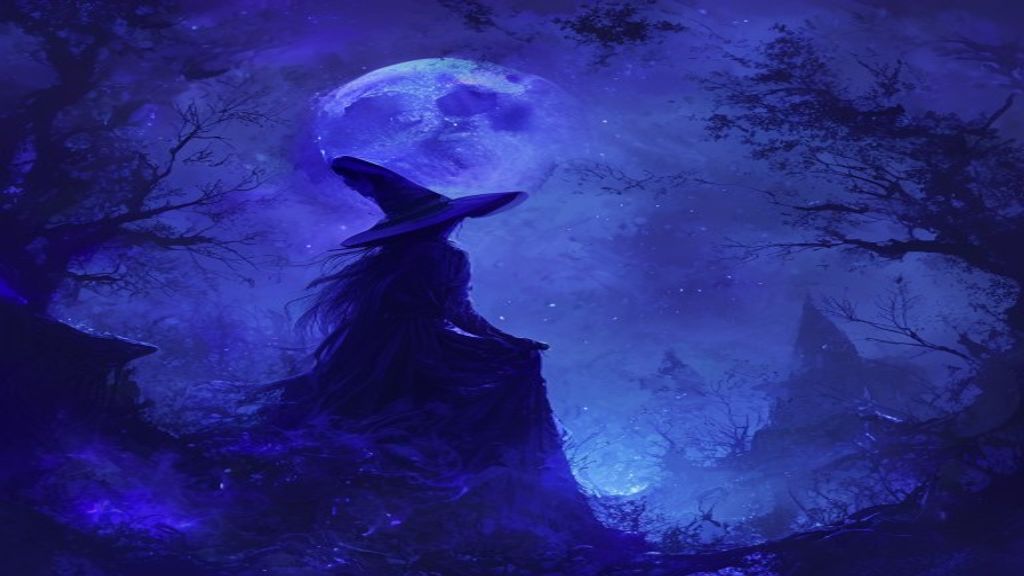
Dreaming of witchcraft is almost always about power: where yours lives, who you think is allowed to use it, and what you’re doing with the parts of yourself that don’t follow the official rules. The ritual, the spell, the circle. All of them are your mind’s way of giving form to something formless.
What kind of witch are you in the dream
You’re the practitioner
You’re the one casting. Something in your life needs deliberate, focused intention. You’ve been drifting or waiting when you actually want to act. The dream doesn’t mean you believe in spells. It means part of you wants to stop being passive. The ritual is a placeholder for real decision-making you haven’t done yet.
You’re the target
Someone else has the power in this dream, and whether they’re using it against you or simply near you, the feeling is what counts. If it’s fear, look at who in your waking life holds influence over you in ways you haven’t named. If it’s awe, you might be recognizing capability in another person, or projecting capability you don’t yet claim as your own.
The transgression underneath
Witchcraft as an image isn’t neutral. It carries centuries of weight: the knowledge that was forbidden, the women who were punished for it, the practices that existed outside sanctioned authority. When your dreaming mind reaches for this symbol, it’s often because you’re brushing against something you’re not supposed to want or do or be. Not in a criminal sense. In the sense of: this isn’t what people in my position are expected to pursue. The spell is shorthand for desire that doesn’t have polite language yet. Ernest Hartmann’s work on how central images condense emotion is useful here. He’d say the witchcraft dream takes a complicated knot of feeling (ambition, guilt, desire for control, the itch to step outside the rules) and gives it one clean picture. That’s what the image is doing. It’s tidying up something messy.
What the ritual means specifically
The shape of the witchcraft matters more than people usually admit. A healing ritual and a hex are doing very different emotional work. Preparing a potion is different from casting a curse is different from being initiated into a coven. I’d ask: was it secret? Were you afraid of being seen? That concealment is often the point. The dream is about the part of your life you’re keeping out of view, not because it’s wrong but because you’re not sure the people around you would understand it. A dream of a hidden message runs on the same logic: something is being said underneath the surface level of your life, in code only you can read.
A long history of ambivalent dreams
Artemidorus’s Oneirocritica, still one of the most detailed records of ancient dreaming, insists that the same dream means different things for different dreamers, and that is a good rule for witchcraft: the same spell is a threat to one dreamer and a liberation to another. Older readings of magic dreams tended to be suspicious, treating the sorcerer as someone operating outside normal social bonds. That frame isn’t wrong, just different. The social disruption it saw as external we’d now read as internal: the disruption is inside you. The question isn’t whether a rival has hexed you. The question is what you feel is operating in your life outside the normal rules. Dreams about death share the structure of crossing a threshold, going somewhere you’re not supposed to go and coming back changed.
Fear or power
Short version: if the dream felt threatening, it’s about power you feel exposed to. If it felt electric, it’s about power you haven’t claimed. Sometimes it’s both in the same thirty seconds of sleep, which is probably the most honest version of all.
Domhoff, who I find useful because he’s relentlessly literal about dreams mirroring waking life, would probably say that a witchcraft dream belongs to a real-life situation involving covert influence: a workplace with an unspoken power structure, a relationship where the rules keep shifting, a community where belonging has conditions nobody will state out loud. He’d be right, and it would feel slightly reductive, and it would also describe the situation perfectly. Context turns neutral things into charged ones. That’s what witchcraft dreams do. They charge the neutral. They make visible the thing that’s been working on you quietly, like smoke, like a smell in wood that won’t air out. The afterlife asks the same question about thresholds from the far side: what crosses, and what doesn’t.
- Were you the practitioner or the target, and how did that feel?
- Is there something in your waking life operating outside the normal rules, either something you’re doing quietly or something being done around you?
- What would you do if you were genuinely allowed to want what the dream showed you wanting?
- What in your life right now feels like it’s been working on you slowly, from the inside out?
Quick answers
What does dreaming of witchcraft mean?
It’s almost always about power: who has it, who’s supposed to, and what you’re doing with the parts of yourself that don’t fit the official categories. Whether you’re casting or being targeted changes the reading, but the core is always about influence working outside normal channels.
Is dreaming of witchcraft a bad sign?
No. It tends to be more interesting than bad. Fear in the dream points to covert influence you feel around you. Electric excitement points to capacity you haven’t fully claimed. The dream is doing diagnostic work, not forecasting disaster.
What does it mean to cast a spell in a dream?
Usually it means you want to take deliberate, focused action in a part of your life where you’ve been passive or waiting. The spell is your mind’s image for intention that hasn’t found its real-world form yet.
Why do witchcraft dreams keep recurring?
Recurring witchcraft dreams usually mean the underlying situation hasn’t shifted: you’re still in the same dynamic around power, permission, and what you’re allowed to want. The dream tends to stop when the waking situation changes, or when you acknowledge honestly what the dream is pointing at.
Sources for this reading
- Domhoff, G. W. (2003). The Scientific Study of Dreams: Neural Networks, Cognitive Development, and Content Analysis. American Psychological Association.
- Domhoff, G. W. (1996). Finding Meaning in Dreams: A Quantitative Approach. Plenum Press.
- Freud, S. (1900). The Interpretation of Dreams (Die Traumdeutung; first published November 1899). English translation by James Strachey, Basic Books.
- Hartmann, E. (1998). Dreams and Nightmares: The New Theory on the Origin and Meaning of Dreams. Plenum Trade.
- Artemidorus of Daldis (2nd century CE). Oneirocritica. English edition: Harris-McCoy, D. E. (2012). Artemidorus’ Oneirocritica: Text, Translation, and Commentary. Oxford University Press.
Full bibliography on Sources and method. Found a mistake? Tell us and see the corrections log.