- Tradition
- Psychological readingSpiritual dreams
- How common
- 16.8%of people have had itNielsen et al., 2003
- Draws on
- Domhoff, Hartmann, Artemidorus
- Reviewed
- 6 min read
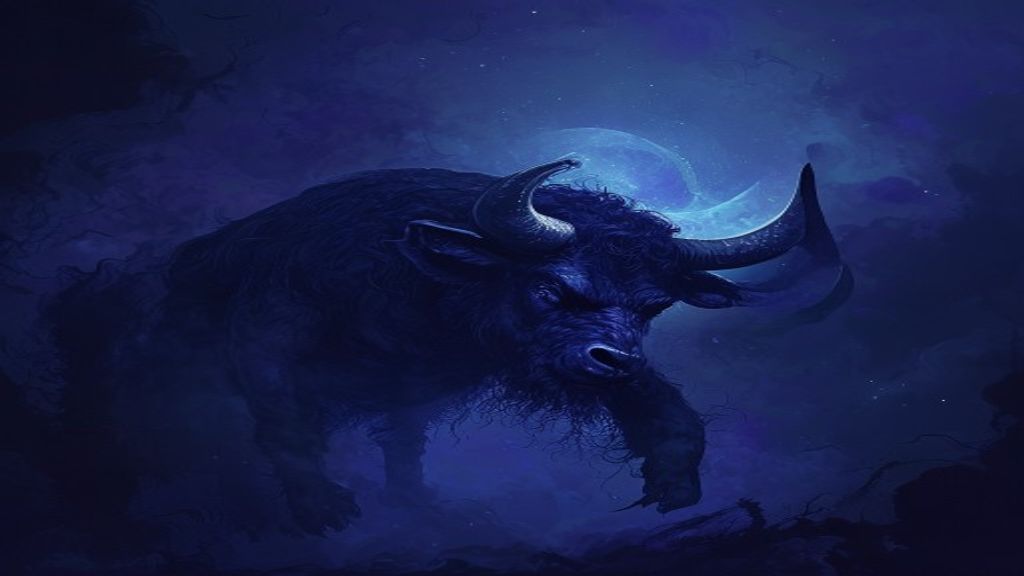
Why isn’t the minotaur in your dream attacking? It’s just standing there, and you know, the way you know things in dreams, that you built the walls around it. That is the most revealing version of this dream: not a monster to flee but a part of yourself you’ve contained, and a maze that is as much the subject as the creature.
The minotaur is an almost impossibly good dream symbol, because the myth did most of the interpretive work before you even fell asleep. A creature that’s two things at once, neither fully, locked away in an architecture designed specifically to contain it. The shame attached to it so total that its existence becomes a secret the whole city organizes itself around. If you dreamed of a minotaur, your sleeping mind chose that image for a reason.
A minotaur in a dream often represents a part of yourself that feels monstrous or unacceptable, something you’ve tried to contain rather than understand. The maze matters as much as the creature: it’s the structure you built to keep this part out of view. Whether the minotaur attacks, waits, or simply exists tells you a lot about where that relationship stands.
Something that’s two things at once
What makes the minotaur different from other dream monsters is its hybridity. A wolf chasing you is pure threat. A minotaur is threat that’s also partly you. The human half is impossible to ignore. And that human half is, in almost every telling of the myth, what makes it genuinely tragic rather than simply dangerous. It didn’t choose what it was.
Hartmann’s framework for understanding dream imagery is useful here: intense emotions tend to crystallize into central images, and those images are usually ones the dreamer finds simultaneously compelling and disturbing. The minotaur is exactly that. It draws you into the maze. You can’t look away. The feeling underneath the dream is usually not straightforward fear but something more complicated: dread mixed with recognition, or a strange compassion you’re not sure you’re allowed to feel.
Ask yourself what the creature was doing. Not attacking but waiting is significant. Waiting means it’s contained, for now, but it also means it knows you. A minotaur that charges is anger or drive or desire that’s been in the dark too long and has run out of patience. A minotaur you discover unexpectedly means you’ve stumbled onto something you’d successfully avoided.
The maze is yours
The maze in the dream isn’t just the setting. It’s the construction. Someone built it, and in a dream, that someone is you. The labyrinth is the elaborate set of avoidances, the habits of thought, the carefully maintained distance from whatever the minotaur represents. This can be rage. It can be grief. It can be ambition or sexuality or the desire to leave everything behind. Whatever felt too large, or too shameful, or too animal to carry in daylight.
Domhoff would frame this in terms of continuity: what’s in the dream tracks what’s in your waking life, without the editorial. If you’ve been containing something, the dream notices. It doesn’t judge. It just puts the thing you’ve been managing into the center of the architecture and lets you walk around it. Sometimes for years.
What Artemidorus thought
Artemidorus, writing in the second century, was practical in a way that modern interpreters sometimes aren’t. His central rule, that the same dream means different things for different dreamers, is a good guide to a minotaur dream: what the creature means depends on who is dreaming it and what they have walled off. A hybrid shape invites reading both natures: what does the human part say, and what does the beast part say, and where do they conflict? It is a dream about split nature. About the part of the person that can reason and the part that can’t, or won’t, and how those two parts are currently getting along.
I find that more useful than interpretations that just label the minotaur as ‘shadow’ and move on. The shadow reading is true but it’s not finished. The question is which shadow. What specifically was so unacceptable that it needed a labyrinth? A minotaur isn’t generic darkness. It’s something with a shape, a specific weight, a particular hunger. Identifying that is the whole work.
If you’re exploring dreams about other figures cast out as dangerous, dreaming of witchcraft is about power that’s been branded dangerous, a stigma much like the one the minotaur carries. And if the minotaur felt like something external controlling you rather than something internal, dreaming of superpowers is the inverse of this dream: the contained force finally released.
What I’d ask you to consider
The myth doesn’t end with the minotaur’s death as triumphant resolution. Theseus leaves Ariadne on the shore. The thread that guided him out gets abandoned. Most retellings of this myth end with a kind of moral unraveling, as if the act of killing the contained thing simply redistributed the damage. Dreams about minotaurs rarely end cleanly either.
If yours keeps returning, I’d be less interested in the creature and more interested in the maze. What are you maintaining? What does the upkeep cost you? The minotaur, at this point, might be the most honest thing about you. It might even be something worth meeting. Not conquering. Just meeting, in better light than a labyrinth provides. If the integration does start, dreaming of a lifted curse is the dream of what it feels like when a weight finally lets go.
- What was the minotaur doing, and does that tell me whether the containment is holding?
- Is there something in my life right now that I’ve been managing rather than actually addressing?
- Did I feel fear, recognition, or something stranger, like pity, toward the creature?
- What would I have to change if I let the maze go?
Quick answers
What does a minotaur represent in a dream?
Usually a part of yourself that feels unacceptable or ungovernable, something you’ve tried to keep contained. The hybrid nature of the minotaur, half human, half beast, suggests an internal split: reason and raw instinct, or the person you present and the person you’re afraid of being. The maze around it is the system of avoidance you’ve built.
Is dreaming of a minotaur a bad sign?
Not straightforwardly. The minotaur’s presence means you’re aware of this contained part of yourself, even if only in sleep. Dreams in which the creature is simply present, not attacking, often indicate a kind of stalemate that’s more stable than threatening. The harder version is when it charges, which usually means the suppression is breaking down.
Why did the minotaur not attack me in my dream?
Waiting rather than attacking often means the energy is still contained, but the dream is surfacing it so you can look at it. It’s less a warning than an invitation. Something you’ve locked away is making its presence known without forcing the issue. Yet.
What if I felt sorry for the minotaur in my dream?
That compassion is significant and worth following. It suggests you’ve moved past simple fear toward something more nuanced: a recognition that this part of you didn’t choose its nature, or has been isolated longer than is fair. Feeling sorry for it is often the first step toward actually understanding what it represents.
Sources for this reading
- Domhoff, G. W. (2003). The Scientific Study of Dreams: Neural Networks, Cognitive Development, and Content Analysis. American Psychological Association.
- Domhoff, G. W. (1996). Finding Meaning in Dreams: A Quantitative Approach. Plenum Press.
- Hartmann, E. (1998). Dreams and Nightmares: The New Theory on the Origin and Meaning of Dreams. Plenum Trade.
- Artemidorus of Daldis (2nd century CE). Oneirocritica. English edition: Harris-McCoy, D. E. (2012). Artemidorus’ Oneirocritica: Text, Translation, and Commentary. Oxford University Press.
- Nielsen, T. A., Zadra, A. L., Simard, V., Saucier, S., Stenstrom, P., Smith, C., & Kuiken, D. (2003). The typical dreams of Canadian university students. Dreaming, 13(4), 211-235.DOI
Full bibliography on Sources and method. Found a mistake? Tell us and see the corrections log.